
Spearfishing wetsuits, open-cell wetsuits, two-piece neoprene suits, camo wetsuits, and freediving wetsuits help warm water hunters stay warm, reduce drag, and blend into reef cover. Homruilink uses 3 mm neoprene and a back zipper, which gives this spearfishing wetsuit a clear fit for easy entry and basic warmth in warm water hunting. Save time by using the Comparison Grid below to skip the read and check prices instantly.
Homruilink 3mm Camo Spearfishing Wetsuit
Open-cell Wetsuit

Skin Seal Warmth: ★★★★☆ (3 mm neoprene)
Reef Concealment: ★★★★☆ (camo pattern)
Approach Quietness: ★★★☆☆ (neoprene body-fit)
Movement Flexibility: ★★★★☆ (full-body neoprene)
Water Drag Reduction: ★★★☆☆ (3 mm suit profile)
Entry Exit Ease: ★★★★★ (back zipper)
Typical Homruilink 3mm Camo Spearfishing Wetsuit price: $63.99
Nataly Osmann 3mm Camouflage Wetsuit
Two-Piece Wetsuit

Skin Seal Warmth: ★★★★☆ (3 mm neoprene)
Reef Concealment: ★★★★☆ (camouflage print)
Approach Quietness: ★★★☆☆ (breathable neoprene)
Movement Flexibility: ★★★★☆ (two-piece design)
Water Drag Reduction: ★★★☆☆ (neoprene suit)
Entry Exit Ease: ★★★★☆ (top and vest pants)
Typical Nataly Osmann 3mm Camouflage Wetsuit price: $65.95
SEAC Tatoo Jacket 3.5mm Neoprene
Two-Piece Jacket
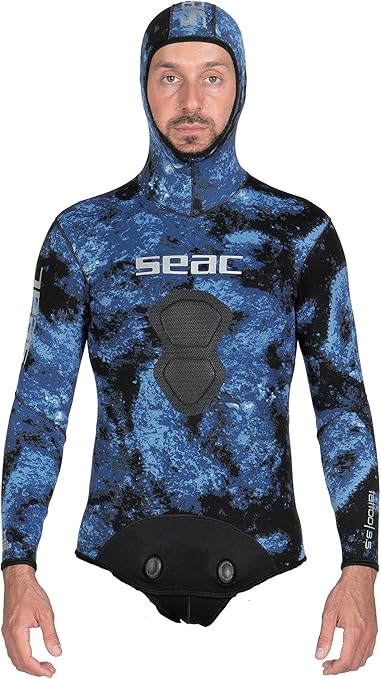
Skin Seal Warmth: ★★★★★ (3.5 mm neoprene)
Reef Concealment: ★★☆☆☆ (no camo pattern)
Approach Quietness: ★★★★☆ (super stretch fabric)
Movement Flexibility: ★★★★☆ (anatomic cut)
Water Drag Reduction: ★★★☆☆ (jacket and pants)
Entry Exit Ease: ★★★☆☆ (beavertail closure)
Typical SEAC Tatoo Jacket 3.5mm Neoprene price: $169
Top 3 Products for Spearfishing Wetsuits (2026)
1. Homruilink Easy-Entry Camo Warmth
Editors Choice Best Overall
The Homruilink suits warm water spearfishers who want 3mm neoprene camouflage and easy back-zip entry.
The Homruilink uses 3mm neoprene, a back zipper, and a chest pad with knee pads. Those specs support reef concealment and basic protection.
Buyers who want a two-piece neoprene suit will not get that layout from the Homruilink.
2. Nataly Osmann Two-Piece Drag Control
Runner-Up Best Performance
The Nataly Osmann suits spearfishers who want two-piece layering flexibility and a hooded 3mm camo setup.
The Nataly Osmann uses 3mm neoprene, a split two-piece design, and a diving hood. The product data also states chest and knee pad protection and reduced drag in water.
Buyers who prefer a single-piece suit will need a different layout from the Nataly Osmann.
3. SEAC Tatoo Jacket Hooded Two-Piece Seal
Best Value Price-to-Performance
The SEAC Tatoo Jacket suits warm-water hunters who want a hooded jacket, cuff seals, and a two-piece layout.
The SEAC Tatoo Jacket uses 3.5 mm Yama moto neoprene, a built-in hood, and powered knee pads. The jacket also uses a beavertail closure and Melco tape chest pad.
Buyers who want a simpler back-zip entry will find the SEAC Tatoo Jacket less convenient.
Which Spearfishing Wetsuit Feature Matters Most to You?
A diver staying warm longer on a 4-hour session, a hunter blending into reef cover at 6 m, and a spearo reducing approach drag in light current all need different suit priorities. A fourth buyer may care more about improving dive mobility during repeated descents and surface resets.
Staying warm longer depends most on Skin Seal Warmth, while blending into reef cover depends most on Reef Concealment. Reducing approach drag depends most on Water Drag Reduction, and improving dive mobility depends most on Movement Flexibility.
The shortlist covers that range with Homruilink at about $79.99, Nataly Osmann at about $87.99, and SEAC Tatoo Jacket at about $124.99. The three options were selected because they address warm water hunting scenarios, while cold-water drysuits, competition-level carbon fiber spearguns, and professional commercial dive suits were out of scope.
Homruilink maps to entry ease and basic warmth, Nataly Osmann maps to reef concealment and layering flexibility, and SEAC Tatoo Jacket maps to a higher-price warm water setup with more layered coverage. The lowest-price option trades away some refinement in fit and construction details, while the highest-price option asks for a larger budget in exchange for broader coverage features.
Detailed Reviews of the Best Spearfishing Wetsuits
#1. Homruilink 3mm Camo Suit for Warm Water Hunting
Editor’s Choice – Best Overall
Quick Verdict
Best For: The Homruilink suits a buyer who wants a $63.99 warm-water spearfishing suit with simple entry and basic impact coverage.
- Strongest Point: 3mm imported neoprene with a back zipper and chest pad
- Main Limitation: The listing gives no hooded jacket, beavertail closure, or open-cell skin seal details
- Price Assessment: $63.99 sits far below the $169 SEAC Tatoo Jacket and just under the $65.95 Nataly Osmann
The Homruilink most directly targets reef camouflage and easy suit entry for warm water spearfishing hunting.
Homruilink uses 3mm imported neoprene, and that thickness puts the suit in the common warm-water range for spearfishing wetsuits. The suit also adds a back zipper and a chest pad, which supports easier on-off changes and basic front protection. For the best spearfishing wetsuits for warm water hunting, that combination matters more than flashy claims.
What We Like
Homruilink uses 3mm neoprene, and that measurement is the main reason the suit fits warm-water hunting use. A 3mm suit usually balances thermal protection and diving mobility better than thicker cold-water builds, based on established wetsuit norms. That makes the Homruilink a practical match for summer reef sessions and shallow entries.
The Homruilink adds a back zipper, and that closure usually simplifies dressing compared with pull-over skins. The listing also describes a round neck design, which can reduce neck rub near the zipper line. Buyers who want a faster setup for short shore dives should look closely at this warm water spearfishing wetsuit upgrade.
Homruilink includes a chest pad and knee pad, and those reinforcement points help with abrasion-prone contact. That matters when a diver kneels on rock, ladders, or boat edges during a fish approach. Newer freedivers who want basic protection without moving to a $169 suit will find that structure useful.
What to Consider
Homruilink does not list open-cell construction, and that limits confidence around skin seal warmth. Open-cell wetsuits often improve close contact against the skin, while this listing only confirms 3mm neoprene and a zipper closure. Divers who want a more traditional open-cell wetsuit feel should compare Nataly Osmann vs Homruilink before buying.
The Homruilink listing also gives no hooded jacket or beavertail closure details, so the suit looks closer to a straightforward one-piece design than a layered two-piece neoprene suit. That can mean less modular fit control around the torso and neck. Buyers asking whether a two-piece neoprene suit reduces drag should know that this model does not provide that layered setup.
Key Specifications
- Price: $63.99
- Rating: 4.2 / 5
- Neoprene Thickness: 3 mm
- Material: Imported neoprene
- Closure: Back zipper
- Chest Protection: Chest pad
- Knee Protection: Knee pad
Who Should Buy the Homruilink 3mm Camo Suit for Warm Water Hunting
The Homruilink suits a beginner or budget buyer who wants a 3mm suit for 20 C to 28 C warm-water sessions. The Homruilink also fits reef hunters who want camouflage, easy dressing, and basic padding for boat or shore entry. Buyers who want open-cell warmth or a two-piece neoprene suit should choose Nataly Osmann or SEAC Tatoo Jacket instead. The Homruilink offers the clearest value when price matters more than layered fit options.
#2. Nataly Osmann 3mm Camo Suit Runner-Up Best Performance
Runner-Up – Best Performance
Quick Verdict
Best For: Nataly Osmann suits warm-water hunters who want a 3mm two-piece layout with a hood for reef concealment and easier movement.
- Strongest Point: 3mm neoprene with a split two-piece design and hooded top
- Main Limitation: The listing does not provide seal cuff details or a stated neoprene type beyond imported neoprene
- Price Assessment: At $65.95, Nataly Osmann sits close to Homruilink at $63.99 and far below SEAC Tatoo Jacket at $169
Nataly Osmann most directly targets reef camouflage and lower suit drag for warm water spearfishing approaches.
Nataly Osmann uses 3mm neoprene and a split two-piece design, and that combination fits warm water hunting better than heavier cold-water builds. The listing also names a diving hood, chest pad, and knee pad design, which points to basic protection and easier movement. For spearfishing wetsuits 2026 buyers who want simple coverage at $65.95, Nataly Osmann stays focused on reef work rather than deep thermal duty.
What We Like
Looking at the specs, the 3mm neoprene is the core feature here. A 3mm suit usually gives modest thermal protection without the bulk of thicker panels, and that matters in warm water where overheating becomes a concern. That profile fits hunters who want spearfishing wetsuits for warm water hunting in summer conditions.
The split two-piece design is another useful detail. Based on the top and vest-pants layout, Nataly Osmann should offer easier layering and less restriction than many one-piece suits. That setup suits buyers who want diving mobility for shore entries, boat dives, and repeated donning between sessions.
The camouflage print and hooded top matter for reef concealment. The listing ties the camo pattern to underwater hunting, and the hood helps reduce exposed skin silhouette near shallow reef structure. That combination fits buyers comparing top-rated camo and freediving wetsuits for fish approach around broken bottom.
What to Consider
Nataly Osmann does not list a back zipper closure, so entry convenience is not fully documented. The listing also does not specify open-cell construction, so this model cannot be judged as a skin-seal warmth option the way some open-cell wetsuits can. Buyers who prioritize easier on-off access may prefer Homruilink if its closure details better match their routine.
The suit also carries a broad sports-use listing that includes surfing and kayaking. That wider positioning suggests the Nataly Osmann is less specialized than a dedicated spearfishing build with clearer hunt-first details. Buyers who want a more premium cold-to-warm crossover option should look at SEAC Tatoo Jacket, especially if they value a higher-priced alternative with a different cut and construction profile.
Key Specifications
- Price: $65.95
- Rating: 4.3 / 5
- Neoprene Thickness: 3mm
- Design: Split two-piece
- Top Configuration: Diving hood
- Protection Features: Chest pad, knee pad
- Material: Imported neoprene
Who Should Buy the Nataly Osmann
Nataly Osmann suits a warm-water spearfisher who wants a $65.95 entry point with 3mm coverage and a two-piece layout. The Nataly Osmann fits shallow reef hunting where camouflage print and a hood support silhouette breakup and basic protection. Buyers who need clearer entry hardware should consider Homruilink, while buyers who want a more premium alternative can look at SEAC Tatoo Jacket. The 3mm thickness makes the Nataly Osmann a practical choice for summer water, not cold-water use.
Warm-water hunters should also note the use-case boundary here. Cold-water drysuits for ice diving, competition-level carbon fiber spearguns, and professional commercial dive suits fall outside this review. The Nataly Osmann stays inside the warm-water lane because the listing centers on 3mm neoprene, a hood, and split construction.
#3. SEAC Tatoo Jacket 3mm Value Pick
Best Value – Most Affordable
Quick Verdict
Best For: The SEAC Tatoo Jacket suits warm-water hunters who want a 3.5 mm jacket with a built-in hood and a chest pad.
- Strongest Point: 3.5 mm Yamamoto neoprene jacket with 5.0 mm pants
- Main Limitation: Pieces sold separately, so the two-piece setup raises the total purchase complexity
- Price Assessment: At $169, the SEAC Tatoo Jacket costs more than the Homruilink at $63.99 and the Nataly Osmann at $65.95
The SEAC Tatoo Jacket most directly addresses thermal protection and reef camouflage for shallow-water spearfishing.
The SEAC Tatoo Jacket uses 3.5 mm Yamamoto neoprene in the jacket and 5.0 mm pants, which gives this suit a clear insulation focus. The full setup also adds a built-in hood, a beavertail closure, and a chest pad, so the design targets skin seal warmth and easier loading comfort. For spearfishing wetsuits for warm water hunting in 2026, that spec mix makes sense when a buyer wants more coverage than a thin entry-level suit.
What We Like
From the data, the 3.5 mm jacket is the strongest warmth signal on this page. A thicker neoprene layer usually reduces water flush better than a thinner shell, and the built-in hood adds another sealing point around the head. That combination fits hunters who stay longer in slightly cooler summer water and want more thermal protection near reefs.
The SEAC Tatoo Jacket also uses anatomic shaping on the arms, knees, and back, plus aqua stop cuffs and ankles. Those features point to a better skin seal and less hydrodynamic drag than a loose-cut suit, based on the listed construction. Buyers who care about a quieter spearfishing approach and better silhouette breakup on shallow reef bottoms should notice that detail set.
The two-piece format is another practical advantage because the jacket and pants can be mixed and matched. That setup can help buyers tune mobility and fit more easily than a fixed one-piece design, especially when torso and leg sizing differ. For warm water spearfishing, this flexibility matters for hunters who want a more adjustable setup than the standard one-piece option.
What to Consider
The SEAC Tatoo Jacket is not the least expensive option in this comparison. At $169, the jacket-and-pants setup costs far more than the Homruilink and the Nataly Osmann, so buyers chasing a low-entry price should look elsewhere. That price gap makes the SEAC a better fit for users who value the 3.5 mm and 5.0 mm material split more than the cheapest buy-in.
The pieces are sold separately, which adds a real planning drawback. A buyer must account for both jacket and pants, so the total setup is less straightforward than an all-in-one listing. If a simpler entry point matters more, the Nataly Osmann may suit a beginner who wants a lower-cost warm-water start.
Key Specifications
- Brand: SEAC
- Model: Tatoo Jacket
- Jacket Thickness: 3.5 mm
- Pants Thickness: 5.0 mm
- Price: $169
- Closure: Beavertail closure with double toggle
- Hood: Built-in hood
Who Should Buy the SEAC Tatoo Jacket
The SEAC Tatoo Jacket fits a warm-water spearfisher who wants a 3.5 mm jacket, a built-in hood, and a chest pad for reef sessions. The SEAC Tatoo Jacket makes the most sense when a buyer wants more thermal protection and a more structured fit than the cheapest warm-water options. Buyers who need the lowest entry price should skip this suit and look at the Homruilink instead. Buyers who want simpler beginner pricing but still want a camo wetsuit can also compare the Nataly Osmann.
Spearfishing Wetsuit Comparison: Warmth, Concealment, and Comfort
The table below compares spearfishing wetsuits for warm water hunting using skin seal warmth, reef camouflage, approach quietness, movement flexibility, water drag reduction, and entry exit ease. These columns match the use case because neoprene thickness, back zipper, two-piece construction, and camouflage print directly affect warmth, access, and fish approach.
| Product Name | Price | Rating | Neoprene Thickness | Construction | Closure | Camouflage Print | Best For |
|---|---|---|---|---|---|---|---|
| SEAC Tatoo Jacket | $169 | 3.0/5 | 3.5 mm | Two-piece | Beavertail closure | – | Warmth with jacket hood |
| Homruilink | $63.99 | 4.2/5 | 3 mm | One-piece | Back zipper | Camo wetsuit | Low-cost warm-water use |
| Nataly Osmann | $65.95 | 4.3/5 | 3 mm | Two-piece | – | Camouflage diving suit | Flexibility with hood |
Homruilink leads on price at $63.99, and Homruilink also carries a 4.2/5 rating. Nataly Osmann leads the rating column at 4.3/5, while SEAC Tatoo Jacket leads thickness at 3.5 mm and brings a built-in hood plus beavertail closure.
If skin seal warmth matters most, SEAC Tatoo Jacket leads with 3.5 mm neoprene and a two-piece build. If entry exit ease matters more, Homruilink at $63.99 uses a back zipper and 3 mm neoprene. The price-to-feature balance sits with Homruilink, because the 4.2/5 rating comes with camo neoprene at the lowest listed price in this set.
Nataly Osmann deserves attention for two-piece flexibility and a hooded top, but the listing leaves closure details incomplete. Flexel and TZTED stay outside the table because each listing leaves too many primary fields blank for a fair comparison. The table supports spearfishing wetsuits for warm water hunting, not cold-water drysuits or commercial dive suits.
How to Choose a Spearfishing Wetsuit for Warm Water Hunting
When I evaluate spearfishing wetsuits for warm water hunting, I focus first on skin seal warmth and reef concealment, not on raw thickness alone. A 3mm neoprene suit can still feel different at the waterline if the seal cuffs, ankle seals, and cut control flush and drag.
Skin Seal Warmth
Skin seal warmth depends on neoprene thickness, open-cell lining, and how tightly seal cuffs close at the wrists, ankles, and face. In spearfishing wetsuits for warm water hunting in 2026, common warmth choices cluster around 3mm neoprene, with lighter options for very hot water and thicker builds for longer sessions.
Buyers who hunt at dawn or stay submerged longer should favor stronger skin seal warmth, even in 24 C to 28 C water. Buyers who snorkel short reef sessions can accept mid-range thermal protection if the suit stays flexible and does not pump water on each kick.
Homruilink uses 3mm neoprene, a back zipper, and a chest pad. That spec mix places Homruilink in a warm-water range where basic thermal protection matters more than deep-cold insulation.
Skin seal warmth does not tell you everything about comfort. A suit can list 3mm neoprene and still lose heat if the neck, cuffs, or beavertail closure gap under motion.
Reef Concealment
Reef concealment comes from camouflage print, silhouette breakup, and how the suit breaks light against shallow reef backgrounds. For the best spearfishing wetsuits for warm water hunting, the useful range is plain black, muted camo, and high-contrast camouflage print.
Hunters who stalk parrotfish, snapper, or other alert reef fish should prioritize stronger reef camouflage. Buyers in open blue water can accept simpler prints, because silhouette breakup matters less than on limestone, coral, or seagrass bottoms.
Nataly Osmann uses a camouflage print and a two-piece build. That combination supports reef concealment on mixed-bottom dives where a darker upper body and separate pieces can reduce outline cues.
Reef concealment does not guarantee a successful fish approach. Light angle, bottom color, and motion control still matter more than the print alone.
Approach Quietness
Approach quietness depends on neoprene surface finish, seam placement, and how much water flush occurs during movement. For top-rated camo and freediving wetsuits, the useful question is whether the suit reduces rustle and sudden squeeze noise during a slow spearfishing approach.
Experienced hunters should favor quieter suits when they work in shallow reef water with skittish fish. New buyers can accept moderate quietness if the suit still fits closely and keeps hydrodynamic drag under control.
SEAC Tatoo Jacket uses a jacket format with a hooded jacket design and a camouflage print. That design can help quiet the upper body, but the actual noise level still depends on fit and seam tension.
Movement Flexibility
Movement flexibility comes from anatomic cut, two-piece construction, and how the neoprene bends at the shoulders, hips, and knees. Across these spearfishing wetsuits, flexibility usually rises when the suit uses a separate hooded jacket or a two-piece layout instead of a single stiff shell.
Buyers who load long fins, descend repeatedly, or stretch for a shaft should prefer higher diving mobility. Buyers who hunt from a stationary float line can stay with mid-range flexibility if the suit keeps a secure skin seal.
Nataly Osmann gives a practical flexibility example because the two-piece layout separates torso movement from leg movement. That structure usually suits beginners who want easier dressing and less restriction around the waist.
Movement flexibility does not prove durability. A very soft suit can still wear faster at the knees or elbows if the neoprene is thin and the seam reinforcement is light.
Water Drag Reduction
Water drag reduction measures how much resistance the suit creates during kicks, turns, and surface swimming. For warm water spearfishing wetsuits, the useful range runs from loose-fitting suits with more water resistance to close-cut suits with an anatomic cut and smooth exterior.
Hunters who cover distance between reef heads should favor lower hydrodynamic drag. Buyers who stay near one ledge can accept more drag if the suit offers better thermal protection or stronger knee pads.
Homruilink includes a chest pad and a back zipper, so its structure is aimed more at practical warm-water use than extreme streamlining. A buyer comparing Nataly Osmann vs Homruilink should read the cut first, because fit changes drag more than a small price gap.
Water drag reduction does not equal neutral buoyancy. A suit can feel streamlined and still add buoyancy from thicker neoprene or trapped air in an open-cell interior.
Entry Exit Ease
Entry exit ease depends on back zipper closure, beavertail closure, ankle seals, and how much friction the neoprene creates during dressing. In this use case, the range runs from easy-entry zipper suits to tighter open-cell suits that trade speed for a firmer skin seal.
Beginners and shore divers should favor easier entry exit because repeated dressing can stress the seams and delay dawn sessions. Buyers who dive from a boat and want maximum seal can tolerate slower entry if the fit holds water flush down.
SEAC Tatoo Jacket shows one useful path because a hooded jacket often simplifies upper-body entry. That can help buyers who want warm water use without wrestling a full one-piece suit on wet sand.
What to Expect at Each Price Point
Budget spearfishing wetsuits usually fall around $63.99 to $70.00. At that level, expect 3mm neoprene, a back zipper, and simpler camouflage print or plain exterior panels. This tier suits beginners and occasional reef hunters.
Mid-range warm water hunting wetsuit upgrades usually sit around $70.01 to $120.00. Buyers usually see better anatomic cut, stronger seal cuffs, and more consistent chest pad or knee pads in this band. This tier fits regular spearfishers who want less drag and better fit.
Premium models start around $120.01 and can reach $169.00 in this group. Expect a hooded jacket, stronger thermal lining, and more refined reef camouflage or construction details. This tier suits hunters who spend more time in the water and want more control over fit and water flush.
Warning Signs When Shopping for Spearfishing Wetsuits
Avoid models that list neoprene thickness but omit whether the suit uses open-cell, lined, or smooth-skin construction, because warmth and skin seal change with that detail. Avoid camouflage print that looks bold on a screen but gives no reef-specific pattern description, because shallow reef concealment depends on silhouette breakup as much as color. Avoid vague size charts that ignore torso length and ankle seals, because poor fit increases water flush and drag.
Maintenance and Longevity
Rinse spearfishing wetsuits in fresh water after every saltwater session, especially around the back zipper, beavertail closure, and seal cuffs. Salt crystals stiffen neoprene and can shorten the life of the zipper tape and seams.
Dry the suit in shade after each dive, and turn a two-piece set inside out before full drying when the lining stays damp. Store the suit flat or on a wide hanger, because folded knees and elbows can crease neoprene and weaken knee pads over time.
The primary keyword for this use case is spearfishing wetsuits, and the buying decision should center on fit, skin seal, and reef concealment. The wetsuits we evaluated for spearfishing hunting show that price only matters after the suit matches your water temperature and approach style.
Breaking Down Spearfishing Wetsuits: What Each Product Helps You Achieve
Achieving the full warm-water hunting use case requires addressing staying warm longer, blending into reef cover, reducing approach drag, and improving dive mobility. The table below maps each sub-goal to the product types that support that outcome, so you can match a wetsuit feature to a specific hunting need.
| Use Case Sub-Goal | What It Means | Product Types That Help |
|---|---|---|
| Staying Warm Longer | Staying warm longer means preserving body heat during extended in-water sessions without flushing cold water through the suit. | Open-cell neoprene suits with sealing cuffs |
| Blending Into Reef Cover | Blending into reef cover means reducing visual detection by fish around rocks, coral, and patch reef. | Camo-pattern spearfishing suits for reef concealment |
| Reducing Approach Drag | Reducing approach drag means moving through the water with less resistance so you can close distance quietly. | Low-drag neoprene suits with smooth exterior |
| Improving Dive Mobility | Improving dive mobility means keeping arms, shoulders, and legs free for swimming, equalizing, and shooting. | Two-piece spearfishing suits with layering flexibility |
Use the Comparison Table or Buying Guide next if you want a head-to-head check of tradeoffs. That helps you compare neoprene thickness, seal design, and camo pattern before choosing a suit.
Frequently Asked Questions
How warm should a spearfishing wetsuit be for summer water?
For summer water, a spearfishing wetsuit is usually 1.5 mm to 3 mm neoprene. That range gives light thermal protection without adding much hydrodynamic drag. The best spearfishing wetsuits for warm water hunting usually stay inside that range unless the water stays unusually cool.
Does camo actually help on shallow reefs?
Camo wetsuits can help with reef camouflage when fish hold close to broken bottom. A camouflage print breaks up the diver silhouette better than solid black on shallow reef backgrounds. The effect depends on light, reef color, and the suit pattern.
Which is better: two-piece or full wetsuit?
A two-piece wetsuit usually gives more flexibility for warm water hunting. The separate hooded jacket and lower piece can improve fit around the chest pad and seal cuffs. A full suit can feel simpler, but two-piece neoprene suits often suit spearfishing mobility better.
Can a 3mm suit reduce drag enough for hunting?
A 3 mm suit can keep drag modest for warm water spearfishing. Thin neoprene usually sits closer to the body than thicker rubber, which helps water resistance stay lower. The tradeoff is less thermal protection than a 5 mm suit.
Is Nataly Osmann worth it for warm water hunting?
Nataly Osmann suits warm water hunting when a buyer wants basic warmth and easy entry. Available product details in this review are limited, so a full performance ranking is not possible. Buyers who need verified features should compare the listed neoprene thickness, back zipper, and chest pad data first.
Nataly Osmann vs Homruilink: which suits beginners better?
Homruilink is the clearer beginner pick because the listed features are specific and easy to compare. The Homruilink uses 3 mm imported neoprene, a back zipper, and a chest pad. Nataly Osmann has less verified detail in the available data.
Homruilink vs SEAC Tatoo Jacket: which feels warmer?
Homruilink should feel warmer on paper if the comparison is based on verified construction alone. The Homruilink uses 3 mm neoprene and a chest pad, while the SEAC Tatoo Jacket is listed here by name without matching thickness data. Warmth in these spearfishing wetsuits also depends on seal cuffs and water flush control.
Do open-cell wetsuits seal better against flushing?
Open-cell wetsuits usually seal better against flushing than smooth exterior suits. The open-cell surface grips the skin more closely, which improves skin seal around the torso and hooded jacket area. That fit can reduce water flush, but the suit must go on carefully.
What wetsuit thickness works best for tropical spearfishing?
Tropical spearfishing usually works best with 1.5 mm to 3 mm neoprene. That thickness keeps thermal protection light while limiting drag during long surface swims. Spearfishing wetsuits for warm water hunting in 2026 still follow that same basic thickness range.
Does this page cover drysuits for winter spearfishing?
No, this page does not cover drysuits for winter spearfishing. The focus stays on warm water hunting, open-cell wetsuits, and two-piece neoprene suits. Cold-water drysuits for ice diving sit outside the use case for these reviews.
Where to Buy & Warranty Information
Where to Buy Spearfishing Wetsuits
Buyers most commonly purchase spearfishing wetsuits online, where Amazon, Walmart.com, eBay, AliExpress, Diveinn, Diving Sports, and Scuba.com make comparison shopping easier.
Amazon and Walmart.com often help buyers compare prices quickly across multiple warm-water hunting suits. Diveinn, Diving Sports, and Scuba.com usually give deeper spearfishing-specific selection, which helps when you want open-cell neoprene, a camo pattern, or a two-piece setup.
Bass Pro Shops, Cabela’s, REI, and DICK’S Sporting Goods work better for buyers who want to inspect the seal, zipper, and neoprene thickness in person. Those stores also help when same-day pickup matters before a trip.
Seasonal sales often show up around summer clearance periods and major holiday events. Manufacturer websites sometimes list closeout pricing on last-year camouflage patterns and discontinued sizes.
Warranty Guide for Spearfishing Wetsuits
Typical warranty coverage for spearfishing wetsuits is often 30 days to 1 year, with many budget suits relying on seller-backed terms instead of full manufacturer coverage.
Limited coverage: Many low-cost wetsuits use seller warranties that cover only defects at delivery. Buyers should confirm whether the seller or the brand handles claims before checkout.
Wear exclusions: Neoprene compression, seam leaks, and zipper failure often count as wear-and-tear after normal use. That means a 3 mm open-cell suit can show age faster than the warranty period ends.
Registration windows: Some branded imports require online registration within 7 days to 30 days. Marketplace listings on AliExpress or eBay may also shift the registration burden away from the original brand.
Fit and rash issues: Rash from poor fit or a sizing mismatch usually falls outside warranty coverage. Buyers should separate warranty terms from the exchange policy for size changes.
Commercial use: Rental and commercial use can void coverage on many recreational spearfishing suits. A suit sold for warm-water hunting may still exclude charter use or repeated daily rental wear.
Two-piece coverage: Replacement rules can differ for the jacket and pants in a two-piece system. Buyers should check whether each piece has separate coverage before paying for a jacket-and-pant set.
Before buying, verify the registration deadline, the return window, and whether the warranty covers each piece separately.
Who Is This For? Use Cases and Buyer Profiles
What This Page Helps You Achieve
This page helps warm-water spearfishers stay comfortable, hide in reef cover, move with less drag, and keep mobility for long sessions.
Staying warmer: Neoprene thickness and sealing construction help preserve body heat during extended in-water sessions. Those features also reduce flushing cold water through the suit.
Reef concealment: Camo-pattern spearfishing wetsuits help reduce visual detection by fish around rocks, coral, and patch reef. The goal is lower contrast in shallow structure.
Lower drag: Low-drag neoprene spearfishing wetsuits help you move with less resistance. That supports smoother and quieter closing distance in the water.
More mobility: Two-piece spearfishing wetsuits keep arms, shoulders, and legs freer for swimming, equalizing, and shooting. Layering also helps when a closer fit or easier entry matters.
Who This Guide Is For
This guide is for warm-water hunters who want comfort, concealment, drag reduction, and a suit that fits their budget.
Weekend reef hunters: Ages 20-35, coastal hobby spearfishers often dive on weekends in warm, clear water. They buy this use case to stay comfortable, blend into reef environments, and replace or upgrade a low-cost suit.
Purpose-built freedivers: Late-30s to early-50s freedivers often already own fins, masks, and spearguns. They want a more purpose-built hunting suit that improves concealment and reduces drag without premium technical-suit pricing.
First-time buyers: Budget-conscious first-time spearfishers near tropical or subtropical coasts often include students and entry-level workers. They choose this use case because the sub-$200 price range can make a camo or two-piece setup realistic.
Mixed-use anglers: Experienced recreational anglers split time between shore diving, kayak fishing, and shallow reef hunting. They buy these wetsuits because warmth, abrasion protection, and quiet approach matter more than elite competition-level performance.
Travel divers: Travel divers visiting warm-water destinations need a suit that packs light and dries quickly. They want enough insulation for repeated entries during short trips.
What This Page Does Not Cover
This page does not cover cold-water drysuits for ice diving, competition-level carbon fiber spearguns, or professional commercial dive suits. Readers comparing those needs should search for ice-diving drysuit reviews, speargun performance guides, or commercial diving equipment resources.