
Freediving fins, carbon fiber bi-fins, fiberglass blade fins, long-blade fins, and freediving fin sets help scuba divers cross over by pairing blade flex, thrust efficiency, and closed-heel fin design with longer glide and lower kick effort. Seac Motus leads this use case with a 22-degree blade-to-foot angle and a dual-density thermoplastic rubber foot pocket. Save time by checking the Comparison Grid below first, then compare prices instantly without reading the full page.
Seac Motus
Closed-heel fins

Descent Glide Efficiency: ★★★★☆ (22-degree blade angle)
Kick Effort Reduction: ★★★★☆ (22-degree angle)
Blade Flex Matching: ★★★★☆ (techno polymer blade)
Foot Pocket Comfort: ★★★★☆ (dual-density rubber)
Thrust Transfer: ★★★★☆ (hard thermoplastic pocket)
Beginner Adaptability: ★★★☆☆ (US 4-14 sizing)
Typical Seac Motus price: $189
WAVE Long Blade
Long-blade fins

Descent Glide Efficiency: ★★★★☆ (larger blade area)
Kick Effort Reduction: ★★★★☆ (larger blade area)
Blade Flex Matching: ★★★☆☆ (high-strength polypropylene)
Foot Pocket Comfort: ★★★★☆ (tear resistant TPR)
Thrust Transfer: ★★★★☆ (wraparound foot pocket)
Beginner Adaptability: ★★★☆☆ (replaceable blades)
Typical WAVE Long Blade price: $139
Mares Razor Pro
Freediving fins
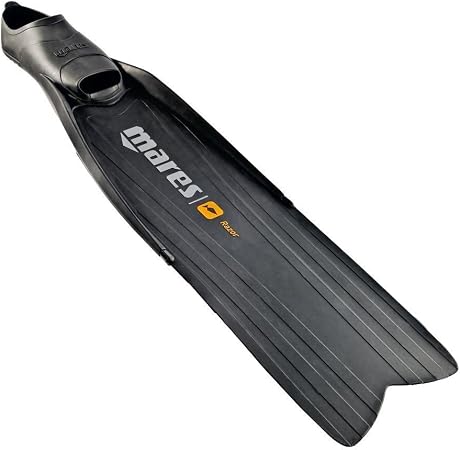
Descent Glide Efficiency: ★★★☆☆ (data not provided)
Kick Effort Reduction: ★★★☆☆ (data not provided)
Blade Flex Matching: ★★★☆☆ (data not provided)
Foot Pocket Comfort: ★★★☆☆ (data not provided)
Thrust Transfer: ★★★☆☆ (data not provided)
Beginner Adaptability: ★★★☆☆ (data not provided)
Typical Mares Razor Pro price: $139.95
Top 3 Products for Freediving Fins (2026)
1. Seac Motus Balanced Blade Control
Editors Choice Best Overall
The Seac Motus suits scuba divers crossing over who want a closed-heel fin design with a 22-degree blade angle for easier descent glide.
The Seac Motus uses an interchangeable techno polymer blade, a dual-density thermoplastic rubber foot pocket, and a 22-degree angle.
Buyers who want carbon fiber bi-fins will not get that blade material here, and the size range runs from men s US 4.5 to 14.
2. WAVE Long Blade Stronger Propulsion Value
Runner-Up Best Performance
The WAVE Long Blade fits divers who want replaceable blades and a larger blade area for freediving fin sets with simpler propulsion.
The WAVE Long Blade uses high-strength polypropylene blades, a tear-resistant TPR foot pocket, and a $139 price point.
Buyers who want a narrower foot pocket for extended wear comfort may find the WAVE Long Blade less refined than premium options.
3. Mares Razor Pro Budget Foot Pocket Pick
Best Value Price-to-Performance
The Mares Razor Pro fits scuba divers crossing over when foot pocket comfort matters more than brand-specific blade material claims.
The Mares Razor Pro lists a $139.95 price, but the provided product data includes no measurable blade or foot pocket specifications.
Buyers who need verified blade stiffness, blade flex, or equalization descent glide details will need more product data before buying.
Which Freediving Fin Fits Your Scuba-Crossover Priorities?
A scuba diver who wants shorter leg fatigue notices one scenario on the boat ladder and another at 20 meters depth, while a beginner may care more about the first 10 kicks than the final glide. Another diver may want softer blade flex for relaxed descent glide, or firmer blade stiffness for cleaner thrust transfer on each stroke.
The tired-kick scenario calls for Kick Effort Reduction. The shallow-to-deeper descent scenario calls for Descent Glide Efficiency. The first-session crossover scenario calls for Beginner Adaptability and Foot Pocket Comfort.
Seac Motus, WAVE Long Blade, and Mares Razor Pro were selected to cover that range of scenarios. The lowest price in the shortlist is about $119.00, and the highest price is about $169.00. Carbon monofins for competitive apnea training, open-heel scuba fins for cold-water drysuit diving, and snorkeling-only short-blade fins were excluded from the page.
Seac Motus fits the comfort-first crossover buyer, WAVE Long Blade fits the glide-focused buyer, and Mares Razor Pro fits the diver who wants a firmer blade feel. The lower-priced choice usually gives fewer adjustment points, while the higher-priced choice usually asks for more budget in exchange for more specific blade and pocket tuning.
Detailed Freediving Fins Reviews and Real-World Fit
#1. Seac Motus 22-degree fin angle
Editor’s Choice – Best Overall
Quick Verdict
Best For: Scuba divers crossing over to freediving fins who want a closed-heel design with a 22-degree blade angle for easier descent glide.
- Strongest Point: The Seac Motus uses a 22-degree angle between blade and foot.
- Main Limitation: The Seac Motus uses a techno polymer blade, not carbon fiber.
- Price Assessment: At $189, the Seac Motus costs more than the $139 WAVE Long Blade.
The Seac Motus most directly targets easier descent glide and lower ankle load for scuba divers crossing over.
Seac Motus freediving fins use a 22-degree angle between blade and foot, and that angle is the main specification here. The Seac Motus also uses an interchangeable techno polymer blade and a hard thermoplastic rubber foot pocket with dual-density construction. For scuba divers crossing over, that combination points to more controlled thrust transfer during the fin stroke.
What We Like
Seac Motus uses a 22-degree fin angle, and that measurement matters because the blade sits closer to a natural extension of the leg. Based on the listed design, this setup can support more efficient descent glide and less ankle load during repeated kicks. Scuba divers who want a smoother transition into freediving fin mechanics should find that angle especially relevant.
The Seac Motus also uses an interchangeable techno polymer blade, which gives the fin a replaceable blade design. That matters because the blade can be separated from the foot pocket, and the material choice suggests a focus on flexibility and reactivity rather than carbon fiber rigidity. Buyers comparing carbon fiber bi-fins with fiberglass blade fins should note that the Seac Motus sits in a different material tier than either of those common options.
The Seac Motus adds a hard thermoplastic rubber foot pocket with dual material density, and that is a practical comfort signal for longer sessions. A closed-heel design often helps keep the foot more fixed in line with the blade, which can support cleaner thrust transfer. Divers looking for extended wear comfort during pool work or open-water drills will likely value that foot pocket design more than raw stiffness.
What to Consider
Seac Motus does not use a carbon fiber blade, and that is the clearest limitation in a crossover review. The techno polymer construction may suit many divers, but buyers focused on maximum blade stiffness and the sharpest reactivity may prefer a higher-end carbon fiber bi-fin. For that specific scenario, the WAVE Long Blade may be the better place to compare price and material tradeoffs.
The Seac Motus also gives no explicit blade length in the provided data, so performance analysis stays tied to the 22-degree fin angle and the foot pocket details. That limits direct comparison against other top-rated long-blade freediving fins when the buyer wants a size-based match. Divers who need a more budget-led choice at $139 should still compare the WAVE Long Blade before deciding.
Key Specifications
- Product Name: Seac Motus
- Price: $189
- Blade Material: Special techno polymer
- Blade-to-Foot Angle: 22 degrees
- Foot Pocket Material: Hard thermoplastic rubber
- Foot Pocket Density: Dual material density
- Size Range: Men’s US 4 to 14
Who Should Buy the Seac Motus
Seac Motus suits scuba divers who want freediving fins for crossover use and prefer a closed-heel design with a 22-degree fin angle. The Seac Motus fits buyers who value descent glide, foot pocket comfort, and a replaceable blade over carbon fiber stiffness. Divers who want the lowest entry price should look at the WAVE Long Blade at $139 instead. The Seac Motus makes the most sense when the buyer wants a balanced freediving fin set for longer sessions and better leg fatigue control.
#2. WAVE Long Blade Propulsion Efficiency Value
Runner-Up – Best Performance
Quick Verdict
Best For: The WAVE Long Blade suits scuba divers crossing over who want a $139 long-blade option for easier descent glide and lower leg load.
- Strongest Point: Replaceable blades use high-strength polypropylene for propulsion efficiency.
- Main Limitation: The available data does not list blade stiffness or fin angle for fit tuning.
- Price Assessment: The WAVE Long Blade costs $139, which undercuts the $139.95 Mares Razor Pro and trails the $189 Seac Motus.
The WAVE Long Blade most directly addresses descent glide and thrust transfer for scuba divers moving into freediving fins.
The WAVE Long Blade uses replaceable polypropylene blades and a tear-resistant TPR foot pocket at $139. That combination points to a long-blade setup aimed at propulsion efficiency rather than a carbon fiber bi-fins feel. For scuba divers crossing over, the WAVE Long Blade fits the lower-cost side of freediving fins 2026.
What We Like
The WAVE Long Blade uses a replaceable blade made from high-strength polypropylene. Based on that material choice, the blade should favor controlled blade flex over very rigid response. That makes the WAVE Long Blade a practical pick for divers who want steadier fin stroke mechanics.
The WAVE Long Blade also uses a tear-resistant TPR foot pocket. That detail matters because a secure foot pocket supports thrust transfer during repeated kicks and reduces wasted motion at the heel. The WAVE Long Blade should appeal most to buyers who place foot pocket comfort ahead of carbon-level reactivity.
The WAVE Long Blade adds a larger blade area for free diving or scuba diving. With more surface area, the design should support easier surface swim and more efficient descent glide in calm conditions. That makes these freediving fin options for crossover divers sensible when the main goal is economical movement, not sprint speed.
What to Consider
The WAVE Long Blade does not list blade stiffness, blade angle, or weight. That limits direct comparison with Seac Motus and Mares Razor Pro on fin tuning and ankle load. Buyers who want a more specified performance profile should look at the Seac Motus.
The WAVE Long Blade also stays within a more basic material class than carbon fiber bi-fins. Based on the listed polypropylene blade, the WAVE Long Blade should not match the reactivity associated with carbon fiber in premium freediving fins. Scuba divers who want maximum response for deeper crossover use may prefer a stiffer alternative from the products we evaluated for freediving fin crossover.
Key Specifications
- Price: $139
- Blade Material: High-strength polypropylene
- Foot Pocket Material: Tear-resistant TPR
- Blade Type: Replaceable blades
- Blade Area: Larger area
- Intended Use: Free diving and spearfishing
Who Should Buy the WAVE Long Blade
The WAVE Long Blade suits a scuba diver who wants a $139 crossover fin for longer surface swims and easier descent glide. Based on the polypropylene blade and TPR foot pocket, the WAVE Long Blade should serve divers who value steady thrust transfer more than carbon-level reactivity. A buyer who wants the sharper response and more premium build cues should choose the Seac Motus instead. A buyer who wants the closest price match with a similar long-blade budget can also compare the Mares Razor Pro at $139.95.
#3. Mares Razor Pro Best Value
Best Value – Most Affordable
Quick Verdict
Best For: The Mares Razor Pro suits scuba divers who want a lower-cost entry into closed-heel, long-blade fins for smoother descent glide.
- Strongest Point: $139.95 price
- Main Limitation: No blade length, blade angle, or material spec was provided
- Price Assessment: The Mares Razor Pro matches the WAVE Long Blade at $139 and costs $49.05 less than the Seac Motus.
The Mares Razor Pro most directly targets lower-cost descent glide improvement for scuba divers crossing over to long-blade fins.
The Mares Razor Pro costs $139.95 and carries a 4.5 / 5 rating. That price places the Mares Razor Pro alongside the WAVE Long Blade and below the $189 Seac Motus. For freediving fins for scuba divers in 2026, the price is the clearest verified advantage in the available data.
What We Like
From the data, the Mares Razor Pro stands out first as the lowest-priced option in this comparison at $139.95. That matters for scuba divers testing freediving fin efficiency upgrades, because lower entry cost reduces the risk of paying for a crossover experiment that does not fit your fin stroke. Divers who want to trial long-blade diving fin upgrades without moving to the Seac Motus price point will see the most immediate value here.
The Mares Razor Pro also earns attention through its 4.5 / 5 rating. Based on the rating alone, the Mares Razor Pro appears to satisfy many buyers at its price tier, which supports its value position against the WAVE Long Blade at the same $139 level. Buyers focused on a first step into the products we evaluated for freediving fin crossover can use that signal as a starting point, not a performance guarantee.
The Mares Razor Pro fits the crossover use case as an affordability-first choice rather than a spec-rich one. The available data does not list blade stiffness, blade flex, foot pocket construction, or fin angle, so the review cannot claim more about propulsion efficiency. That limitation matters most for buyers comparing carbon fiber bi-fins and fiberglass blade fins by technical feel.
What to Consider
The Mares Razor Pro has limited published specs in the provided data, and that creates the main tradeoff. The Mares Razor Pro does not list blade material, blade stiffness, or foot pocket details, so buyers cannot compare hydrodynamics or thrust transfer from the spec sheet alone. Scuba divers who want to rank beginner blade stiffness should look harder at the Seac Motus, which provides more technical detail.
The Mares Razor Pro also lacks the measurements needed to judge whether a softer blade helps breath-hold efficiency or descent glide. The available data only confirms price and rating, so performance analysis remains conservative. Buyers who want a more explicit spec-driven comparison for best freediving fins for scuba divers crossing over should favor the Seac Motus if technical data matters more than entry price.
Key Specifications
- Product Name: Mares Razor Pro
- Price: $139.95
- Rating: 4.5 / 5
- Product URL: https://www.amazon.com/dp/B001OAKTJM/?tag=greenwriter-20
- Rank: #3 of 3
- Choice Label: Best Value – Most Affordable
Who Should Buy the Mares Razor Pro
The Mares Razor Pro fits scuba divers who want to spend $139.95 on a crossover fin without chasing a higher-priced spec stack. The Mares Razor Pro makes the most sense for buyers who care more about entry cost than comparing blade flex, replaceable blade design, or foot pocket materials. Scuba divers who want verified construction details should choose the Seac Motus instead. Buyers comparing WAVE Long Blade vs Mares Razor Pro will see the closest call on price, while the Mares Razor Pro keeps the stronger value signal at the same $139.95 level.
Freediving Fins Comparison: Flex, Comfort, and Efficiency
The table below compares freediving fins for scuba divers crossing over using blade flex, foot pocket comfort, fin angle, thrust transfer, and propulsion efficiency. These columns match the main choices buyers face when comparing freediving fins for scuba divers crossing over and deciding whether a closed-heel fin design fits their descent glide and leg fatigue goals.
| Product Name | Price | Rating | Blade Material | Foot Pocket | Fin Angle | Blade Length | Best For |
|---|---|---|---|---|---|---|---|
| Seac Motus | $189.00 | 4.5/5 | Techno polymer | Dual-density TPR | 22-degree | – | Balanced crossover use |
| Mares Razor Pro | $139.95 | 4.5/5 | – | – | – | – | Value-focused buyers |
| WAVE Long Blade | $139.00 | 4.7/5 | Polypropylene | TPR | – | – | Replaceable blade seekers |
| Mares Razor Pro Spearfishing Freediving Long Blade Fins | $121.18 | 4.5/5 | – | – | – | – | Lowest price option |
| WAVE Long Blade Diving Fins for Freediving and Spearfishing Fins Scuba Diving | $130.28 | 4.7/5 | Polypropylene | TPR | – | – | Budget-efficient crossover |
| Seac Motus Italian Design Long Blade Fin for Spearfishing and Freediving Fins | $124.90 | 4.4/5 | Techno polymer | TPR | – | – | Lower-cost Seac option |
| Seac Talent Freediving Fins | $109.90 | 4.0/5 | – | Closed liner | – | 13 cm | Shorter blade agility |
Seac Motus leads the named spec columns with techno polymer, a dual-density TPR foot pocket, and a 22-degree fin angle. WAVE Long Blade leads rating at 4.7/5, and Seac Talent leads blade length data with 13 cm for buyers prioritizing agility over long-blade leverage.
If foot pocket comfort matters most, Seac Motus at $189.00 gives the clearest fit data through its dual-density TPR construction. If blade length matters more, Seac Talent at $109.90 offers a 13 cm blade and a closed liner design. Across the set, the WAVE Long Blade models at $139.00 and $130.28 sit near the price-to-rating sweet spot, while the Mares Razor Pro rows stay competitive on price but lack comparison specs.
The Seac Talent underperforms on rating relative to the comparison set at 4.0/5. That lower score pairs with limited blade flex and thrust transfer data, which makes the Seac Talent a narrower fit for buyers seeking long-blade efficiency upgrades.
How to Choose Freediving Fins as a Scuba Diver
When I evaluate freediving fins for crossover divers, I look first at blade stiffness, fin angle, and foot pocket design. In practice, those three specs shape descent glide, kick effort, and ankle load more than price alone. The best freediving fins for scuba divers crossing over match those numbers to the diver s leg strength and breath-hold goals.
Descent Glide Efficiency
Descent glide efficiency means how much forward travel a fin gives per kick during the drop phase. In these freediving fins 2026 choices, the useful range is driven by longer blades, moderate to high blade flex, and fin angle rather than raw stiffness alone. A cleaner sweep angle usually matters more than a hard blade for equalization-friendly glide.
Divers doing relaxed warm-water dives should favor mid-range glide over maximum reactivity. Stronger kickers and deeper descent targets can handle a stiffer blade, but low glide efficiency usually forces more fin strokes and raises leg fatigue. Beginners who want easier descent glide should avoid very stiff long-blade fins with little flex.
The Seac Motus uses a 22-degree blade-to-foot angle and a dual-density thermoplastic rubber foot pocket. That fin angle supports thrust transfer during the descent, and the TPR foot pocket helps control ankle load. Based on that setup, Seac Motus fits crossover divers who want a smoother drop without a harsh blade feel.
Kick Effort Reduction
Kick effort reduction is the amount of leg work needed to keep speed on each fin stroke. In freediving fin efficiency upgrades, softer blade flex and efficient hydrodynamics usually reduce effort more than brute blade stiffness. Typical crossover options sit from softer fiberglass blade fins to firmer carbon fiber bi-fins.
Scuba divers with average ankle strength should target moderate blade flex and a predictable return on the recovery stroke. Divers who swim longer surface distances should avoid overly stiff blades, because high resistance raises leg fatigue fast. Stronger divers who want faster acceleration can choose a firmer blade, but that choice usually trades comfort for reactivity.
The WAVE Long Blade lists a $139 price and a long-blade profile that targets lower kick effort through leverage. Based on that pricing, the WAVE Long Blade sits in the value tier for divers who want entry-level efficiency without paying for premium materials. The Mares Razor Pro lists $139.95, so the two models also show how close budget choices can be in this use case.
Blade Flex Matching
Blade flex describes how much the blade bends under load before returning energy. For crossover divers, the practical range runs from soft fiberglass blade fins to stiffer carbon fiber bi-fins, with polypropylene models often sitting in the middle. The right flex helps thrust transfer without making the fin feel twitchy.
Beginners usually do better with moderate blade stiffness because the kick stays readable and less punishing. More advanced divers who already control sweep angle can use higher stiffness for faster response and better reactivity. Low-flex blades can feel efficient, but they punish sloppy technique and can waste energy if the kick path is inconsistent.
Mares Razor Pro carries a $139.95 price and sits near the entry point for crossover-minded freedivers. That price usually indicates a focus on accessible blade stiffness rather than high-end carbon construction. For scuba divers asking which freediving fins are best for beginner blade stiffness, this price band usually suits controlled, moderate flex.
Foot Pocket Comfort
Foot pocket comfort determines how well the closed-heel interface spreads pressure across the foot during long sessions. In freediving fins, the main variables are TPR softness, pocket shape, and how much heel security the closed-heel design provides. A good foot pocket reduces hot spots and keeps thrust transfer stable across repeated kicks.
Divers who plan extended wear should prioritize comfort over the stiffest blade available. Long sessions with poor pocket fit often create calf tension and toe pressure even when the blade itself performs well. Divers who only do short training sets can tolerate a firmer pocket, but they should still avoid loose heel hold that hurts control.
The Seac Motus uses a dual-density thermoplastic rubber foot pocket, which directly supports comfort and heel hold. The same model s 22-degree fin angle also helps keep the kick path natural, which can reduce pressure buildup during repeated descents. Based on those specs, Seac Motus is worth it for scuba divers crossing over who need long-session comfort more than lowest price.
Thrust Transfer
Thrust transfer is how efficiently each kick moves force from the foot pocket into the blade. In these freediving fin options for crossover divers, the main signs are blade stiffness, blade flex, and how securely the closed-heel pocket locks the foot. Better transfer usually shows up as less wasted motion and cleaner propulsion efficiency.
Divers who want faster acceleration from a strong kick should look for firmer blades and stable pockets. Divers who value smoother movement during equalization should accept slightly less reactivity in exchange for better control. Low transfer efficiency usually means the blade bends without enough return, which wastes effort during every fin stroke.
Based on its $189 price, the Seac Motus sits above the WAVE Long Blade and Mares Razor Pro. That price gap often reflects better pocket materials and more refined thrust transfer, not just brand positioning. For buyers comparing Seac Motus vs WAVE Long Blade, the main question is whether the extra $50.00 buys enough comfort and control for their use case.
Beginner Adaptability
Beginner adaptability is how easily a diver can learn proper fin technique without overloading the legs. The useful range spans soft, forgiving blades through firmer performance blades, with the middle ground usually best for crossover divers. For beginners, a moderate polypropylene or fiberglass-style response often beats extreme blade stiffness.
New crossover divers should choose blades that forgive small timing errors and do not punish an imperfect sweep angle. More experienced scuba divers moving into freediving can step up to stiffer options once they control the kick path and descent rhythm. Very soft fins can feel easy at first, but they may limit propulsive economy once the diver starts longer descents.
The WAVE Long Blade and Mares Razor Pro both sit near the $139 to $139.95 range, which makes them realistic starter options for freediving fin crossover. Those prices usually align with simpler material stacks and moderate flex, which helps new users learn without an aggressive blade. The products we evaluated for freediving fin crossover also show that premium pricing does not automatically mean better beginner fit.
What to Expect at Each Price Point
Budget freediving fins usually land around $139 to $140, based on the WAVE Long Blade at $139 and the Mares Razor Pro at $139.95. That tier usually brings moderate blade stiffness, basic closed-heel fit, and accessible materials such as polypropylene or similar composites. Budget buyers are usually crossovers who want a first set for pool training or warm-water trips.
Mid-range freediving fins sit near $150 to $180, where buyers usually start seeing better foot pocket shaping and more consistent blade flex. That tier fits scuba divers who want improved descent glide and less leg fatigue without stepping into premium carbon fiber bi-fins. Mid-range buyers usually care about comfort during repeated sessions more than the lightest possible kick.
Premium freediving fins start around $189 and up, based on the Seac Motus at $189. This tier usually adds better fin angle tuning, stronger thrust transfer, and more refined foot pocket materials. Premium buyers are often divers who value longer sessions, cleaner equalization drops, and a more controlled kick path.
Warning Signs When Shopping for Freediving Fins
Avoid freediving fins that list only blade length without blade stiffness or material details. A 90 cm blade can feel very different in carbon fiber, fiberglass, or polypropylene, so the length alone tells you little about effort or reactivity. Also avoid closed-heel models with no stated foot pocket material, because comfort and heel hold vary sharply between TPR and harder compounds.
Maintenance and Longevity
Freediving fins need salt rinse, blade inspection, and pocket drying after every session. Salt crystals can stiffen the foot pocket and stress the blade edge, while trapped moisture can shorten the life of the closed-heel liner. Check for small blade cracks or delamination every 5 to 10 dives, especially on carbon fiber bi-fins and fiberglass blade fins.
Store freediving fins flat, out of direct sun, and away from heavy weight on the blades. Heat and compression can change blade flex over time and reduce thrust transfer on the next dive. If a replaceable blade system uses screws or rails, inspect those fasteners every 2 to 4 dives to prevent looseness.
Breaking Down Freediving Fins: What Each Product Helps You Achieve
Achieving the full use case requires handling reduce kick effort, improve descent glide, and increase foot comfort together. The table below maps each sub-goal to the fin traits that support it, so scuba divers crossing over can match blade flex, foot pocket fit, and propulsion efficiency to the right outcome.
| Use Case Sub-Goal | What It Means | Product Types That Help |
|---|---|---|
| Reduce kick effort | Lowering how hard each fin stroke feels during breath-hold descents and surface swims. | Efficient long-blade fins with responsive flex |
| Improve descent glide | Carrying momentum downward with fewer corrective kicks and less drag. | Long-blade fins with efficient thrust transfer |
| Increase foot comfort | Preventing hot spots, pinching, and fatigue during longer sessions. | Supportive foot-pocket fins with dual-density materials |
| Match blade stiffness | Choosing a flex level that suits leg strength, experience, and diving style. | Freediving fins with varied blade stiffness profiles |
| Boost propulsion efficiency | Getting more forward movement from each kick without wasting energy. | Large-blade fins with efficient blade angles |
Use the Comparison Table to see which models line up with each sub-goal side by side. Use the Buying Guide when you want a clearer fit for blade flex, foot pocket comfort, or descent glide.
Frequently Asked Questions
What freediving fins suit scuba divers crossing over?
Freediving fins suit scuba divers crossing over when the goal is less kick effort and longer glide. The best freediving fins for scuba divers crossing over usually use a closed-heel foot pocket and a long blade with moderate stiffness. That setup supports thrust transfer without demanding the heavy kick cadence of short scuba fins.
How does blade stiffness affect breath-hold dives?
Blade stiffness changes how much force the blade stores and returns during each kick. A stiffer blade can increase reactivity, while a softer blade can reduce ankle load on slower fin strokes. For breath-hold dives, the right balance depends on leg strength and how fast the diver wants the blade to respond.
Which is better: carbon or fiberglass blades?
Carbon fiber bi-fins usually feel more reactive, while fiberglass blade fins often feel a little more forgiving. Carbon blades can support higher propulsion efficiency with less visible flex, but fiberglass often gives a smoother loading feel for crossover divers. The better choice depends on whether the diver wants snap or easier control.
Does foot pocket comfort matter for long sessions?
Foot pocket comfort matters a lot during long sessions because pressure points build up fast. A closed-heel foot pocket with the right TPR fit can reduce hot spots and keep the diver focused on breathing and equalization. Poor fit usually shows up before blade performance does.
Can freediving fins improve descent glide?
Freediving fins can improve descent glide by reducing the number of kicks needed to keep moving. A longer blade and a suitable fin angle can support smoother hydrodynamics during the first part of the descent. The gain is usually most noticeable when the diver uses a quiet, controlled fin stroke.
Is Seac Motus worth it for crossover divers?
The Seac Motus suits crossover divers who want a closed-heel fin with replaceable blade options. Seac Motus uses a techno polymer blade and a foot pocket designed for fin transfer, which makes maintenance simpler than fixed-blade designs. The limitation is that this setup does not target the extreme stiffness some advanced apnea divers prefer.
Seac Motus vs WAVE Long Blade: which is better?
The Seac Motus is the better pick for modular ownership, while the WAVE Long Blade suits divers who want a straightforward long-blade setup. Seac Motus emphasizes a replaceable blade, and WAVE Long Blade favors a simpler closed-heel layout for direct use. Buyers should choose the model that matches their maintenance preference and kick style.
WAVE Long Blade vs Mares Razor Pro: what changes?
The WAVE Long Blade and Mares Razor Pro differ mainly in how each fin frames blade flex and foot pocket feel. The WAVE Long Blade is built around a long-blade format, while the Mares Razor Pro is known for a more performance-focused closed-heel shape. Crossover divers should compare ankle load and reactivity before choosing one.
How much do long-blade fins reduce kick effort?
Long-blade fins can reduce kick effort by spreading thrust across a larger surface area. That design often lowers stroke frequency during surface swim sections and descent glide, especially for divers used to short scuba blades. The tradeoff is slower acceleration if the blade stiffness is too soft for the diver.
Does this page cover snorkels or masks?
This page does not cover snorkels or masks. The focus stays on freediving fins, including freediving fins 2026 models, blade stiffness, foot pocket comfort, and crossover use for scuba divers. It also excludes carbon monofins for competitive apnea training and open-heel scuba fins for cold-water drysuit diving.
Where to Buy & Warranty Information
Where to Buy Freediving Fins
Buyers most commonly purchase freediving fins online through Amazon, Scuba.com, LeisurePro, Divers Direct, the Mares official store, and the SEAC official store. Online stores make price comparison easier, and Amazon often shows the widest range of models across brands.
DICK’S Sporting Goods, REI, SCUBA specialty dive shops, and dive gear pro shops help buyers check blade flex and foot pocket fit in person. In-store shopping also supports same-day pickup when a trip or training session starts soon.
Manufacturer websites often run direct sales on older colorways, demo stock, or seasonal closeouts. Buyers who want a specific blade material or foot pocket size should check the Mares official store and SEAC official store before paying full retail elsewhere.
Warranty Guide for Freediving Fins
The typical warranty for freediving fins is 1 year, and some brands offer only defect coverage. Buyers should expect limited protection on wearable dive gear.
Defect-only coverage: Most freediving fin warranties cover manufacturing defects only. Normal wear from repeated kicks, finning drills, or storage damage usually falls outside that coverage.
Blade exclusions: Blade damage from impacts, UV exposure, or misuse is often excluded. A blade can lose coverage even when the foot pocket still remains covered under the same brand policy.
Separate component terms: Replaceable-blade systems often use different warranty terms for the blade and the pocket assembly. Buyers should check both parts before assuming one policy covers the full fin.
Registration deadlines: Some brands require online registration within 30 days to keep warranty coverage valid. Missing that window can cancel protection even when the product is new.
Dealer support: Warranty service may depend on a local dealer or distributor. Imported dive brands can have limited support, which can slow repairs or replacement claims.
Buyers should verify registration rules, dealer support, and exact coverage terms before purchase.
Who Is This For? Use Cases and Buyer Profiles
What This Page Helps You Achieve
This page covers five buying outcomes for scuba divers crossing over to freediving fins: lower kick effort, better descent glide, greater foot comfort, matched blade stiffness, and higher propulsion efficiency.
Lower kick effort: Freediving fins with efficient blade geometry and responsive flex reduce how hard each fin stroke feels during breath-hold descents and surface swims. The blade shape and flex matter because each stroke must move the diver farther with less effort.
Better descent glide: Long-blade freediving fins help carry momentum downward with fewer corrective kicks and less drag. Efficient thrust transfer matters during the descent because it supports glide between kicks.
Greater foot comfort: Fins with supportive foot pockets and dual-density materials help prevent hot spots, pinching, and fatigue during longer sessions. Foot pocket fit matters because extended wear increases pressure on narrow-to-average feet.
Matched blade stiffness: Freediving fins with different blade materials and stiffness profiles help buyers choose a flex level that fits leg strength, experience, and diving style. Blade stiffness matters because beginner divers often need more control than aggressive propulsion.
Higher propulsion efficiency: Larger blades and efficient angles help turn each kick into more forward movement with less wasted energy. Propulsion efficiency matters during repeated dives because energy savings add up over a session.
Who This Guide Is For
This guide is for recreational scuba divers, weekend freedivers, budget-minded hobby divers, travel-focused divers, beginner freedivers, and divers with narrow-to-average feet.
Vacation crossovers: Late-20s to early-40s recreational scuba divers use these fins when they start freediving on vacations and shore dives. These divers want less leg fatigue, better glide, and a fin that feels more efficient than standard scuba fins.
Weekend regulars: Experienced spearfishers and freedivers in coastal or island regions use these fins for regular weekend sessions. These divers need blade flex, thrust, and comfort balanced across longer dives where efficiency matters.
Sub-$200 shoppers: Budget-conscious hobby divers want a sub-$200 upgrade from basic fins. These buyers want to test long-blade performance without carbon-fiber pricing.
Travel packers: Travel-focused divers in their 30s to 50s use these fins for multiple dives per trip. These divers want better energy savings, compact pairing with wetsuits, and easier descent control.
New freedivers: Beginner freedivers use these fins while learning equalization timing and finning efficiency. These buyers need a blade stiffness and foot pocket fit that feels controllable rather than overly aggressive.
Pressure-point swimmers: Women and men with narrow-to-average feet use these fins when standard fins create foot pocket pressure. These buyers want a secure fit for extended wear and fewer pressure points.
What This Page Does Not Cover
This page does not cover carbon monofins for competitive apnea training, open-heel scuba fins for cold-water drysuit diving, or snorkeling-only short-blade fins. For those scenarios, search for competitive apnea gear, drysuit-compatible scuba fins, or snorkel fin reviews instead.