
Split fins, blade fins, hinged fins, open-heel fins, and other scuba fins address recreational diving by balancing kick efficiency, current control, and low-effort cruising speed across different swim patterns. Atomic Aquatics delivers that use case with a split blade design and a 16.0-inch blade length, which supports split blade propulsion for relaxed recreational dives. Save time by checking the Comparison Grid below first, so you can skip the read and check prices instantly.
Atomic Aquatics Split Fins
Split Fin

Leg Fatigue Reduction: ★★★★★ (less effort split blade)
Current Thrust Output: ★★★★☆ (internal power plate)
Hovering Control: ★★★☆☆ (reduced drag)
Kick Efficiency: ★★★★★ (power rails)
Maneuverability: ★★★☆☆ (one-handed buckle release)
Cruising Effort: ★★★★★ (split blade deflects with slight kick)
Typical Atomic Aquatics Split Fins price: $101
TUSA SF-22 Solla
Blade Fin

Leg Fatigue Reduction: ★★★☆☆ (ForcElast Technology)
Current Thrust Output: ★★★★★ (three channel blade)
Hovering Control: ★★★★☆ (anatomic foot pocket)
Kick Efficiency: ★★★★☆ (multi-compound foot pocket)
Maneuverability: ★★★★☆ (20 angled blade)
Cruising Effort: ★★★★☆ (crescent tip)
Typical TUSA SF-22 Solla price: $170
IST Rocket
Jet Fin
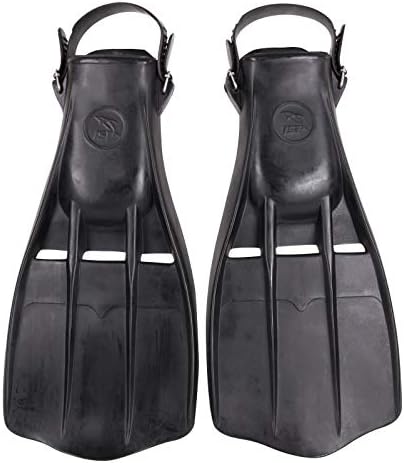
Leg Fatigue Reduction: ★★★☆☆ (rubber design)
Current Thrust Output: ★★★★☆ (deep grooves)
Hovering Control: ★★★★☆ (tapered blade)
Kick Efficiency: ★★★★☆ (curvature and tapered blade)
Maneuverability: ★★★☆☆ (open back)
Cruising Effort: ★★★☆☆ (bootie-compatible fit)
Typical IST Rocket price: $109.95
Top 3 Products for Split Fins vs Blade Fins (2026)
1. Atomic Aquatics Low-Effort Split Blade
Editors Choice Best Overall
The Atomic Aquatics split fins suit recreational divers who want lower kick effort for low-effort cruising and relaxed open-water dives.
Atomic Aquatics uses a split blade design, an Internal Power Plate, and Power Rails for force transfer and reduced drag.
Atomic Aquatics leaves less room for raw current-driving thrust output than a stiff blade fin.
2. TUSA SF-22 Balanced Thrust Control
Runner-Up Best Performance
The TUSA SF-22 Solla suits recreational divers who want firmer thrust output and steadier photography hovering control in moderate current.
TUSA SF-22 Solla uses a 20-degree Angled Blade Design, a three-channel blade, and a multi-compound foot pocket for power transfer.
TUSA SF-22 Solla gives up split-fin leg fatigue reduction efficiency for a stiffer blade feel and more direct response.
3. IST Rocket Affordable Open-Heel Power
Best Value Price-to-Performance
The IST Rocket suits divers who wear booties and want open-heel fit with straightforward propulsion for casual reef dives.
IST Rocket uses a curved jet-style blade, deep water channels, and an open back for dive booties.
IST Rocket emphasizes propulsion over fine hovering control, so underwater photography users may prefer a softer split fin.
Not Sure Which Fins Match Your Diving Priorities?
A diver doing 40-minute reef swims needs easy cruising with low leg fatigue. A diver holding position in 1.0-knot current needs stable control and quick corrections. A diver filming fish at close range needs hovering control with minimal fin movement.
The first scenario depends most on Leg Fatigue Reduction. The second scenario depends most on Current Thrust Output and Maneuverability. The third scenario depends most on Hovering Control and Kick Efficiency.
The shortlist covers that range with Atomic Aquatics at about $149.95, TUSA SF-22 Solla at about $109.95, and IST Rocket at about $69.95. The page screened out technical overhead use, snorkel-only bundles, and rental-fleet buying cases.
Atomic Aquatics suits the diver who wants lower cruising effort and split blade propulsion. TUSA SF-22 Solla suits the diver who wants a balanced current response with an open-heel fit. IST Rocket suits the diver who wants the lowest entry price and accepts less margin for fine hovering control.
Detailed Reviews of the Best Split Fins vs Blade Fins
#1. Atomic Aquatics Split Fins 4.5/5 value
Editor’s Choice – Best Overall
Quick Verdict
Best For: Recreational divers who want lower leg fatigue during low-effort cruising and relaxed kick cycles.
- Strongest Point: The split blade uses an Internal Power Plate and Power Rails for force transfer.
- Main Limitation: The split-fin design is built for reduced drag, not maximum stiffness for hard current swimming.
- Price Assessment: At $101, the Atomic Aquatics price sits below the TUSA SF-22 Solla at $170 and above the IST Rocket at $109.95.
The Atomic Aquatics split-fin design most directly targets kick efficiency for recreational divers who want lower-effort cruising and reduced calf fatigue.
Atomic Aquatics Split Fins cost $101 and use a split blade with an Internal Power Plate and Power Rails. That setup is meant to move force through the blade while reducing drag in a kick cycle. For split fins vs blade fins in 2026, that specification points toward easier cruising rather than maximum thrust output.
What We Like
Looking at the specs, the Atomic Aquatics split blade uses an Internal Power Plate plus Power Rails. That combination gives the foot a rigid sole plate and gives the blade a framework for propulsion efficiency. Recreational divers who want low-effort cruising are the clearest match.
The EZ-Lok buckle system supports one-handed release and simple re-attachment. That matters for dive booties and open-heel fit changes at the deck, where quick fin removal saves time and reduces fiddling. Divers who value easy gear handling between entries and exits should care most.
The split blade deflects with a slight kick and forms two water channels. Based on that water deflection, the fin is aimed at reduced water resistance and a smoother flutter kick. Underwater photographers and casual divers who prioritize hovering control and gentle movement may prefer that behavior.
What to Consider
The Atomic Aquatics split-fin design is not built around the stiffest possible thrust output. A blade fin with higher stiffness, such as the IST Rocket, is a better fit for strong current diving and harder acceleration. Divers who need forceful maneuvers should look elsewhere.
The Atomic Aquatics model also makes a tradeoff at speed changes. The same split blade that supports kick efficiency can feel less direct than a stiffer blade during aggressive directional changes. Divers who often fight current or want the sharpest maneuverability may prefer the TUSA SF-22 Solla.
Key Specifications
- Product Name: Atomic Aquatics Split Fins
- Price: $101
- Rating: 4.5 / 5
- EZ-Lok Buckle System: Patented quick-release design
- Internal Power Plate: Included
- Power Rails: Included
- Split Blade: Included
Who Should Buy the Atomic Aquatics Split Fins
Atomic Aquatics Split Fins fit recreational divers who want lower leg fatigue on easy reef dives and long surface swims. The $101 price makes sense when kick efficiency matters more than maximum thrust output. Divers who need stronger current diving should skip the Atomic Aquatics model and consider the IST Rocket instead. Divers who want more aggressive maneuverability should look at the TUSA SF-22 Solla.
#2. TUSA SF-22 Solla 21-angled propulsion
Runner-Up – Best Performance
Quick Verdict
Best For: Recreational divers who want stronger thrust output and cleaner control for current diving, photography hovering, and longer surface swims.
- Strongest Point: TUSA SF-22 Solla uses a 20 Angled Blade Design and a three-channel blade with crescent tip.
- Main Limitation: TUSA SF-22 Solla costs $170, which sits above Atomic Aquatics at $101 and IST Rocket at $109.95.
- Price Assessment: At $170, the TUSA SF-22 Solla costs more, but the spec set is focused on propulsion efficiency and foot pocket comfort.
The TUSA SF-22 Solla most directly targets thrust output with control in current diving and photography hovering.
The TUSA SF-22 Solla uses a 20 Angled Blade Design and a three-channel blade with crescent tip. That layout points to split blade propulsion with stronger water channeling than a flat blade shape. For recreational divers comparing split fins vs blade fins in 2026, this model reads like a control-first option rather than a low-effort cruising fin.
What We Like
From the data, the TUSA SF-22 Solla combines a 20 Angled Blade Design with a crescent tip. Those features support propulsion efficiency by directing water through the blade instead of letting it spill sideways. That makes the Solla a sensible match for divers who want steady thrust output in moderate current.
The TUSA SF-22 Solla also uses a multi-compound foot pocket and an anatomic foot pocket. That combination matters because a secure pocket can improve power transfer from the leg to the blade during each kick cycle. Divers in open-heel fins who wear dive booties should find that setup easier to evaluate than softer, less structured foot pockets.
Looking at the specs, the Solla favors maneuverability more than pure softness. The three-channel blade gives the fin a structured path for water deflection, which should help with modified flutter kick control and photography hovering control. Buyers who want current diving performance and measured fin stiffness will get the clearest read from these features.
What to Consider
The TUSA SF-22 Solla costs $170, and that price is higher than both Atomic Aquatics at $101 and IST Rocket at $109.95. For buyers focused mainly on low-effort cruising, the extra cost may not translate into the lightest kick feel. The TUSA SF-22 Solla makes more sense when thrust output and control matter more than budget.
Performance analysis is limited by available data because no blade length, weight, or stiffness rating was provided. That makes direct comparison harder for buyers asking whether a stiffer fin improves thrust output in their specific kicking style. In that case, the Atomic Aquatics split fins may be the better comparison point for leg fatigue reduction and relaxed cruising.
Key Specifications
- Model: TUSA SF-22 Solla
- Price: $170
- Rating: 4.6 / 5
- Blade Design: 20 Angled Blade Design
- Blade Construction: Three-channel blade
- Tip Design: Crescent tip
- Foot Pocket: Multi-compound anatomic foot pocket
Who Should Buy the TUSA SF-22 Solla
The TUSA SF-22 Solla fits recreational divers who want more thrust output for 20-minute drift dives, reef currents, and surface swims. The TUSA SF-22 Solla also suits divers who value anatomic foot pocket comfort and a blade that channels water during each kick. Divers who want the cheapest option should skip this model and look at Atomic Aquatics instead. For buyers comparing split fins vs blade fins worth buying, the Solla stands out when current diving and photography hovering control matter more than price.
#3. IST Rocket Open-Heel Value Pick
Best Value – Most Affordable
Quick Verdict
Best For: Recreational divers with dive booties who want simple low-effort cruising and stronger straight-line thrust than a soft split blade.
- Strongest Point: Deep grooves and a tapered blade support propulsion in the kick cycle.
- Main Limitation: The stiffer jet style design gives less emphasis to easy photography hovering control than a softer split fin.
- Price Assessment: At $109.95, the IST Rocket costs less than the $170 TUSA SF-22 Solla and more than the $101 Atomic Aquatics option.
The IST Rocket most directly targets current diving thrust output and low-effort cruising within the split fin and blade fin performance comparison.
The IST Rocket costs $109.95 and uses an open-back, rubber construction with a curved, tapered blade. Based on that blade shape, the IST Rocket favors directed thrust over the loose flex of many split fins. For recreational divers comparing split fins vs blade fins in 2026, that profile points toward better straight-line kicking with dive booties.
What We Like
Looking at the specs, the IST Rocket uses deep grooves that channel water backward. That design supports water deflection on each kick cycle, which is the main reason blade fins often feel more direct than split fins. Divers who want stronger propulsion efficiency in moderate open-water cruising should pay attention here.
The IST Rocket also uses a curved, tapered blade. Based on that geometry, the fin should hold a more organized water path than a flatter blade and may feel easier to control during a modified flutter kick. That makes the IST Rocket relevant for divers who want current diving thrust output without moving into technical overhead use.
The open-back design matters because the IST Rocket is built to be worn with dive booties. Open-heel fit is useful for shore entries, colder water, and divers who want more secure foot coverage than strapless fins provide. The IST Rocket fits recreational buyers who value a rigid sole plate feel and do not want the softer, rolling behavior of some split blade designs.
What to Consider
The IST Rocket gives up the easier leg-freshness feel associated with split fins. Based on the curved blade and deep grooves, the IST Rocket is built to move water with more structure, which can demand more ankle input than a hinged fin during long relaxed swims. Divers asking how do split fins affect leg fatigue should note that a blade like this usually shifts more work back to the diver.
The IST Rocket is also less suited to photography hovering control than softer recreational fins. The blade geometry supports forward drive, but buoyancy trim and very slow position changes usually favor fins with more flex and less water resistance. Divers who want the best fins for underwater photography should look more closely at the TUSA SF-22 Solla.
Key Specifications
- Product Name: IST Rocket
- Price: $109.95
- Rating: 4.4/5
- Blade Style: Jet style
- Construction: Strong rubber design
- Fit Type: Open back
- Blade Geometry: Curvature and tapered blade
Who Should Buy the IST Rocket
The IST Rocket suits recreational divers who wear dive booties and want a $109.95 fin for steady open-water cruising. The IST Rocket also fits buyers who care more about current diving thrust output than slow hovering for photography. Divers who want a softer split fin for ankle strain reduction should choose the Atomic Aquatics instead. The IST Rocket becomes more attractive than the TUSA SF-22 Solla when the budget matters more than extra refinement.
Split Fins vs Blade Fins: Side-by-Side Comparison
This table compares the products we evaluated for recreational scuba finning using leg fatigue reduction, current thrust output, hovering control, kick efficiency, maneuverability, and cruising effort. These columns match the split blade and water deflection factors that most affect propulsion efficiency, kick cycle load, and low-effort cruising.
| Product Name | Price | Rating | Blade Design | Foot Pocket | Thrust Detail | Control Detail | Best For |
|---|---|---|---|---|---|---|---|
| Atomic Aquatics | $101 | 4.5/5 | Split fins | Internal Power Plate | Power Rails | Less drag | Low-effort cruising |
| TUSA SF-22 Solla | $170 | 4.6/5 | 20 Angled Blade Design | Anatomic foot pocket | Three channel blade | Crescent tip | Balanced thrust control |
| Cressi Gara 3000 | $149.95 | 4.7/5 | Long flexible blade | – | Less muscle effort | Leg fatigue reduced | Longer relaxed kicks |
| Scubapro Twin Jet | $189 | 4.5/5 | Split-fin technology | Soft foot pocket | Vented area | Side rails | Relaxed recreational dives |
| Oceanic Vortex V-16 | $159.95 | 4.0/5 | Propeller fin technology | Ergonomic fit | Four material compounds | Semi-rigid battens | Steady fin control |
| Bio-Fin Pro | $156.75 | 3.9/5 | 20 blade angle | – | Reduced air consumption | Excellent maneuverability | Fatigue reduction focus |
| Seac Motus | $189 | 4.5/5 | Interchangeable blade | Hard thermoplastic pocket | 22 blade angle | Different sizes | Open-heel fit |
| WAVE | $139 | 4.7/5 | Replaceable blades | TPR foot pocket | High-strength polypropylene | Perfect transmission | Propulsion efficiency |
Atomic Aquatics leads price at $101, while TUSA SF-22 Solla leads rating at 4.6/5 and Cressi Gara 3000 leads rating among the listed options at 4.7/5. TUSA SF-22 Solla pairs a 20 angled blade design with an anatomic foot pocket and a crescent tip, which supports thrust control.
If your priority is leg fatigue reduction, Cressi Gara 3000 leads with a long flexible blade and less muscle effort. If current thrust output matters more, TUSA SF-22 Solla at $170 offers a three channel blade and 20 blade angle. Atomic Aquatics is the price-to-performance sweet spot because $101 buys split fins, an Internal Power Plate, and Power Rails.
Bio-Fin Pro is the outlier because $156.75 buys a 3.9/5 rating, which trails several higher-rated options. The available data also excludes technical overhead use, snorkel-only bundles, and rental fleet purchasing programs, so those buyers should look elsewhere.
How to Choose Between Split Fins and Blade Fins
When I’m evaluating split fins and blade fins, I look first at how the blade moves water in a kick cycle. The split fin and blade fin performance comparison usually comes down to kick efficiency, fin stiffness, and how much control a diver wants during a flutter kick or frog kick.
Leg Fatigue Reduction
Leg fatigue reduction measures how much ankle strain and calf fatigue a fin can reduce during a long surface swim or relaxed descent. In split fins vs blade fins in 2026, the practical range runs from soft split blade designs with high propulsion efficiency to stiffer blades that demand more leg input but give stronger water deflection.
Divers who want low-effort cruising usually favor the soft-to-mid range because the kick cycle feels lighter. Divers who swim against current should avoid the softest fins, since low resistance can also mean less thrust output when the water speed rises.
The Atomic Aquatics split fin uses a power plate and power rails, and that layout is designed to support propulsion efficiency. The Atomic Aquatics model costs $101, which places it near the budget end for recreational split fins.
Current Thrust Output
Current thrust output measures how much forward drive a fin maintains when water resistance increases. For best split fins vs blade fins for recreational divers, the usual range runs from flexible split blade fins with modest channel thrust to stiffer angled blade design models that hold shape under load.
Divers who dive in mild drift should look for mid-range thrust output and some water channeling. Divers who face stronger current need higher fin stiffness, while new divers in calm water can accept lower output if kick effort stays low.
The IST Rocket costs $109.95, which puts it close to the lower-mid price tier for this use case. The TUSA SF-22 Solla costs $170, which places that model in the premium tier for recreational buyers.
Current thrust output does not tell you everything about comfort, because a strong blade can still create calf fatigue. A diver who wants best fins for current diving should compare thrust output with foot pocket comfort and blade stiffness.
Hovering Control
Hovering control measures how precisely a fin supports neutral buoyancy and small position changes during photography hovering control. In these top-rated split fins and blade fins for divers, the useful range runs from highly flexible split fins that reduce fin wash to more controlled blades that respond better to small corrective kicks.
Underwater photographers should prioritize mid-stiff fins that stop short of a hard blade feel. Divers who mainly cruise open water can accept less hovering precision, but divers who need tight trim near coral should avoid very soft fins that drift with each kick cycle.
The TUSA SF-22 Solla costs $170, which suggests a higher-spec build for divers who want more controlled trim. The open-heel fit on many recreational fins also helps when a diver uses dive booties for better stance and foot pocket comfort.
Kick Efficiency
Kick efficiency measures how much forward movement a fin produces for each kick cycle. In split fins vs blade fins worth buying, the useful range runs from very efficient relaxed flutter-kick fins to stiffer models that trade some economy for stronger maneuverability in current.
Divers who ask what are the best split fins for recreational divers usually want high kick efficiency and lower ankle strain. Divers who spend more time in surge or drift conditions should accept a lower-effort-to-thrust tradeoff and choose a blade with more structure.
The Atomic Aquatics model and the TUSA SF-22 Solla sit on different ends of the comfort-versus-control range, which is why the first often suits relaxed cruising and the second suits more demanding water. That comparison also matters for divers asking can split fins reduce air consumption, because easier kicking can support steadier breathing during long swims.
Maneuverability
Maneuverability measures how well a fin responds to frog kick, modified flutter, and short corrective movements. For this use case, the range runs from soft split blade propulsion that tracks straight with less effort to stiffer blades that pivot more cleanly when a diver needs directional control.
Divers who dive in current or make quick turns should lean toward higher maneuverability and firmer fin stiffness. Divers who want best fins for underwater photography should avoid overly rigid models if those models make slow corrections harder.
The IST Rocket at $109.95 sits in a price band where buyers often compare maneuverability against comfort rather than against maximum thrust output. The TUSA SF-22 Solla at $170 gives a clearer example of a premium recreational fin where control features matter more than entry-level softness.
Cruising Effort
Cruising effort measures how hard a diver must work to maintain low-effort cruising over long distances. In these products, the range runs from soft split fins that reduce propulsion drag to blade fins that create more resistance but can feel steadier at moderate pace.
Beginners and casual divers should choose lower cruising effort if they spend most dives in calm water. Divers who want best fins for low-effort cruising should avoid overly stiff fins, while divers who need current diving stability can accept more work per kick.
The open-heel fins commonly used with dive booties often improve fit stability during long surface swims. The rigid sole plate on stiffer designs can improve load transfer, but that same structure can raise ankle strain for lighter kickers.
What to Expect at Each Price Point
Budget split fins vs blade fins in 2026 usually fall around $101 to $110. This tier often includes basic open-heel fit, moderate propulsion efficiency, and simpler split blade or angled blade design details for casual divers.
Mid-range models usually sit around $110 to $150. Buyers at this level often get better foot pocket comfort, more balanced kick cycle response, and enough structure for mixed reef and drift dives.
Premium recreational fins usually start around $170 in this set. That tier fits divers who want tighter trim control, more refined water channeling, and a stronger focus on maneuverability in current.
Warning Signs When Shopping for Split Fins vs Blade Fins
Avoid listings that state only fin length without fin stiffness or blade construction, because those details change thrust output more than length alone. Be cautious with split fins that never specify open-heel fit or the type of foot pocket, since bootie compatibility affects stability. Also avoid claims about low effort that do not mention kick cycle behavior or water deflection, because those claims are not comparable across models.
Maintenance and Longevity
Rinse split fins and blade fins with fresh water after every dive, especially around the hinge area, the side rails, and the foot pocket. Salt buildup in those areas can stiffen the kick cycle and reduce propulsion efficiency over time.
Inspect the blade edge, buckle hardware, and rigid sole plate every 5 to 10 dives. Small cracks or loose buckles can turn a controlled fin into a poor fit long before full failure appears.
Breaking Down Split Fins vs Blade Fins: What Each Product Helps You Achieve
Achieving the full use case requires addressing reducing leg fatigue, improving current control, and holding stable hover together. The table below maps each sub-goal to the product types that help most, so readers can match kick efficiency, thrust output, and hover control to the dive plan.
| Use Case Sub-Goal | What It Means | Product Types That Help |
|---|---|---|
| Reducing Leg Fatigue | Reducing leg fatigue means maintaining a comfortable kick with less ankle and calf effort over longer recreational dives. | Split fins and flexible recreational blade fins |
| Improving Current Control | Improving current control means keeping usable thrust output when swimming through mild to moderate water movement. | Stiffer blade fins with direct kick response |
| Holding Stable Hover | Holding stable hover means staying nearly motionless for photography, observation, or buoyancy practice. | Balanced blade fins with predictable response |
| Maximizing Easy Cruising | Maximizing easy cruising means covering distance with low ankle strain during relaxed finning. | Split fins and low-drag recreational fins |
For head-to-head evaluation, compare the products in the Comparison Table or review the Buying Guide for dive-by-dive tradeoffs. The Buying Guide also helps narrow choices for snorkeling-only fins, technical overhead penetration, and rental fleet programs, which are outside this page s use case.
Frequently Asked Questions
Do split fins reduce leg fatigue?
Split fins can reduce calf fatigue for steady flutter kick use because their split blade design lowers water resistance. The Atomic Aquatics split fin uses power rails and a power plate, which supports propulsion efficiency during relaxed cruising. Strong finning against surge can reduce that advantage.
Which fins are better in current?
Blade fins usually handle current better because a stiffer blade gives more direct thrust output on each kick cycle. The TUSA SF-22 Solla and IST Rocket suit divers who want firmer control in moving water. Split fins can feel less stable when a diver needs quick corrections.
Can blade fins improve hovering control?
Blade fins can improve hovering control when a diver uses small modified flutter kicks and careful trim. Their angled blade design gives predictable water deflection, which helps photographers hold position near coral or wrecks. The benefit depends on fin stiffness and the diver’s buoyancy trim.
How much does fin stiffness matter?
Fin stiffness matters because a stiffer blade increases control, while a softer blade can reduce ankle strain during easy swimming. Recreational divers usually notice the difference most during current, surface swim, and low-speed maneuvering. Very stiff fins can feel tiring during long relaxed dives.
Is Atomic Aquatics worth it for recreational diving?
The Atomic Aquatics split fin suits recreational divers who want low-effort cruising and a more relaxed kick cycle. Its power rails, power plate, and split blade layout target propulsion efficiency rather than forceful thrust output. Divers who spend more time in current or tight turns may prefer a blade fin instead.
Atomic Aquatics vs TUSA SF-22 Solla: which is better?
Atomic Aquatics favors easy cruising, while the TUSA SF-22 Solla favors more direct blade fin response. The Atomic Aquatics split fin uses channel thrust features, and the TUSA SF-22 Solla suits divers who want stronger maneuverability in current. Recreational divers should choose the fin that matches their kick style.
IST Rocket vs Atomic Aquatics: which is better?
The IST Rocket is the better match for divers who want a firmer blade feel and quicker corrections. The Atomic Aquatics split fin is better for relaxed swimming and lower leg fatigue during long reef dives. Both options serve recreational scuba finning, but each favors a different kick cycle.
Do open-heel fins fit dive booties better?
Open-heel fins fit dive booties better because the heel strap leaves room for thicker footwear and a more adjustable fit. That design helps divers who need a rigid sole plate inside the boot for shore entries or cold water. Closed-foot fins usually suit thinner socks or bare feet.
What fins work best for underwater photography?
Blade fins usually work best for underwater photography because they help with hovering control and small position changes. A stiffer fin with an angled blade design can give cleaner water deflection during short corrections near a subject. Split fins can work, but they often favor cruising over precise stops.
Does this page cover snorkel fins?
No, this split fins vs blade fins page does not cover snorkeling-only fins or mask-snorkel set bundles. The focus stays on recreational scuba use, including low-effort cruising, current handling, and photography hovering control. Technical overhead penetration gear also falls outside this review.
Where to Buy & Warranty Information
Where to Buy Split Fins vs Blade Fins
Recreational divers most often buy split fins and blade fins from online retailers, because Amazon, Divers Direct, Scuba.com, LeisurePro, Dive Right in Scuba, the Mares official store, the TUSA official store, and the Atomic Aquatics official store make price comparison simple.
Amazon and the larger dive retailers usually show the widest mix of open-heel fit options, split blade design models, and fin stiffness choices. Brand stores such as the Mares official store, the TUSA official store, and the Atomic Aquatics official store help buyers compare a specific model against the maker’s own specifications.
Physical stores suit buyers who want to check foot pocket fit in person before ordering. Dive shop specialty retailers, Dick’s Sporting Goods, Bass Pro Shops, and scuba schools and training centers also support same-day pickup when a diver needs new fins before a trip.
Seasonal sales often appear around major holiday periods, and manufacturer websites sometimes clear prior-year colors or sizes. Buyers who want the lowest posted price should compare online first, then check local dive shops for in-person fitting and pickup timing.
Warranty Guide for Split Fins vs Blade Fins
Split fins and blade fins usually carry warranties of 1 year to 2 years, and some brands offer longer coverage. Buyers should compare the blade warranty and the replaceable-part warranty separately before judging price.
Coverage length: Warranty length varies by brand, so a fin set may carry 12 months on one model and 24 months on another. The brand policy matters more than the fin style when a buyer compares value.
Parts coverage: Buckles, straps, and foot pockets often receive different coverage than the blade itself. Open-heel models with replaceable parts need special attention because a strap failure may fall under a separate parts rule.
Wear exclusions: Saltwater corrosion, UV exposure, and accidental strap damage are often treated as wear-and-tear. Those issues may fall outside defect coverage even when the main blade remains under warranty.
Registration rules: Some brands require online registration or proof of purchase before they honor coverage or send replacement parts. Buyers should keep the receipt and record the serial number after purchase.
Commercial use: Commercial training use, rental use, and dive-center fleet use can shorten coverage or void a consumer warranty. Recreational buyers should confirm that a personal-use policy still applies before using the fins for instruction.
Service access: Authorized service and replacement availability can be limited outside major dive markets. That limitation matters when a buckle or strap needs fast replacement before the next dive trip.
Before purchasing, verify the warranty term, registration requirement, and parts coverage for the exact model.
Who Is This For? Use Cases and Buyer Profiles
What This Page Helps You Achieve
This page helps recreational divers compare leg fatigue reduction, current control, stable hover, and easy cruising.
Reduced leg fatigue: Split fins and flexible blade fins are the common choice for longer recreational dives. These fins aim to lower ankle and calf strain during relaxed kicking.
Current control: Stiffer blade fins usually suit swimming against mild to moderate water movement. These fins keep usable thrust output when current increases.
Stable hover: Balanced blade fins with predictable response help underwater photography and buoyancy practice. These fins support controlled hovering with less fin wash.
Easy cruising: Split fins and other low-drag recreational fins usually support distance swimming with less effort. These fins target low-effort cruising speed during reef, shore, and boat dives.
Who This Guide Is For
This guide is for recreational divers who want easier kicks, better control, and a clearer split-fins-versus-blade-fins choice.
Vacation divers: Divers ages 30-55 who make two to ten vacation dives a year often want easier kicks after long boat days. These buyers usually compare split fins for ease against blade fins for more control.
Photo hobbyists: Underwater photography hobbyists in their mid-20s to early-40s often focus on buoyancy discipline and stable hovering. These divers compare fins that minimize fin wash and support position control.
First-time buyers: Entry-level divers in their 20s to 50s often rent gear and want personal fins under about $200. These buyers usually want bootie fit, simple buckles, and efficient kicking without strong leg effort.
Older divers: Recreational divers in their 50s to 70s often need lower effort because ankle, knee, or calf fatigue matters more. These buyers usually prefer easier propulsion over aggressive thrust output.
Travel divers: Weekend dive-club members and travel divers often pack light and want reliable performance across reef, shore, and boat dives. These buyers usually balance portability, comfort, and enough thrust for occasional current.
Cold-water divers: Cold-water hobby divers often use open-heel gear with booties and dive from shore or charter boats. These buyers usually care about fit, strap security, and stable kicking as much as raw propulsion.
What This Page Does Not Cover
This page does not cover technical scuba propulsion fins for cave or technical overhead penetration, snorkeling-only fins and mask-snorkel set bundles, or professional training and rental fleet purchasing programs. For those needs, search for technical diving gear guides, snorkeling package reviews, or fleet procurement resources.