

Scuba Forge is reader-supported: some links on this page are affiliate links, and as an Amazon Associate Scuba Forge earns from qualifying purchases at no extra cost to you. Learn more.
A scuba diving computer is a wearable device that monitors depth, time, and pressure to manage a diver’s safety limits. You need a subsurface computer when you plan to stay underwater for more than a few minutes or descend beyond the shallowest recreational zones. You should determine your maximum planned depth and total bottom time before selecting a device, as these two numbers dictate the specific software algorithms the computer must run to keep you safe.
Scuba diving computers provide real-time data to prevent decompression sickness
Divers face the risk of nitrogen narcosis and decompression sickness, which occur when gases dissolve into the bloodstream under pressure. Without a way to track these physiological changes, a diver might stay down too long or surface too quickly, leading to severe physical consequences. A scuba diving computer removes the guesswork from these calculations by providing real-time data on how much time remains before a diver must ascend.
How a Scuba Diving Computer Works
The operation of an underwater computer follows a linear progression of data collection and calculation to provide a safety buffer for the user.
For a deep dive into the specs, see our full Suunto Ocean review to see how it performs.
- The device first captures ambient pressure data through a physical sensor.
- The internal processor converts this pressure into a depth reading in meters or feet.
- The software compares the current depth and elapsed time against a pre-programmed decompression model.
- The computer calculates the rate at which nitrogen or other gases are accumulating in the body.
- It then displays the remaining time a diver can stay at that specific depth before they must begin a staged ascent.
- The device constantly updates these figures every second as the diver moves through the water column.
Scuba Diving Computers we have reviewed in detail
Prices across these 3 run from $224 to $699.99; each one has a full review here.
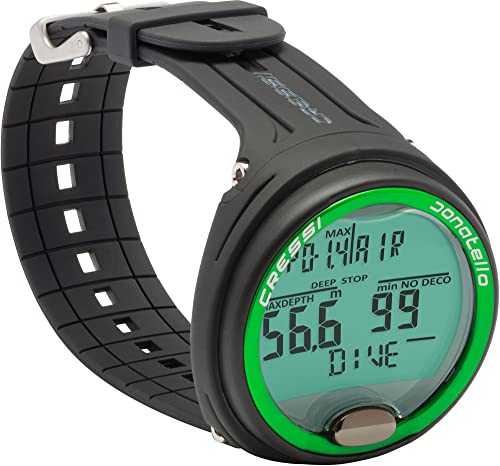


Parts and Stages That Matter to a Buyer
The functionality of a scuba diving computer depends on three primary hardware components that dictate how the device interacts with the environment.
Pressure sensors calculate decompression limits and maintain stable depth readings
The pressure sensor is the core component that detects the weight of the water above the device. It measures the surrounding pressure and calculates decompression limits, which are the time limits a diver can stay at a certain depth without needing to stop and wait for nitrogen to release. A high-quality sensor ensures that the depth readings remain stable even when the diver is moving quickly or facing strong currents.
You can view our full Teric Color spec breakdown to see if it fits your requirements.
Battery capacity determines the maximum duration of a scuba dive
The battery provides the power for the internal processor and the display screen. It determines the maximum dive time the device can support before it loses power. Because a dead computer provides no data, the battery capacity and its ability to operate under pressure are critical for long-duration excursions.
Sturdy bezels protect the screen and allow for manual setting adjustments
The bezel is the outer frame of the device that holds the screen in place. It protects the lens from impacts and allows for manual rotation to adjust settings. A sturdy bezel ensures that the screen remains visible and functional even if the device bumps against rocks or equipment during a dive.
What Having a Scuba Diving Computer Changes in Practice
Using a subsurface computer changes the way a diver manages their gas supply and ascent profile. In a typical dive, the device acts as a constant supervisor, providing a “no-decompression” limit—the maximum time a diver can spend at depth and still surface directly without stopping. This allows a diver to focus on the environment rather than constantly calculating math in their head.
Check out our full Puck Pro+ review to see how it handles basic diving needs.
Dive computers automatically adjust remaining time based on current depth
The difference is most visible when a diver decides to stay deeper for longer than originally planned. The computer will automatically adjust the remaining time, showing exactly how much “buffer” is left. However, the device does not change the physical limits of the human body; it only provides the data to help the diver stay within those limits. In shallow water where nitrogen absorption is minimal, the device provides a safety margin but may not show complex decompression requirements.
How does the screen resolution compare to other high-end wrist units?
The screen resolution of a scuba diving computer is designed for high-contrast readability rather than high-fidelity imagery. Unlike a smartwatch where resolution allows for complex graphics, a diving computer uses pixels to ensure that numbers remain legible in low-light, murky water. You will find that these units prioritize a clear, high-contrast interface that can be read at a glance during a stressful situation.
Does it have a “no-decompression” limit or just basic depth?
A scuba diving computer provides a “no-decompression” limit, which is a calculated time limit based on depth and the specific gas mix used. While a basic depth gauge only tells you how deep you are, the computer uses that depth to calculate how much time you have left before you reach a safety threshold. Most modern units use advanced algorithms to provide these limits, ensuring you have enough time to surface safely without requiring mandatory decompression stops.
Freedivers can view our full SEAC Driver review to see if it fits their specific needs.
Who Needs a Scuba Diving Computer and Who Does Not
You need a scuba diving computer if you plan to perform recreational dives that involve staying underwater for more than 15 minutes or reaching depths beyond 10 meters. These conditions require the device to track nitrogen absorption and provide accurate time limits to prevent decompression sickness. If you only plan to swim in shallow water or participate in very short, surface-level snorkeling, a computer is not a requirement.
Planned dive depth and duration determine the required computer complexity
Professional divers and those exploring deeper environments require advanced units that can handle complex gas mixes and deeper decompression profiles. Conversely, a person who never intends to submerge below the surface has no use for this technology. The decision depends entirely on your planned depth and the duration of your time underwater.
The other underwater computer guides we have published
- Scuba Diving Computers for Multisport Training Compared
- Choosing the Best Watch-Style Dive Computer with Air Integration
- The Watch Style Dive Computers That Work Best for Small Wrists
- Which Scuba Diving Computer with GPS Is Best?
- Best Dive Computers for Nitrox
- Tracking Depth and Bottom Time While Snorkeling With a Scuba Diving Computer