

Scuba Forge is reader-supported: some links on this page are affiliate links, and as an Amazon Associate Scuba Forge earns from qualifying purchases at no extra cost to you. Learn more.
Battery life for a scuba diving computer should range from 25 to 100 hr depending on the specific requirements of the dive profile and the frequency of use. You need a minimum of 20 hr for a standard multi-day trip to ensure the device remains functional through every dive and surface interval without requiring a recharge or battery swap.
If you plan on doing mixed gas dives, see our list of the best dive computer for nitrox.
Recommended Battery Life for Scuba Diving Computers
| Use Case | Recommended Battery Life | Why this number |
|---|---|---|
| Full day of snorkeling | 15 to 30 hr | Calculated for 12 hr of surface time at 80% usable capacity. |
| Multi-sport triathlon | 22 to 44 hr | Calculated for 20 hr of activity at 90% usable capacity. |
| Standard recreational diving | 25 to 40 hr | Based on the median 40 hr stated by 33% of the evaluated models. |
| Professional expedition use | 40 to 100 hr | Allows for extended periods between charging opportunities in remote locations. |
Scuba Diving Computers we have reviewed in detail
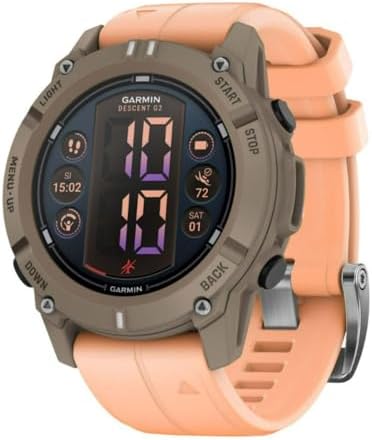
Prices across these 3 run from $249.95 to $1199.95; each one has a full review here.
Many divers prefer a compact form factor, so browse the best watch-style dive computer options.


What happens if you go under or overbuy on battery life?
If you choose a scuba diving computer with a battery life that falls below your required threshold, the device may shut down during a dive or a critical surface interval. A power failure during an underwater excursion can prevent the display of depth, time, and decompression data, which are the primary functions of an underwater computer.
Navigation-focused divers should see our comparison of the best scuba diving computer with gps.
You should also consider how to choose the right case diameter for scuba diving computers.
Overbuying on battery life involves paying a higher price for a high-capacity battery that provides significantly more hours than your specific use case requires. While a long-lasting battery provides a safety margin, the extra capacity often comes with a larger physical footprint or a higher cost that does not provide additional utility for a standard diver who returns to a power source daily.
Understanding your budget is vital, so compare what different price levels get you.
What is the common mistake with scuba diving computer battery life?
The most common mistake is prioritizing the maximum rated battery life over the actual usable capacity during active use. Many scuba diving computers show a high maximum duration because the battery is rated for a low-power standby mode that does not reflect the power draw of a backlit screen and active sensor tracking.
Safety is paramount, so verify the certifications and safety standards for scuba diving computers.
To understand your options better, explore the different types of scuba diving computers.
Prioritise active battery life for continuous scuba diving profiles
You should instead optimise for the battery life stated for active use during a full dive profile. A device that claims 100 hr of life but only provides 20 hr when the screen is active will fail to meet your needs during a long day of diving. Focus on the duration the device can sustain a continuous cycle of descending, bottom time, and ascent.
Before making a purchase, review the scuba diving computer warranties to ensure coverage.
How does battery life interact with other scuba diving computer specs?
Battery life interacts with display resolution and brightness because higher pixel counts and brighter screens increase the rate of power consumption. A scuba diving computer with a high-resolution display will deplete its power faster than a simpler, monochrome screen, meaning you must balance your need for visual clarity against your required runtime.
Beginners can start by learning how a scuba diving computer works in detail.
You can see how the Teric Color performs in our full review.
How sensor frequency and complex algorithms affect dive computer power
Battery life also relates to the depth sensors and telemetry systems used by the device. If the scuba diving computer provides high-frequency data updates or complex decompression algorithms, these calculations draw more power from the internal cell. You may find that a device with a high battery life rating is only possible because it uses a lower frequency for sensor pings or a less demanding processor.
We also provide our full review of the Puck Pro+ for more details.
Matching maximum operating depth to technical diving requirements instead of battery life
If a scuba diving computer has a high battery life but a low maximum operating depth, the longevity of the power supply is irrelevant for deep technical diving. The real limit for your use case is the depth the device can safely function at, not how long the battery lasts. Ensure the depth limit meets your requirements before focusing on the number of hours the battery provides.
Explore the technical specs by viewing our full review of the SEAC Driver.
More underwater computer explainers and comparisons
- The Watch Style Dive Computers That Work Best for Small Wrists
- Which Scuba Diving Computer with GPS Is Best?
- Best Dive Computers for Nitrox
- Tracking Depth and Bottom Time While Snorkeling With a Scuba Diving Computer
- Which Scuba Diving Computer Keeps You Safe During Deep Technical Dives Under 260m?
- The Scuba Diving Computers That See My Dive Data on My Phone