

Scuba Forge is reader-supported: some links on this page are affiliate links, and as an Amazon Associate Scuba Forge earns from qualifying purchases at no extra cost to you. Learn more.
Second stage regulators are underwater breathing devices that deliver air from a cylinder to a diver’s mouth. You need a regulator that meets international safety standards when you plan to dive deeper than 10 meters or in any conditions where equipment reliability is a priority. You should verify that your equipment carries a recognized certification from a recognized agency like EN 13579 or CE before you purchase it.
What does the EN 13579 standard guarantee?
The EN 13579 standard is a European safety standard that governs the design and manufacturing of scuba diving equipment. It ensures that a second stage regulator undergoes rigorous testing for pressure resistance, material integrity, and mechanical consistency. This standard guarantees that the internal components of the regulator can withstand the pressures found in underwater environments and that the breathing mechanism functions predictably across a range of temperatures.
EN 13579 standard focuses on mechanical integrity over ergonomic performance
The EN 13579 standard does not guarantee that a regulator is suitable for every specific diving environment, such as extreme cold or high-current zones. It focuses on the mechanical and material integrity of the unit rather than the specific ergonomic performance of the mouthpiece or the aesthetics of the housing. While it provides a baseline for manufacturing safety, it does not replace the need for a diver to choose a model that fits their specific physical requirements or diving style.
Selecting the correct hose length is vital, so see our advice on choosing your second stage regulator hose length.
Where these choices show up in our reviews
From $102.49 to $1091: 3 of the 10 in this category we have reviewed in full.


What does the CE mark mean for a regulator?
The CE mark is a mandatory conformity marking for products sold within the European Economic Area, indicating that the second stage regulator meets the health, safety, and environmental protection standards of the European Union. This mark is issued by the manufacturer who declares that the product complies with relevant directives, such as the Pressure Equipment Directive (PED). It confirms that the product has been designed to meet specific safety thresholds regarding pressure and material safety.
CE mark serves as a legal requirement rather than a quality rating
The CE mark does not certify the “quality” of the breathing experience or the durability of the regulator over years of heavy use. It is a legal requirement for market access, not a performance rating. A regulator can have a CE mark while still being a basic, entry-level model. For a buyer, the presence of this mark is a minimum requirement for legal sale in Europe, but it does not differentiate between a basic regulator and a high-end engineering benchmark like the Apeks XTX or Scubapro S620 Ti.
You can learn more about different designs by viewing the various types of second stage regulators available.
Which safety marks address common failure modes?
Safety marks address the failure mode of free-flow, which occurs when a regulator fails to close and continuously exhausts the gas supply. Standards like EN 13579 require the regulator to maintain a stable “closed” position under specific pressure loads to prevent this exhaustion. By adhering to these standards, manufacturers ensure that the internal valves have sufficient seating and spring tension to remain shut when not in use.
Breathing resistance standards ensure safety without guaranteeing effortless inhalation
These standards also address the failure mode of breathing resistance, which is the physical effort required to inhale or exhale through the device. While the standards define the limits of acceptable resistance, they do not provide a “perfect” score for ease of breathing. If a regulator feels difficult to inhale through, it may still be compliant with safety standards as long as it does not exceed the maximum resistance limits defined by the testing protocol. The standard ensures the device is safe to breathe, but it does not guarantee that the breathing will feel effortless for every user.
Material standards prevent moisture accumulation and corrosion in regulators
Moisture accumulation is a failure mode where internal condensation causes the mechanism to seize. Standards governing the materials used in the second stage, such as the specific grades of stainless steel or polymers, ensure that the components are resistant to corrosion and moisture. These standards ensure the device remains functional after repeated exposure to water, but they do not guarantee that a regulator will never require a service to clear internal salt or silt buildup.
For a foundational understanding of the technology, see our guide on how a second stage regulator works.
How can you verify a mark is real?
Verifying a mark is real involves checking the physical product and its accompanying documentation rather than relying solely on the packaging. A printed sticker on a box can be easily reproduced, but the manufacturer’s documentation must provide a traceable path to the certification.
- Check the physical housing of the second stage regulator for a stamped or engraved mark, which is harder to forge than a sticker.
- Request the “Declaration of Conformity” from the manufacturer, which is the legal document stating the product meets the specific standard.
- Verify the manufacturer’s name against the official registry of the certifying body, such as the relevant European notified body for the CE mark.
- Look for a batch number or serial number on the device that corresponds to the certification date in the manufacturer’s documentation.
Which marks are non-negotiable for safety?
The EN 13579 standard and the CE mark are non-negotiable requirements for a second stage regulator if you intend to use the device in a regulated market. These certifications provide the baseline assurance that the device will not fail due to a fundamental manufacturing defect or a material failure under pressure. If a regulator lacks these marks, it means the manufacturer has not verified the device against the standard pressure requirements of the diving industry.
Performance indicators beyond standard marks matter for specialized diving needs
When choosing a regulator, you should treat these marks as the baseline and then look for additional performance indicators. For example, if you are planning a technical dive involving specialized sidemount configurations, you may need to look beyond the standard marks to find a regulator with a specific flow rate or a specialized exhaust port. The standard marks ensure the device is safe to use, but they do not determine how the device performs in extreme conditions or how it feels in your hands.
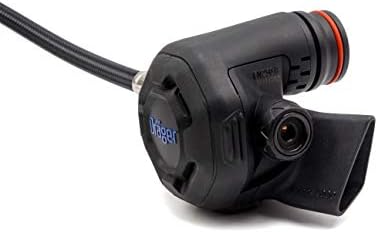
For a comprehensive analysis of this professional unit, view our full Secor 7000 review for technical details.
Manufacturer technical data provides specific ratings for low temperature operation
If you are planning a dive in a high-altitude lake, you might find that the standard pressure ratings are sufficient, but the environmental conditions require a regulator with high resistance to cold. Does the regulator you are considering have a specific rating for low-temperature operation? Many high-end regulators are tested to remain functional at temperatures as low as -10°C, which is a specific performance claim that goes beyond the basic safety certification. You should check the manufacturer’s technical data for these specific environmental limits before purchasing.
Verifying model specific certification is more important than brand reputation
A common mistake for new buyers is assuming that a high-quality brand name replaces the need for certification. A brand may have a reputation for reliability, but the specific model you are buying must still meet the required safety standards. Always ensure that the specific model number on the box matches the certification listed in the documentation. If you are unsure about a specific mark, the safest course of action is to contact the manufacturer directly to ask for their compliance documentation for that specific model.
More second stage regulator explainers and comparisons
- Which Second Stage Regulator Is Best for a Full Face Diving Mask?
- Best Second Stage Regulators for Hookah Diving
- Backmount Second Stage Regulators Under $150 Compared
- Choosing the Best Second Stage Regulator for Right Handed Configuration
- The Second Stage Regulators That Work Best for Underwater Breathing
- Which Second Stage Regulator Is Easy to Breathe for Intermediate Diving?