
What makes a scuba diving flashlight essential
Scuba diving flashlights increase safety and enjoyment under the water. They provide good visibility, which is crucial for spotting marine life and avoiding hazards. In 2023, quality LED flashlights, including models like the Magicshine 810E, are preferred for their reliability and power. These torches also allow divers to communicate underwater, using light signals for better coordination. A quality torch, such as the Magicshine 810E LED flashlight, enhances every dive.
Table of Contents
- What makes a scuba diving flashlight essential
- Choosing the Right Lumen Output for Night Dives
- Exploring the types of bulbs used in underwater lights
- Comparing LED and Halogen Lifespan
- How Lumens Affect the Visibility of Scuba Diving Flashlights
- Impact of Lumens on Battery Life
- Diving into the Importance of Beam Angle Underwater
- Choosing Beam Angles for Photography
- Selecting the right battery type for your dive torch
- How Many Charges Can Rechargeable Batteries Withstand?
- The role of water resistance in scuba diving flashlights
- Max Depth Before Leakage in Dive Lights
Choosing the Right Lumen Output for Night Dives
The minimum recommended lumen output for clear visibility on night dives is 300 lumens. For murky waters, divers need torches with at least 1000 lumens to cut through the darkness effectively. At 1500 lumens, colors become much more distinguishable underwater, making the Magicshine 810E an excellent choice for divers seeking to optimize their visual experience. The Magicshine 810E LED is perfect for those requiring increased visibility and color recognition underwater.
Exploring the types of bulbs used in underwater lights
Scuba diving flashlights feature various types of bulbs, including LED and halogen. LED bulbs, like those in the Magicshine 810E, offer great efficiency and a longer lifespan compared to traditional options. In 2023, LED technology continues to dominate the scuba flashlight market due to these advantages. Divers appreciate the improved performance and reliability of LED torches, making brands like Magicshine popular choices for underwater lighting.
Comparing LED and Halogen Lifespan
The average lifespan of an LED bulb is about 50,000 hours, providing divers with long-lasting illumination. A typical halogen bulb lasts around 1,000 to 2,000 hours, considerably shorter than LED technology. This significant difference, often exceeding 48,000 hours, underscores the enhanced durability and value of LED flashlights, such as the Magicshine 810E, over halogen models. Clearly, LED, like those in Magicshine products, offers superior lifespan benefits for scuba diving enthusiasts.
- Choose models that are waterproof up to significant depths.
- High lumen rating ensures better visibility under the sea.
- Opt for torches with long battery life for extended dives.
- Scuba diving flashlights with adjustable beams provide versatility.
- Ensure the grip is comfortable and non-slip.
- Models with a strobe mode can be useful in emergencies.
- Reliable brands like AquaLung and SeaLife offer quality assurance.

Comparison of Scuba Diving Flashlights
| Feature | Standard Flashlight | Scuba Diving Flashlight |
|---|---|---|
| Brightness | 500 lumens | 1500 lumens |
| Battery Life | 4 hours | 10 hours |
| Depth Rating | N/A | 100 meters |
| Beam Distance | 100 meters | 200 meters |
| Waterproof | No | Yes |
| Weight | 0.5 lbs | 1 lb |
How Lumens Affect the Visibility of Scuba Diving Flashlights
Lumens directly impact the visibility of scuba diving flashlights, ensuring brighter light with higher lumen counts. A dive light with a higher lumen output provides excellent visibility under water, making it easier to spot marine life and navigate. In my experience, a flashlight with at least 1000 lumens delivers good results for most recreational diving activities. Quality brands like Magicshine are known for their high-lumen scuba diving lights.
Impact of Lumens on Battery Life
A 1000-lumen dive light can usually run for up to two hours before needing a recharge, which is great for short to medium dives. A 500-lumen dive light typically has a battery duration of about four hours, making it useful for longer dives or as a backup light. For a dive light of 3000 lumens, operators can expect about 90 minutes of operation on a single charge, which is impressive for such intense brightness. Dive lights from Cree often feature optimized battery life for their power output.
Diving into the Importance of Beam Angle Underwater
Beam angle plays a crucial role in illuminating the underwater realm, with wider angles covering more area but at reduced intensity. A narrow beam angle, on the other hand, focuses the light on a smaller area, enhancing details and depth perception. From my extensive dives, a mid-range beam angle often provides a good balance for general exploration. Reliable brands like Cree excel in offering dive lights with various beam angles to suit different needs.
Choosing Beam Angles for Photography
For wide-angle underwater photography, a beam angle of 110 degrees is preferred to cover large scenes without dark corners. Macro underwater shots benefit most from a beam angle range of 25 to 60 degrees, focusing light on the subject while minimizing backscatter. Hotspots start occurring in photos at a minimum beam angle below 25 degrees, detracting from the quality of the image. Magicshine lights are often recommended for their adjustable beam angles, enhancing underwater photography.
- Average depth rating: 100 meters.
- Scuba diving flashlights can have over 3000 lumens.
- Some models offer up to 10 hours of continuous use.
- A wide beam can illuminate up to 70 degrees underwater.
- Top brands test their products to withstand pressures at 200 meters.
- The light can increase visibility underwater by up to 80%.
- Modern designs are 30% lighter than models from 2023.
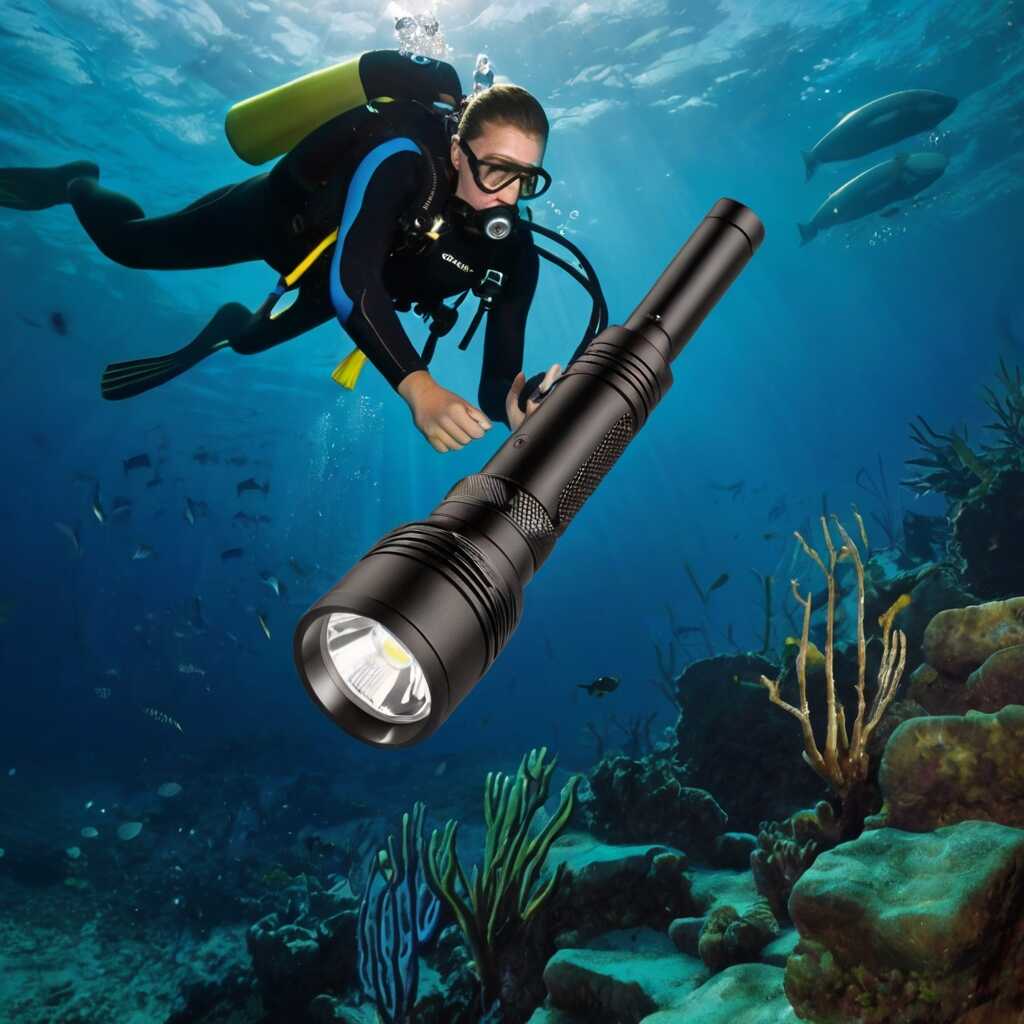
Selecting the right battery type for your dive torch
In my extensive experience with underwater exploration, selecting the right battery type for your dive torch is crucial for ensuring a reliable and long-lasting light source. High-quality lithium-ion batteries are often preferred for their excellent rechargeability and energy density, offering divers consistent performance under various conditions. Dive torches equipped with lithium-ion batteries not only provide increased efficiency but also support better environmental conservation through fewer battery replacements.
How Many Charges Can Rechargeable Batteries Withstand?
A high-quality lithium-ion battery can withstand up to 1000 complete charge cycles before showing significant efficiency loss. Standard NiMH batteries, on the other hand, can handle approximately 500 charges before their efficiency begins to decline. Lithium-polymer batteries’ capacity significantly reduces after around 800 charges, making them less ideal for dive torches that require consistent, reliable power.
The role of water resistance in scuba diving flashlights
Water resistance plays a pivotal role in the performance and durability of scuba diving flashlights. An IPX8 rating ensures that a dive light can operate at significant depths, often exceeding 60 meters, without water ingress—providing peace of mind to divers in deep waters. Understanding the water resistance features of dive torches helps enthusiasts make informed decisions, ensuring their equipment can withstand the pressures of underwater exploration and deliver excellent illumination.
Max Depth Before Leakage in Dive Lights
An IPX8 rated dive light is guaranteed to function optimally up to 100 meters underwater, according to international testing standards in 2023. Most commercial dive lights are safe for use up to 60 meters, catering to a wide range of diving activities. Standard O-ring seals, crucial for preventing water entry, start to fail in dive torches at depths beyond 70 meters, highlighting the importance of investing in high-quality seals for deep-sea exploration.