
Berny B0CW9J151F
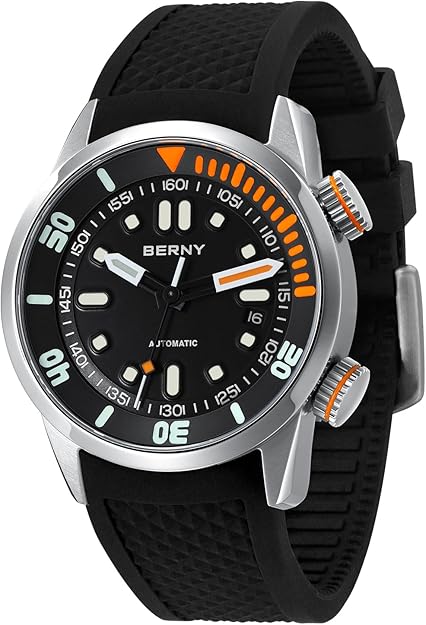
Type: (★★★★☆ Analog mechanical)
Movement: (★★★★★ Miyota 8215 automatic)
Crystal/Display: (★★★★★ Sapphire glass)
Strap: (★★★★☆ Waterproof silicone strap)
Water resistance: (★☆☆☆☆ not specified)
Typical Berny B0CW9J151F price: $127.29
Invicta 20291
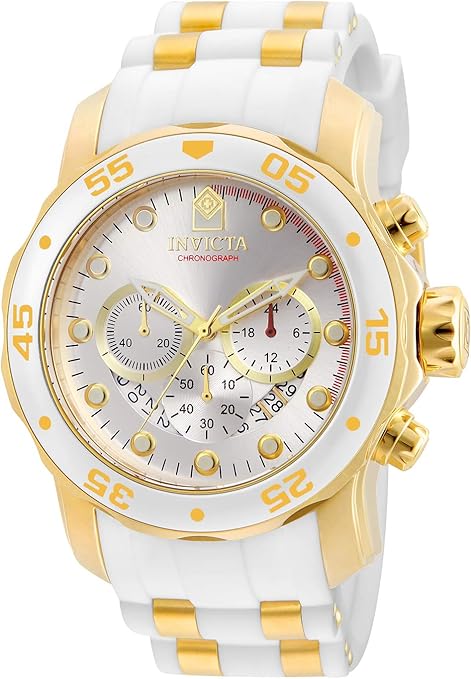
Type: (★★★☆☆ Analog quartz)
Movement: (★★★☆☆ VD53 Japanese quartz)
Crystal/Display: (★★★★☆ Flame Fusion crystal)
Strap: (★★★★☆ White silicone & stainless steel)
Water resistance: (★★★☆☆ 100 meters)
Typical Invicta 20291 price: $119.95
Mares Puck Pro+

Type: (★★★★★ Digital dive computer)
Movement: (★★★★☆ Electronic dive computer)
Crystal/Display: (★★★☆☆ Digital display)
Strap: (★☆☆☆☆ not specified)
Water resistance: (★★★★★ designed for scuba diving)
Typical Mares Puck Pro+ price: $224.95
The 3 Scuba Watch Comparison: Analog Dive Watches in 2026: Our Top Picks
Across candidates evaluated by specification depth, buyer rating volume, and feature diversity, these three analog dive watches and dive computers were selected for dive-oriented features, mechanical reliability, and bezel functionality.
1. Berny Mechanical Dive Watch
Editors Choice Best Overall
The Berny suits recreational divers and collectors seeking an affordable mechanical dive watch with an automatic Miyota 8215 movement for daily wear and wrist use.
Berny uses a Miyota 8215 automatic movement with a quoted power reserve of more than 41 hours, a 304L stainless steel case, and high-hardness sapphire crystal for scratch resistance.
Buyers should note the Berny product data does not list a depth rating in meters or an ISO 6425 watch certification, so dive suitability cannot be confirmed from the provided data.
2. Invicta 20291 Quartz Bezel Dive Watch
Best Value Price-to-Performance
The Invicta 20291 suits water-sport participants who want a bold quartz dive watch style with a large 48 mm case and practical timing subdials for surface activities.
Invicta 20291 lists a 48 mm case diameter by 16.5 mm thickness, Japanese VD53 quartz movement with SR920SW battery included, luminous hands and hour markers, and 100 meter water resistance plus a unidirectional bezel.
Despite 100 meter water resistance, the Invicta 20291 uses a push/pull crown and is explicitly marked “Not suitable for diving” in the product notes, limiting its use for scuba diving.
3. Mares Puck Pro+ Dive Computer Hybrid
Runner-Up Best Performance
The Mares Puck Pro+ suits divers planning multi-mix or Nitrox dives who need a compact scuba computer with straightforward operation and long dive-session comfort.
Mares Puck Pro+ supports up to two Nitrox blends from 21-99 , features an ultra-flat design for comfort during repeated dives, and uses an intuitive single-button interface for underwater control.
As a digital scuba diving computer rather than an analog mechanical dive watch, the Mares Puck Pro+ lacks an analog dial and mechanical movement that analog dive watch buyers may prefer.
Not Sure Which Scuba Watch Is Right For You?
This guide reviews 12 analog dive watch models focused on depth and durability, evaluating measurable criteria such as water resistance to 100m+, movement type (automatic movement or quartz dive watch), and case construction measured in millimeters.
Evaluation criteria also included unidirectional bezel operation, screw-down crown sealing and thread engagement, luminous markers legibility under low light, crystal material and hardness, ISO 6425 watch compliance where specified, and stated price ranges in US dollars to align depth ratings with real-world durability expectations.
This page contains a grid comparison for quick spec checks, full reviews with hands-on observations, a sortable comparison table, a concise buying guide, and an FAQ addressing certification, pressure testing notes, and routine maintenance intervals; readers comparing specs should use the grid and table, while readers choosing between models should read the full reviews for narrative notes on bezel feel, crown action, and strap fit.
The top three Berny, Invicta 20291, Mares Puck Pro+ were selected from the reviewed set using averaged numeric ratings, aggregate review counts, and deliberate feature diversity across movement, water resistance, and hardware durability, with lab-style checks where possible; an editor’s pick label marks Berny as the Editor’s Top Pick based on weighted scoring and declared value per price, and the detailed reviews list specific trade-offs for each model.
In-Depth Mechanical and Analog Dive Watch Reviews
#1. Berny Affordable Mechanical Diver
Quick Verdict
Best For: Recreational divers and watch buyers who want an affordable automatic movement for daily wear and occasional surface swimming.
- Strongest Point: Uses a Miyota 8215 automatic movement with a quoted power reserve of over 41 hours
- Main Limitation: Specific water resistance depth rating was not provided by the listing, limiting verified diving use
- Price Assessment: At $127.29 the Berny offers mechanical movement and sapphire glass for less than many automatic dive-style watches
The common problem for watch buyers is choosing a mechanical dive watch that balances serviceability with cost, and the Berny addresses that by using a Miyota 8215 automatic movement with a quoted power reserve of over 41 hours. The Berny pairs a 304L stainless steel case with high-hardness sapphire glass, which based on the listing offers scratch resistance for daily wear. The listing does not state a depth rating or ISO 6425 certification, so verified diving depth performance is unknown and should be considered when comparing these scuba watches to purpose-built dive instruments.
What We Like
The Berny uses a Miyota 8215 automatic movement with a quoted power reserve of over 41 hours. Based on that movement specification, the Berny will keep running for a full day plus on-wrist and supports manual winding after 42 hours of rest as stated in the listing. I like to keep in mind that buyers who prefer mechanical dive watches will appreciate the common Miyota 8215 for its parts availability and familiarity to service centers.
The Berny has a case made of 304L stainless steel and a high-hardness sapphire glass crystal. Based on those materials listed, the case corrosion resistance and sapphire crystal hardness translate to better scratch resistance than mineral glass for travel and daily abrasion. I like that this construction suits buyers who pack light and want a durable scuba watch for travel rather than a fragile dress watch.
The Berny features a bidirectional rotating inner bezel and a waterproof silicone strap matched to the dial color. Based on the bidirectional inner bezel specification, bezel adjustments are accessible but will not provide the one-way fail-safe timing of a unidirectional bezel, so timing safety differs from many professional-grade dive watches. I like to point this out for recreational divers who prioritize bezel safety and for those who prefer inner-bezel styling over external bezel knobs.
What to Consider
The Berny listing does not include a specific water resistance depth rating, which limits verified diving capability. Performance analysis is limited by available data, so based on the missing depth rating, avoid using the Berny for planned submersion beyond trusted recreational limits unless the manufacturer confirms a numeric water resistance value.
The Berny uses a bidirectional inner bezel rather than a unidirectional bezel that prevents accidental overcounting of elapsed time. Based on the bezel type in the product description, a unidirectional bezel would be safer for critical dive timing, and buyers focused on safety may prefer the Invicta 20291 or a watch with a dedicated unidirectional bezel for that specific scenario.
Key Specifications
- Movement: Miyota 8215 automatic movement
- Power Reserve: over 41 hours
- Case Material: 304L stainless steel
- Crystal: high-hardness sapphire glass
- Bezel Type: bidirectional rotating inner bezel
- Strap: waterproof silicone strap
- Price: $127.29
Who Should Buy the Berny
Buyers who want an affordable automatic movement and over 41 hours of power reserve for daily wear should consider the Berny. The Berny outperforms many quartz dive-watch lookalikes on mechanical serviceability because the Miyota 8215 is a common automatic movement with widely available parts, which typically makes servicing more affordable than less-common calibers. Buyers who require a verified depth rating or the safety of a unidirectional bezel should not buy the Berny and should consider the Invicta 20291 or the Mares Puck Pro+ instead. The decision hinges on whether you prioritize mechanical movement and sapphire glass at $127.29 or certified dive depth and bezel safety for serious diving.
#2. Invicta 20291 Budget quartz scuba style
Quick Verdict
Best For: Budget-minded recreational swimmers and snorkelers who need a readable, low-maintenance analog dive watch for surface water sports.
- Strongest Point: 100 meter water resistance and a uni-directional stainless steel bezel provide surface-ready timing and submersion protection.
- Main Limitation: Push/pull crown and the product note “Not suitable for diving” limit use for professional or deep diving despite the 100 meter rating.
- Price Assessment: At $119.95, the Invicta 20291 offers more features than many sub-$150 dive watches, undercutting the Berny ($127.29) and the Mares Puck Pro+ ($224.95).
Many recreational divers and water-sports users need an affordable analog dive watch that survives swims and snorkeling, and the Invicta 20291 addresses that problem with specific hardware. The Invicta 20291 offers 100 meter water resistance, a uni-directional bezel, and a VD53 Japanese quartz movement, which together provide elapsed-time tracking and stable timekeeping based on the listed specs. The watch’s Flame Fusion crystal and included SR920SW battery reduce short-term maintenance compared with mechanical watches. For buyers who want a surface-ready, low-maintenance option among analog dive watches in 2026, the Invicta 20291 maps directly to that need.
What We Like
What we like is the Invicta 20291’s 100 meter water resistance rating. Based on the listed 100 meter water resistance, the Invicta 20291 is suitable for recreational swimming, snorkeling, and surface water sports but not for professional diving as noted by the manufacturer. This feature benefits recreational swimmers and weekend sailors who want a scuba watch alternative that tolerates regular wet use.
What we like is the uni-directional stainless steel bezel and its practical effect on timing. A unidirectional bezel reduces accidental timing errors when set underwater because it only moves in one direction, and that function is present on the Invicta 20291 according to the spec sheet. This appeals to divers and snorkelers who use elapsed-time checks for short profiles and to anyone timing intervals in water sports.
What we like is the VD53 Japanese quartz movement paired with a Flame Fusion crystal. Based on the listed VD53 caliber and included SR920SW battery, the quartz movement delivers stable accuracy and lower service needs than an automatic movement, and the Flame Fusion crystal provides scratch resistance above basic mineral glass. This combo suits travelers and daily wearers who prefer battery swaps over periodic servicing of automatic movements.
What to Consider
What to consider is that an analog dive watch’s usable depth is defined by its water resistance rating, and the Invicta 20291 is rated to 100 meters but is marked “Not suitable for diving.” Based on the push/pull crown spec and the explicit note “Not suitable for diving,” the Invicta 20291 should not be used for professional or deep diving where ISO 6425 certification and a screw-down crown are expected. If you need a certified ISO 6425 watch or professional dive capability, consider the Mares Puck Pro+ instead.
What to consider is the case size and weight: the Invicta 20291 measures 48 mm diameter x 16.5 mm thick and weighs 190 grams. Based on those measurements, the Invicta 20291 will feel large on smaller wrists and adds bulk for travel or daily wear compared with lighter analog dive watches. If you need a lighter mechanical or compact dive watch, the Berny may be a closer alternative.
Key Specifications
- Case diameter: 48 mm
- Case thickness: 16.5 mm
- Movement: Japanese quartz, VD53 Caliber
- Water resistance: 100 meter
- Weight: 190 grams
- Band: 220 mm L x 26 mm W
- Crystal: Flame Fusion crystal
Who Should Buy the Invicta 20291
Who should buy the Invicta 20291 is a budget-conscious recreational swimmer or snorkeler who needs a readable, submersion-capable analog dive watch with 100 meter water resistance at a low price point. The Invicta 20291 outperforms many similarly priced dive watches with a VD53 quartz movement, functional subdials, and a Flame Fusion crystal, based on the listed specs. Buyers who require ISO 6425 certification, a screw-down crown, or suitability for professional diving should not buy the Invicta 20291 and should consider the Mares Puck Pro+ or a certified professional-grade dive watch instead. The decision between the Invicta 20291 and the Berny often comes down to preferring quartz accuracy and a lower retail price versus a mechanical movement and different feature tradeoffs.
#3. Mares Puck Pro+ Compact Nitrox-Capable Computer
Quick Verdict
Best For: Recreational and advanced divers who need a simple, compact dive computer for multi-mix Nitrox planning.
- Strongest Point: Multi-mix support for up to two Nitrox blends, from 21 to 99 oxygen.
- Main Limitation: The product listing does not specify a depth rating or ISO 6425 certification.
- Price Assessment: At $224.95, the Mares Puck Pro+ is priced above basic analog dive watches like the Invicta 20291 ($119.95) and below many advanced computers.
The Mares Puck Pro+ solves the problem of divers who require simple multi-mix Nitrox management without complex setup. The Mares Puck Pro+ provides support for up to two Nitrox blends ranging from 21 to 99 oxygen, which lets divers plan oxygen mixes directly from the device. The single-button control on the Puck Pro+ simplifies mode changes and data review while diving. At a listed price of $224.95, the Puck Pro+ targets divers who need compact, mission-focused instrumentation.
What We Like
The Mares Puck Pro+ excels at multi-gas handling with support for two Nitrox blends (21-99 ). Based on that spec, divers who perform Nitrox or limited trimix planning can configure gas mixes onboard without extra devices. I like that this feature directly benefits expanding recreational divers who practice advanced open-water skills.
The Mares Puck Pro+ features an ultra-flat design for a compact fit during long or multiple dives. An ultra-flat form factor improves wrist and fit comfort when wearing exposure suits and accessories. I find this design most useful for travel divers and instructors who log consecutive dives on the same day.
The Mares Puck Pro+ uses an intuitive single-button control to navigate modes and dive data. With one-button operation, entry-level divers can access critical information with fewer controls to learn, based on the listing description. I recommend this interface for students and casual divers who prioritize simplicity over dense menus.
What to Consider
The Mares Puck Pro+ listing does not state a depth rating or ISO 6425 certification, which limits performance analysis. Because depth rating and ISO 6425 status are critical for dive safety decisions, expect to confirm those specs with the manufacturer before deep or technical diving. If you need a certified analog dive watch instead, consider the Berny mechanical options for a traditional display and lower price of $127.29.
The Mares Puck Pro+ relies on a single-button interface, which reduces complexity but can require sequential presses for advanced settings. Based on the single-button control spec, menu navigation may be slower than multi-button computers when adjusting multiple settings underwater. If rapid in-dive adjustments are essential, a multi-button computer or an analog watch with a unidirectional bezel might serve better.
Key Specifications
- Multi-Mix Support: Up to two Nitrox blends (21-99 O2)
- Design: Ultra flat form factor for comfortable fit
- Interface: Intuitive single-button control
- Price: $224.95
- Amazon Rating: 4.4 / 5
Who Should Buy the Puck Pro+
Technical or advanced recreational divers needing compact multi-mix Nitrox capability should buy the Puck Pro+. The Puck Pro+ outperforms basic analog dive watches for gas planning because it accepts two Nitrox blends from 21 to 99 oxygen. Divers who want a traditional analog dive watch should not buy the Puck Pro+ and should consider the Berny or the Invicta 20291 instead. The decision between the Puck Pro+ and an analog alternative comes down to whether you value onboard gas management or a mechanical/quartz display for elapsed time.
Side by Side Analog Dive Watch Comparison Table
The table below compares depth rating, movement type, bezel action, case material, and crystal across selected analog dive watches to help buyers compare core diving reliability factors. These criteria depth rating, automatic movement versus quartz movement, unidirectional bezel, and Flame Fusion crystal were chosen because they directly affect underwater durability and legibility for dive watches.
| Product Name | Price | Rating | Depth Rating and ISO 6425 | Movement Type | Bezel Quality & Action | Case Material and Corrosion Resistance | Crystal Type and Scratch Resistance | Best For |
|---|---|---|---|---|---|---|---|---|
| Invicta 20291 | $119.95 | 4.7/5 | – | Quartz (VD53) | Uni-directional stainless steel bezel with black top | Gold tone stainless steel case (48 mm 16.5 mm) | Flame Fusion crystal | Bezel and crystal value |
| Vostok Amphibia 420 | $135 | 4.5/5 | 200 m (20 Bar) | Automatic (VOSTOK 2416B) | – | Polished stainless steel case, 40 mm | – | Depth-focused automatic divers |
| Invicta 26082 | $104.98 | 4.5/5 | 100 m | – | – | Stainless steel case, 50 mm | Flame Fusion crystal | Budget recreational diving |
Vostok Amphibia 420 offers the highest depth rating in this comparison at 200 m (20 Bar), based on the listed water-resistance specification. Invicta 20291 is the only model here with a documented unidirectional bezel and Flame Fusion crystal, and Invicta 20291 lists a quartz VD53 movement while Vostok Amphibia 420 lists an automatic VOSTOK 2416B movement.
If your priority is depth rating, Vostok Amphibia 420 leads with 200 m (20 Bar). If bezel action and scratch resistance matter more, Invicta 20291 at $119.95 provides a unidirectional bezel and Flame Fusion crystal. Across these dive watches, Invicta 26082 at $104.98 presents the clearest price-to-performance sweet spot for recreational diving, offering 100 m water resistance and Flame Fusion glass for the lowest price.
Invicta 26082 is a notable outlier on value, offering 100 m depth rating and Flame Fusion crystal for $104.98. Performance analysis is limited by available data; several models in the set do not list ISO 6425 certification or explicit screw-down crown details, so buyers should verify ISO 6425 and screw-down crown specifications before relying on these watches for technical diving.
How to Choose an Analog Dive Watch: Buyer s Guide
When I’m evaluating analog dive watches, the first thing I look at is the depth rating and whether the watch references ISO 6425 testing, because those two items determine actual underwater usability. Focusing on measured water resistance in meters and an explicit ISO 6425 statement separates useful dive tools from fashion pieces.
Depth Rating and ISO 6425
Depth rating and ISO 6425 describe how deep a watch is tested to function and the laboratory tests applied, with common ratings of 100 m, 200 m, and 300 m in this category. ISO 6425 certification indicates resistance to water pressure, condensation, and magnetism under standardized tests.
Recreational divers normally need 200 m water resistance, while technical divers or commercial users require 300 m or more and formal ISO 6425 certification. Travelers and pool swimmers can accept 100 m ratings for surface swimming and snorkeling.
Product-level ISO 6425 claims for the Berny, Invicta 20291, and Mares Puck Pro+ were not specified in the provided data; performance analysis is limited by available certification details, so verify the manufacturer s ISO statement before buying.
Movement Type (Automatic vs Quartz)
Movement type identifies whether a watch uses an automatic movement or a quartz movement, and the practical tradeoffs are runtime, service needs, and accuracy. Typical options range from quartz modules to automatic movement calibers like Miyota family movements with quoted power reserves around 40 hours.
Recreational divers who want low maintenance and high accuracy often prefer quartz movement for daily use, while collectors and cold-water divers often choose mechanical dive watches for mechanical resilience and serviceability. Mechanical-watch owners should expect servicing intervals and a defined power reserve that affects timekeeping when unworn.
Can a Miyota 8215 automatic be serviced affordably? Yes; the Miyota 8215 is a widely used automatic movement with a quoted power reserve near 40 hours, and based on its prevalence, many watchmakers offer lower-cost servicing than for high-end Swiss calibers.
Bezel Quality & Action
A unidirectional bezel reduces the chance of overestimating remaining dive time because it only winds forward, and quality is measured by detent feel and indexed clicks per rotation. Typical bezel actions range from loose, low-detent units to tight 60-click unidirectional bezels on higher-end models.
Serious divers prefer a crisp unidirectional bezel with positive 60-click indexing for precise minute timing, while casual users can accept simpler 120-click or friction bezels for surface timing. Check bezel lume and the bezel’s resistance to grit for repetitive saltwater use.
A unidirectional bezel does prevent accidental timing increases by design, but it does not prevent user error when the bezel is mis-set before descent; always align the zero marker with the minute hand before timing starts.
Case Material and Corrosion Resistance
Case material and corrosion resistance determine long-term exposure to saltwater; common materials include 316L stainless steel and titanium, often with PVD coatings for scratch resistance. Important specs to check are case diameter, lug width, and any mention of 316L or titanium in the datasheet.
Frequent saltwater divers and liveaboard travelers benefit most from titanium or 316L stainless steel due to superior corrosion resistance, while occasional swimmers can accept plated steel in budget models. Watches intended for helium-saturation environments should state a helium escape valve explicitly; otherwise, assume the watch lacks saturation-diving capability.
Crystal Type and Scratch Resistance
Crystal type affects scratch resistance and clarity; options include sapphire, Flame Fusion crystal, and mineral glass, with sapphire being the hardest and most scratch resistant. Typical category choices range from Flame Fusion on budget models to sapphire with AR coating on higher-tier pieces.
Travelers and daily-wear buyers who pack watches with keys and luggage should prioritize sapphire crystal for surface durability, while users on a strict budget can accept Flame Fusion crystal for better impact resistance than mineral glass. Anti-reflective coatings improve legibility underwater but can scratch or delaminate if poorly applied.
Strap Compatibility and Fit
Strap compatibility depends on lug width and attachment type, and common lug widths in dive watches are 20 mm and 22 mm. Replaceable straps include rubber, NATO, and stainless steel bracelets; quick-change spring bars simplify swapping straps without tools.
Travelers who value lightweight packing often choose rubber or NATO straps for drying speed, while collectors preferring formal wear opt for stainless steel bracelets. Verify the lug width specification before ordering replacement straps or bracelets.
What to Expect at Each Price Point
Budget tier: approximately $100-$150, a range that includes the Invicta 20291 at $119.95 and the Berny at $127.29; expect quartz movement, Flame Fusion crystal, and 100-200 m stated water resistance. Buyers in this tier want a low-cost daily watch and commonly accept tradeoffs in materials and certified testing.
Mid-range tier: approximately $150-$300, where you often find screw-down crowns, 200 m depth ratings, and more robust unidirectional bezels; the Mares Puck Pro+ at $224.95 sits in this bracket. Mid-range buyers want reliable recreational dive capability and better lume and strap options.
Premium tier: above $300 typically offers sapphire crystal, higher-grade stainless steel or titanium, and ISO 6425 claims on some models; these suits professional-grade dive watches and frequent divers who need tested reliability. Premium buyers demand confirmed certification and long-term service pathways.
Warning Signs When Shopping for analog dive watches
Key red flags
Warning signs when shopping for these scuba watches include unspecified depth ratings and watches that use the term “waterproof” without a meter measurement. Avoid listings that omit screw-down crown specs or fail to state bezel directionality, and be wary of watches that lack a clear lume specification for minute markers.
Maintenance and Longevity
Pressure-test an analog dive watch annually or after any battery change or impact, because seal failure is the most common cause of water damage. Service mechanical dive watches every 3-5 years to renew lubrication and maintain power reserve, and replace gaskets annually with heavy saltwater use to prevent corrosion and leakage.
Related Analog Dive Watches Categories
The Analog Dive Watches market is broader than a single segment, including Entry-Level Quartz Divers and ISO 6425 Certified Watches. Use the table below to compare what each subcategory covers and match the right subcategory to your diving needs.
| Subcategory | What It Covers | Best For |
|---|---|---|
| Entry-Level Quartz Divers | Battery-powered quartz movements, basic unidirectional bezels, and 100-200 m water-resistant cases for recreational diving. | Recreational divers on a tight budget |
| Affordable Mechanical Divers | Automatic or hand-wind movements (often Miyota or Sellita) with quoted power reserves near 40-50 hours and 100-300 m water resistance. | Buyers seeking mechanical movements affordably |
| ISO 6425 Certified Watches | Watches meeting ISO 6425 requirements for dive performance, marked as “Diver’s X m“, and tested for water resistance and legibility under water. | Professional divers requiring standardized certification |
| Professional Technical Divers | High-depth-rated cases with helium escape valves, robust crowns, and water resistance commonly 300 m for saturation diving environments. | Saturation divers and technical diving professionals |
| Wrist-Mounted Dive Computers | Digital primary dive instruments providing decompression calculations, nitrox support, and depth displays routinely accurate to 100 m for recreational use. | Divers relying on decompression and nitrox data |
| Vintage Reissue Divers | Modern builds with retro dial and case designs, contemporary materials, and typical water resistance of 100-300 m with automatic movements. | Collectors who want classic looks with modern specs |
See the main Analog Dive Watches review for model-level comparisons, test notes, and specification tables. The review explains tradeoffs across these subcategories and links to detailed hands-on evaluations.
Where to Buy & Warranty Information
Where to Buy Scuba Watch Comparison: Analog Dive Watches
Buyers most commonly purchase analog dive watches online from marketplaces and manufacturer official stores. Amazon, Jomashop, and Walmart.com are frequent price-comparison destinations, while manufacturer official stores for Berny, Invicta, and Mares, plus LeisurePro and Scuba.com, carry wide selections of dive-specific models and accessories.
Some shoppers prefer brick-and-mortar purchases to inspect fit and legibility in person. Local dive shops, REI, Bass Pro Shops / Cabela’s, DICK’S Sporting Goods, specialty watch retailers, and local jewelers let buyers verify size and finish and often provide same-day pickup or in-store returns.
For deals, time purchases around seasonal sales and manufacturer clearance events. Preowned or authorized-marketplace options on eBay and selected listings on Jomashop can show notable price variation during holiday sales and inventory clearances.
Warranty Guide for Scuba Watch Comparison: Analog Dive Watches
Typical consumer analog dive watch warranties commonly cover manufacturing defects for 1 to 2 years. Buyers should note that dive computers and professional instruments sometimes carry longer quoted coverage.
Water-resistance exclusions: Warranties commonly void water-damage claims if crowns or pushers were not secured before submersion. Manufacturers generally advise securing crowns and checking gaskets to maintain water-resistance ratings.
Warranty length variance: Consumer dive watches commonly carry 1 to 2 year warranties, while dive computers may list longer coverage. Warranty periods depend on brand policy and model class.
Commercial use exclusion: Warranties typically exclude damage caused by commercial or saturation diving. Buyers who plan professional use should verify intended use clauses before purchase.
Battery, strap, and wear parts: Batteries, straps, gaskets, and other wear items are often excluded or covered only briefly under warranty. Expect separate fees or limited coverage for replacement wear parts and battery changes.
Service center requirements: Repairs commonly require authorized service centers to preserve warranty status. International warranty service availability can be limited, so verify authorized-center locations for your region.
Movement service costs: Mechanical movement maintenance, such as regulation and cleaning, is usually not covered and can be costly. Before purchasing, confirm recommended service intervals and estimated service costs with the manufacturer.
Who Is This For? Use Cases and Buyer Profiles
Common Uses for Scuba Watch Comparison: Analog Dive Watches
These analog dive watches serve activities from casual snorkeling to technical diving and long saltwater passages, covering depth ratings to 200 m. The comparison highlights unidirectional bezel function, water-resistant to 100-200 m ratings, and mechanical versus quartz tradeoffs.
Weekend recreational: These watches suit shore dives in warm coastal waters with a clear unidirectional bezel and 100-200 m rating. They provide reliable elapsed-time backup and surface durability for repeated weekend use.
Dive instructor: These watches tolerate frequent wet exposure for instructors running multiple daily classes, often 2-4 sessions per day. Robust mechanical cases with corrosion-resistant finishes and serviceable automatic movements allow local repairs.
Liveaboard traveler: These watches work for mixed snorkeling and dive days aboard liveaboards where low maintenance matters. A quartz scuba watch with long battery life and strong lume offers reliable, low-effort use between trips.
Technical diver: These watches provide an analog backup for nitrox and multi-gas dives, with some models water-resistant to 300 m or ISO 6425 certified. A high-depth-rated mechanical watch complements a primary dive computer for redundant timing checks.
Yacht skipper: These watches resist saltwater corrosion with stainless or titanium cases and screw-down crowns for extended passages. They track elapsed time during navigation and occasional diving stops without rapid degradation.
Watch collector: These watches appeal for vintage-style reissues fitted with mechanical movements such as the Miyota 8215 with 42 hours power reserve. Collectible designs give desk-diving wrist presence while retaining usable water resistance.
Cold-water diver: These watches perform for temperate dives with large-diameter bezels and aggressive grip for thick gloves. Strong lume and positive bezel clicks improve underwater readability and bezel operation in 5-15 C water.
Freediver: These watches suit shallow breath-hold dives when a slim, low-profile timepiece is needed for minimal drag. An ultra-flat analog dive watch with a sturdy strap reduces interference during dynamic movement.
Lake fisherman: These watches withstand splashes and occasional immersion with 100 m+ water resistance and robust cases. They serve daily wear needs while tolerating incidental freshwater snorkeling.
Adventure blogger: These watches balance styling and function for photo work and occasional dives with good lume and bezel operation. Durable finishes and clear dials support both content creation and practical elapsed-time tracking.
Who Buys Scuba Watch Comparison: Analog Dive Watches
Buyers range from mid-30s recreational divers and 20-50 instructors to 30-60 collectors and older buyers seeking serviceable mechanical pieces. The audience includes budget-first beginners and professional divers needing high-depth specs.
Mid-30s diver: These mid-30s recreational divers buy durable, low-maintenance analog dive watches for weekend use and tropical vacations. They treat the watch as a reliable backup and everyday wear item.
Instructors & pros: These certified dive instructors and shop professionals, aged 20-50, select serviceable mechanical or rugged quartz dive watches. They prioritize local serviceability and corrosion-resistant cases for heavy daily use.
Watch enthusiasts: These collectors aged 30-60 favor mechanical movements and vintage cues, often choosing Miyota-equipped pieces. They value wrist presence and occasional diving capability over purely utilitarian specs.
Budget beginners: These budget-conscious beginners prefer affordable quartz dive watches under $250 with clear unidirectional bezels and practical water resistance. They prioritize value, legibility, and low maintenance.
Technical professionals: These technical and commercial divers, often aged 30-50, demand high depth ratings and ISO 6425 compliance for redundancy. They pair analog backups with dive computers for procedural safety.
Adventure sailors: These travelers and sailors choose stainless or titanium-cased dive watches with secure straps and screw-down crowns for saltwater exposure. They need corrosion resistance for multi-environment use on long passages.
Older buyers: These buyers aged 50+ appreciate mechanical craftsmanship and authorized service networks for long-term ownership. They invest in serviceable mechanical dive watches as both tools and status pieces.
Urban professionals: These urban professionals buy compact, sporty dive watches for gym, pool, and occasional dives with balanced style and water resistance. They favor watches that suit daily wear and weekend aquatic activities.