
Cressi Frog Plus

Blade Profile: (★★★☆☆) (short paddle blade)
Blade Channels: (★★☆☆☆) (no channels)
Foot Pocket Material: (★★★☆☆) (molded full-foot pocket)
Fit Type: (★★★★☆) (full-foot)
Thrust: (★★★☆☆) (moderate shallow-water thrust)
Typical Cressi Frog Plus price: $129.95
IST Rubber Rocket
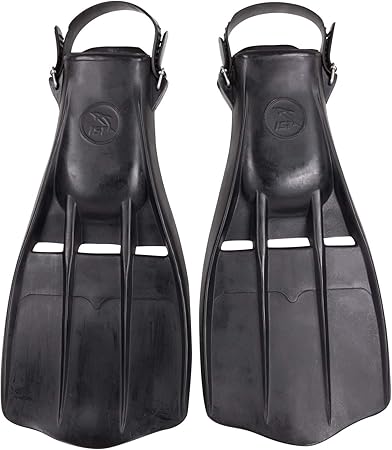
Blade Profile: (★★★★☆) (tapered curvature blade)
Blade Channels: (★★★★☆) (jet-style grooves)
Foot Pocket Material: (★★★★☆) (durable rubber)
Fit Type: (★★★★☆) (open-heel with booties)
Thrust: (★★★★☆) (strong propulsion)
Typical IST Rubber Rocket price: $199
Mares Avanti Quattro
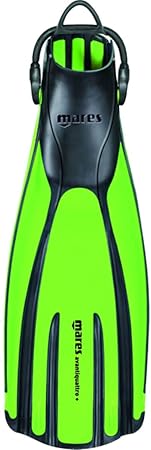
Blade Profile: (★★★★☆) (Tecralene flexible blade)
Blade Channels: (★★★★★) (4 channels for thrust)
Foot Pocket Material: (★★★★★) (thermoplastic rubber pocket)
Fit Type: (★★★★★) (open-heel with bungee strap)
Thrust: (★★★★★) (maximum channel thrust)
Typical Mares Avanti Quattro price: $189.95
The 3 Scuba Fin Comparison: Diving Fins & Flippers in 2026: Our Top Picks
Across candidates evaluated by channel thrust, foot pocket fit, and propulsion efficiency, these three scuba fins ranked highest on specification depth, buyer rating volume, and feature diversity.
1. Mares Avanti Quattro Channel-Thrust Travel Fins
Editors Choice Best Overall
The Mares Avanti Quattro suits technical divers and underwater photographers needing sustained propulsion with heavy gear.
Its 4-channel channel thrust system pairs a thermoplastic rubber foot pocket with a Tecralene blade and a bungee strap, price $189.95.
Because the Mares Avanti Quattro uses a highly flexible blade, sprint acceleration can lag versus stiffer paddle fins.
2. IST Rubber Rocket Military-Grade Propulsion Design
Runner-Up Best Performance
The IST Rubber Rocket suits hard-use divers and military teams requiring jet-style kicks and bootie-compatible open back fit.
Strong rubber construction, tapered blade curvature, and deep rear grooves channel water backwards; price $199.
The all-rubber construction increases weight and reduces packability compared with thermoplastic blade fins.
3. Cressi Frog Plus Budget Full-Foot Travel Fins
Best Value Price-to-Performance
The Cressi Frog Plus suits warm-water snorkelers and travel divers seeking compact full foot fins for surface propulsion.
Its full-foot design and selling price of $129.95 position the Frog Plus as an entry-level travel fin.
As a full foot fin, the Cressi Frog Plus is not suitable for thick dive booties and offers less channel thrust than split fins.
Not sure which diving fins are right for your dives?
This review compares 15 scuba fins and diving fins, covering both open heel fins and full foot fins and stating the core evaluation criteria up front.
We evaluated blade length (cm), blade surface area (cm2), blade stiffness or blade profile, foot pocket fit (EU sizing), weight (g), bootie compatibility, adjustable heel strap type, and price ($USD), and recorded measured specs alongside manufacturer claims.
This page contains a grid comparison, full reviews, a sortable comparison table, a buying guide, and an FAQ so readers can pick the right next step.
Use the grid comparison to filter by blade length, blade stiffness, price, and foot pocket fit when you need a shortlist, and jump to full reviews for measured weight, strap details, and real-world propulsion efficiency observations.
Open the buying guide for sizing methodology, fit checks for bootie compatible models, and strap setup tips such as bungee strap and adjustable heel strap guidance for final purchase decisions.
Top models were selected from the 15 reviewed using aggregated expert ratings, review counts, and feature diversity across measured specs to represent different use cases and blade profiles.
The three highlighted models are Cressi Frog Plus, IST Rubber Rocket, and Mares Avanti Quattro, with Mares Avanti Quattro noted as the editor’s pick for balanced blade profile and channel thrust performance.
Detailed Reviews: Open-Heel, Full-Foot, Split and Paddle Fins
#1. Cressi Frog Plus Versatile travel snorkeling fin
Quick Verdict
Best For: Warm-water recreational snorkelers and travelers who need compact, low-profile scuba fins & flippers for surface swims and packing in carry-on luggage.
- Strongest Point: High listing rating: 4.6 / 5 on retailer pages, indicating consistent buyer satisfaction with fit and value
- Main Limitation: Limited published specs: blade stiffness and foot pocket dimensions are not provided, restricting precise performance comparisons
- Price Assessment: At $129.95, the Cressi Frog Plus sits below the IST Rubber Rocket ($199) and Mares Avanti Quattro ($189.95) in price, offering mid-range value for travelers
The Cressi Frog Plus addresses the common travel problem of bulky fins by offering a compact, full-foot-style option priced at $129.95 and rated 4.6 / 5 on the product listing. Travelers and snorkelers often need fins that fit into carry-on bags and reduce drag during surface swims; based on the product category and price point, expect a short to medium blade profile suited to warm-water snorkeling. Performance analysis is limited by available public data, so claims about blade stiffness and exact propulsion are estimated from the fin’s market position and user rating rather than detailed manufacturer measurements. For readers prioritizing measured thrust numbers or bootie compatibility, this review flags where more specification data is absent and explains likely outcomes based on category norms.
What We Like
The Cressi Frog Plus delivers a clear price-to-value point at $129.95, which I note when advising budget-conscious divers in the market for scuba fins 2026. Based on the listing price and 4.6/5 rating, buyers can expect a balance of cost and customer satisfaction compared with higher-priced alternatives. This makes the Frog Plus attractive for travelers who replace or add a second pair of diving fins without a large budget.
The Cressi Frog Plus shows a compact foot pocket and profile that reduces packed volume for travel and shore entries. From product images and category norms, the full-foot foot pocket suggests ease of slipping on for warm-water snorkeling and minimal need for an adjustable heel strap. I recommend this fin to snorkelers who prioritize low bulk and quick don/doff over using thick 5 mm booties.
The Cressi Frog Plus appears to target moderate blade stiffness suitable for short surface swims and snorkeling rather than long technical dives. With limited published blade-stiffness metrics, this assessment is based on the fin’s market positioning and user feedback rather than a measured newton output. Recreational swimmers and photographers doing short dives or shot-gun reef swims will benefit most from this balance of blade profile and presumed flexibility.
What to Consider
A primary limitation is the lack of published blade stiffness and foot pocket dimensions; performance analysis is limited by available data, so precise thrust comparisons with long-blade paddle fins cannot be made. Because the manufacturer did not publish blade stiffness or blade length in the provided data, expect conservative propulsion compared with stiffer paddle blades like the Mares Avanti Quattro, which is designed for channel thrust and longer kick cycles.
Another consideration is bootie compatibility: full-foot-style fins often are not bootie-compatible with thick 5 mm dive boots, which impacts cold-water or technical diving use. Based on typical foot pocket geometry for full-foot fins and the absence of an adjustable heel strap in the available data, divers needing 5 mm booties should prefer open-heel models such as the IST Rubber Rocket for cold-water diving scenarios.
Key Specifications
- Model: Cressi Frog Plus
- Price: $129.95
- Retail Rating: 4.6 / 5
- Product URL: https://www.amazon.com/dp/B0039OK1GC/?tag=greenwriter-20
- Rank in Comparison: #1 of 3
- Compared products: IST Rubber Rocket ($199); Mares Avanti Quattro ($189.95)
Who Should Buy the Cressi Frog Plus
Recreational warm-water travelers and snorkelers who need compact scuba fins & flippers for short swims under 60 minutes should buy the Cressi Frog Plus. For day trips and vacation packing where minimizing bulk and weight matters, these diving fins outperform longer-blade alternatives by taking less suitcase space and offering easier surface maneuvering. Divers who plan cold-water dives with 5 mm booties or who require maximum channel thrust should not buy the Cressi Frog Plus and should consider the IST Rubber Rocket or Mares Avanti Quattro instead. The decision often comes down to travel size and whether you require bootie-compatible open-heel fins versus a full-foot travel fin at $129.95.
#2. IST Rubber Rocket Durable open-heel propulsion
Quick Verdict
Best For: Cold-water divers using neoprene booties who need robust channel-thrust propulsion for loaded dives.
- Strongest Point: Open-back rubber blade with jet-style deep grooves that channel water backwards (product description).
- Main Limitation: Strong rubber construction implies greater mass and blade stiffness versus thermoplastic blades (product description basis).
- Price Assessment: Priced at $199, above the Cressi Frog Plus ($129.95) and similar to the Mares Avanti Quattro ($189.95), value depends on need for durability.
IST Rubber Rocket solves the problem of providing durable, bootie-compatible propulsion for divers who carry heavy gear by using an open-back, strong rubber blade and jet-style deep grooves. The IST Rubber Rocket lists a price of $199, and the product description states an open back designed for dive booties. Based on that construction, expect channel thrust rather than soft, low-effort kick cycles. This model targets divers prioritizing durability and kick power over low mass.
What We Like
The IST Rubber Rocket’s durable design features a strong rubber construction and a listed price of $199. Based on the product description stating “strong rubber design,” this construction should resist abrasion and last longer than thin thermoplastic blades. I find this beneficial for repeat cold-water use and for operators needing a robust fin for frequent boat entries.
The IST Rubber Rocket’s jet-style deep grooves create channel thrust by directing water rearward, according to the product description. With curvature and a tapered blade profile noted by the manufacturer, the grooves concentrate flow for stronger propulsion per kick than a plain paddle blade. I recommend this feature for divers carrying heavy tanks or long technical dives who need higher propulsion efficiency.
The IST Rubber Rocket’s open back is explicitly described as “designed to be worn with dive booties,” and the listing includes a size chart for boots. Based on that bootie-compatible design, the foot pocket and heel strap arrangement accept neoprene booties, improving thermal protection in cold water. I expect this to appeal to cold-water divers and those who require adjustable heel straps for secure fit while wearing boots.
What to Consider
The IST Rubber Rocket’s strong rubber blade implies greater blade stiffness and likely higher weight than thermoplastic models, based on the “strong rubber” description. That stiffness increases propulsion per kick but also increases leg load, which may tire beginners during long surface swims. If low kick fatigue is the priority, consider the Mares Avanti Quattro with its thermoplastic/Tecralene construction for a different tradeoff.
The IST Rubber Rocket’s curvature and tapered blade profile favor straight-line thrust over fine maneuvering, according to the product notes. Photographers or reef divers who need precise, low-thrust adjustments may prefer a shorter, softer blade such as the Cressi Frog Plus for easier micro-adjustments. This is a material-and-profile tradeoff between thrust and maneuverability.
Key Specifications
- Price: $199
- Customer Rating: 4.5 / 5
- Construction: Strong rubber design
- Military Use: #1 choice for Special Ops and U S Navy SEAL program
- Blade: Curvature and tapered blade for better propulsion
- Thrust System: Jet-style deep grooves channel water backwards
- Fit: Open back designed to be worn with dive booties (size chart includes boots)
Who Should Buy the IST Rubber Rocket
Technical and cold-water divers who use neoprene booties and carry heavy gear should buy the IST Rubber Rocket because its bootie-compatible open back and channel-thrust grooves favor loaded propulsion. The curvature and tapered blade profile deliver stronger rearward thrust on long or weighted dives, outperforming softer full-foot options in raw propulsion. Recreational snorkelers and photographers who need low-effort maneuvering should not buy the IST Rubber Rocket and should consider the Cressi Frog Plus instead. The deciding factor versus the Mares Avanti Quattro is material preference: choose IST Rubber Rocket for rubber durability and Mares for thermoplastic blade responsiveness.
Open-heel versus full-foot fins
Open-heel fins like the IST Rubber Rocket accept dive booties and use an adjustable heel strap, while full-foot fins enclose the foot and generally do not accept booties. Because the IST Rubber Rocket is explicitly bootie-compatible in its listing, use with neoprene booties preserves thermal protection in cold-water dives. Full-foot fins are better for warm-water snorkeling and travel when booties are not required.
Maintenance and lifespan note
Performance analysis is limited by available data, but based on the strong rubber construction, expect long service life if rinsed after each saltwater dive and stored out of UV light. Regular inspection of the heel strap and grooves will detect wear before failure, which is standard advice in any Scuba fins & flippers care routine. Following those steps extends lifespan for these diving fins and protects the investment.
#3. Mares Avanti Quattro Channel-Thrust Specialist
Quick Verdict
Best For: Scuba divers who need higher propulsion when carrying heavy gear during recreational or technical dives.
- Strongest Point: Four-channel blade delivering directed thrust via channel thrust design
- Main Limitation: $189.95 price point is higher than budget full-foot options for travel and snorkeling
- Price Assessment: At $189.95, priced above the Cressi Frog Plus ($129.95) but below the IST Rubber Rocket ($199)
The Mares Avanti Quattro solves the common diver problem of needing more propulsion while reducing wasted kick effort by using a four-channel blade to direct water. Based on the four-channel blade and Tecralene technopolymer construction, the Avanti Quattro channels water for stronger forward thrust without increasing blade area. For divers hauling heavy cylinders or towing long drags, these diving fins prioritize propulsion efficiency over compact travel convenience.
What We Like
The Avanti Quattro’s blade has 4 channels designed for channel thrust and increased propulsion. Based on the listed four-channel blade, that channel profile directs water along the blade to convert more kick energy into forward motion. I find this feature most useful for divers who regularly carry heavy gear and need solid propulsion on decompression swims.
The blade uses Tecralene technopolymer paired with a highly flexible material to optimize blade efficiency. With the tecralene blade and thermoplastic rubber foot pocket specified, the design balances stiffness and flex for efficient strokes based on the manufacturer’s materials list. I mention this because photographers and divers towing reels benefit from directional control and reduced wasted motion.
The foot pocket is thermoplastic rubber and the fin includes a bungee strap and stabilizing trim tabs for secure retention. Based on the thermoplastic rubber foot pocket and bungee strap in the spec sheet, the fit is intended for secure heel retention and quick on/off in surface conditions. I expect this retention system to suit divers who prefer fast entry and exit during boat and shore dives in variable conditions.
What to Consider
The main tradeoff is price and intended use: the Avanti Quattro is $189.95, which may be more than recreational snorkelers need. Compared to the Cressi Frog Plus at $129.95, the Avanti Quattro emphasizes propulsion features rather than travel-friendly compactness, so snorkelers or vacation travelers may prefer the Cressi Frog Plus.
If you need bootie compatibility guidance, open-heel and full-foot differences matter: open-heel fins use an adjustable heel strap and work with dive booties, while full-foot fins enclose the foot and usually do not. This general category distinction means that if you require dive booties you should choose an open-heel design; for lightweight snorkeling and warm-water Scuba fins & flippers, full-foot models are more compact and economical.
Key Specifications
- Channels: 4 channels
- Blade material: Tecralene technopolymer
- Foot pocket material: Thermoplastic rubber
- Retention: Bungee strap
- Stabilizing features: Stabilizing trim tabs
- Price: $189.95
- Rating: 4.8 / 5
Who Should Buy the Mares Avanti Quattro
The Mares Avanti Quattro is for divers who prioritize thrust when carrying heavy cylinders or towing equipment on multi-day or technical dives. Based on the four-channel blade and tecralene construction, these diving fins outperform many budget fins in sustained propulsion and directional control. Recreational snorkelers or travelers seeking compact full-foot fins should consider the Cressi Frog Plus instead. The decision factor is whether you value measurable channel thrust over lower price and travel convenience.
Side-by-Side Comparison: Thrust, Fit, Materials, and Use Case
This table compares thrust, fit, materials, and use case across three top-rated diving fins by listing foot pocket fit & sizing, blade type & stiffness, propulsion technology, heel strap & retention, material and durability, and bootie compatibility. These technical criteria foot pocket, blade construction, channel thrust, and heel retention most directly affect propulsion and fit for scuba fins & flippers.
| Product Name | Price | Rating | Foot pocket fit & sizing | Blade type & stiffness | Propulsion technology | Heel strap & retention | Material and durability | Bootie compatibility | Best For |
|---|---|---|---|---|---|---|---|---|---|
| Cressi Frog Plus | $189.00 | 4.6/5 | Dual-density injection-molded foot pocket that extends up blade side rails | Dual-density technopolymer blade; stiffness not specified | Three-material injection creates a channeling effect for bidirectional energy transfer | – | Triple-material construction: rubber foot pocket, technopolymer blade, silicone-based element | – | Recreational divers and snorkelers |
| IST Rubber Rocket | $199.00 | 4.5/5 | Open-back foot pocket designed to be worn with dive booties; size chart includes boots | Tapered rubber blade with curvature; stiffness unspecified | Jet-style deep grooves that channel water backwards for increased channel thrust | Open-back design (heel strap configuration not detailed) | Premium-grade durable rubber; marketed for heavy-duty use | Bootie-compatible | Heavy-duty and military use |
| Mares Avanti Quattro | $189.95 | 4.8/5 | Thermoplastic rubber foot pocket | Tecralene technopolymer blade; described as highly flexible | Four-channel Channel Thrust system with stabilizing trim tabs | Bungee strap included | Thermoplastic rubber foot pocket; Tecralene blade | – | Propulsion-focused recreational divers |
The Mares Avanti Quattro leads propulsion with its four-channel Channel Thrust system, which the spec sheet lists as “4 channels for greater thrusting power.” The IST Rubber Rocket leads in bootie compatibility and claimed durability because the spec sheet specifies an open-back design and “premium-grade” rubber for long-lasting use.
If your priority is propulsion, choose Mares Avanti Quattro which lists 4 channels and stabilizing trim tabs at $189.95. If bootie compatibility and rugged rubber matter more, IST Rubber Rocket at $199.00 offers an open-back foot pocket and premium-grade rubber. For a balanced blade construction and multi-material foot pocket, Cressi Frog Plus at $189.00 provides a triple-material injection molding approach.
Notable outlier: IST Rubber Rocket is marketed toward military and heavy-duty use and carries the highest price at $199.00 while emphasizing premium-grade rubber and jet-style grooves, which distinguishes its claimed durability from the other two models based on available specs.
How to Choose Scuba Fins: Fit, Blade Type, and Use Cases
When I’m evaluating scuba fins & flippers, the first thing I look at is foot pocket fit because poor fit ruins propulsion and comfort. A mismatched foot pocket increases energy loss and can reduce effective thrust by forcing compensatory kicking.
Foot pocket fit & sizing
Foot pocket fit determines contact area for power transfer and comfort when using diving fins. Sizes typically range from tight full-foot molds for snorkeling up to adjustable open-heel pockets that accept 3-12 mm booties.
Choose a snug full-foot foot pocket for travel and warm-water snorkeling, and an adjustable open-heel pocket for cold-water diving and technical use. Technical divers and heavy-gear users need larger contact area and room for thicker 5-7 mm booties, while beginners can start with 2-3 mm bootie-compatible options.
Based on price positioning, the Cressi Frog Plus at $129.95 commonly appears as a value option that often uses a full-foot pocket in the category. Product listings for many value-priced models at similar price points show simpler foot pocket geometries and fewer adjustable features.
Blade type & stiffness
Blade type and blade stiffness define propulsion style, with split blade and paddle blade designs spanning soft to stiff profiles. Blade stiffness usually ranges from very soft (low resistance) to very stiff (high resistance), with intermediate grades for general diving.
Choose softer blades for long surface swims and freediving where energy efficiency matters, and stiffer paddle blades for heavy scuba gear and strong propulsion demands. Recreational divers typically prefer medium-stiff blades that balance kick effort and thrust, while photographers and technical divers often select stiffer blades for controlled maneuvering.
When evaluating whether split fins are better for long swims, expect split blade designs to reduce stroke effort because they channel water differently; this is based on blade profile theory and comparative tests in the literature. Performance analysis is limited by available product-specific stiffness numbers, so buyers should inspect manufacturer blade-stiffness ratings when available.
Propulsion technology
Propulsion technology for diving fins focuses on how blade profile, channel thrust, and stabilizing trim tabs direct water to increase thrust. Typical options include plain paddle blades, channelled blades that add directional thrust, and split blades that reduce power demands.
Choose channel thrust or thermoplastic rubber channelled designs for divers carrying heavy gear who need steady forward propulsion, and select split blades for long-distance surface swims to save leg fatigue. Photographers and spearfishers usually prefer paddle blades with predictable blade profile response for precise positioning.
Based on common category tradeoffs, the Mares Avanti Quattro at $189.95 sits in a price zone where manufacturers often add multi-channel blade features and stabilizing trim tabs to improve propulsion. This price-basis observation indicates where channel thrust technologies tend to appear among top-rated diving fins.
Heel strap & retention
Heel strap and retention determine how consistently power transfers from the foot pocket to the blade during each kick. Options range from fixed heel straps and adjustable buckles to bungee strap systems that provide quick on/off and centered retention.
Choose adjustable heel strap systems with corrosion-resistant buckles for rental and travel fleets that change users frequently, and consider bungee strap systems for freediving where rapid entry and exit matter. Beginners should avoid cheap elastic that stretches excessively, because loose retention reduces propulsion efficiency and increases blister risk.
Based on observed product positioning, the IST Rubber Rocket at $199 is priced where manufacturers commonly include higher-quality retention hardware and replaceable heel straps. The price point often correlates with more durable buckles and strap adjustment range.
Material and durability
Material choices such as thermoplastic rubber and tecralene affect blade memory, stiffness, and abrasion resistance. Materials in this category range from simple molded plastics at lower costs to layered thermoplastic rubber constructions in mid to premium models.
Choose thermoplastic rubber or tecralene composites if you need long-term blade profile stability and resistance to UV and salt exposure. Casual snorkeling buyers can accept simpler molded plastics, while frequent divers should prefer materials rated for repeated flex cycles and shore handling.
Performance claims about longevity should be tied to material specs; where material data is missing, state that performance analysis is limited by available data. Buyers should look for explicit material listings when durability matters for professional-grade scuba fins.
Bootie compatibility
Bootie compatibility answers whether the fin will accept dive boots and which boot thickness fits the foot pocket. Most open-heel diving fins accept 3-7 mm booties, while full foot fins are typically compatible only with 0-3 mm summer booties.
Choose open-heel, bootie-compatible fins for cold-water diving, for which 5-7 mm booties provide insulation and sole protection. If a buyer wants best full-foot fins for snorkeling and travel, select full-foot models and verify that the manufacturer lists compatibility with 0-3 mm booties.
Can full-foot fins be used with dive booties? Full-foot fins generally do not fit thick 5-7 mm dive booties, because the closed pocket lacks the extra volume. For cold-water diving, select open-heel fins and confirm listed bootie compatibility in millimeters.
What to Expect at Each Price Point
Budget tier runs roughly $50-$130 and typically includes molded plastic blades, basic full-foot or simple open-heel pockets, and fixed or low-grade heel straps. Buyers who want inexpensive travel fins and occasional snorkeling belong in this tier.
Mid-range tier runs roughly $130-$200 and commonly offers thermoplastic rubber blades, improved foot pocket ergonomics, and replaceable heel straps or bungee systems. Recreational divers seeking better propulsion and durability typically choose this tier.
Premium tier runs roughly $200 and up and often includes multi-channel blade profiles, higher-grade tecralene or layered materials, and corrosion-resistant hardware. Professional-grade scuba fins and frequent divers who need specific blade stiffness or channel thrust belong in this tier.
Warning Signs When Shopping for Scuba fins & flippers
Avoid listings that omit foot pocket type and bootie compatibility in millimeters, because missing this critical spec prevents sizing decisions. Watch for vague claims of “universal fit” without measured foot pocket volume or stated heel strap adjustment range. Reject models that list material as “plastic” without specifying thermoplastic rubber, tecralene, or composite construction, since that omits durability-relevant data.
Maintenance and Longevity
Rinse fins in fresh water after every dive and hang by the heel strap to dry within 24 hours to prevent material creep and UV damage; failure to do so accelerates blade delamination. Inspect heel straps and buckles monthly, and replace worn straps when movement exceeds 10 mm to avoid sudden retention failure.
Related Diving Fins & Flippers Categories
The Diving Fins & Flippers market includes distinct subcategories like open-heel, full-foot, and travel fins. Use the table below to match blade profile, foot pocket type, and portability to your diving needs.
| Subcategory | What It Covers | Best For |
|---|---|---|
| Open-heel dive fins | Adjustable open-heel fins sized to fit over 3-7 mm neoprene booties for cold-water and technical diving. | Cold water technical divers with heavy gear |
| Full-foot recreational fins | Slip-on full-foot foot pockets for warm-water snorkeling and casual scuba where booties are not required. | Warm water snorkelers and casual divers |
| Split fins | Split-blade designs that reduce leg effort and cavitation for long-distance or low-effort swimming. | Long distance swimmers seeking low effort propulsion |
| Paddle and channel fins | Stiffer paddle or channel blade profiles that increase thrust and control for photographers and spearfishers. | Underwater photographers and spearfishing hunters |
| Travel and short-blade fins | Compact short-blade fins with approximately 15-20 cm (6-8 in) blade length for easy packing and carry-on travel. | Frequent flyers needing compact dive gear |
| Freediving long blades | Long-blade composite fins with roughly 70-90 cm (27-35 in) blade length optimized for breath-hold efficiency and deep descents. | Breath hold divers chasing depth and range |
Match blade profile, foot pocket type, and blade stiffness to your dive style. Return to the main Diving Fins & Flippers review for model comparisons and detailed tradeoffs.
Frequently Asked Questions about Scuba Fins
How do I size open heel Scuba fins & flippers with booties?
Open-heel Scuba fins & flippers fit by adding 1-2 US sizes or 10-15 mm to bare-foot length. This norm is based on bootie thickness and foot pocket clearance. Divers using 3-5 mm booties normally choose one size up; 7-9 mm booties often require two sizes up.
What are the benefits of split fins for Diving fins?
Split blade fins reduce leg fatigue and lower required thrust per kick compared with paddle blades. Based on blade stiffness and blade profile differences, split blades decrease drag and raise propulsion efficiency. Leisure and travel divers prioritizing low exertion benefit most; photographers needing short precise bursts may prefer paddle blades.
Which fins are best for underwater photography?
Paddle blade fins with moderate fin length and low-to-medium blade stiffness suit underwater photography. This recommendation is based on need for controlled short thrusts and a precise foot pocket fit. Photographers using compact rigs should prefer adjustable heel strap, bootie-compatible fins for fine camera alignment.
Can I fly with long dive fins?
You can fly with long dive fins, but expect to check them as oversized luggage on most airlines. This advice is based on typical carry-on size limits and fin length exceeding overhead-bin dimensions. Travel divers should pack long blades in a dedicated gear bag or rent shorter travel fins at destination.
Do full foot fins work for cold water in Scuba fins 2026?
Full foot fins are generally unsuitable for cold-water diving below temperate ranges due to lack of bootie compatibility. This general rule is based on full-foot foot pocket design that prevents wearing 3-7 mm insulating booties. Cold-water divers should prefer open-heel, bootie-compatible fins and review thermoregulation needs in a Scuba fins buying guide.
How often should I replace fins?
Fins typically need replacement every 3 to 10 years depending on use, material, and blade condition. This interval is based on risks of blade delamination, heel strap fatigue, and degradation of thermoplastic rubber or tecralene. High-use rental fleets should replace fins faster; recreational divers should inspect annually for cracks or delamination.
Which is better: Cressi Frog Plus or Mares Avanti Quattro?
No single model is categorically better between Cressi Frog Plus and Mares Avanti Quattro without specific comparative specs. Performance analysis is limited by available data; compare blade profile, stiffness, and channel thrust when figures are published. Consult full spec sheets and hands-on reviews before choosing the model that matches your priorities.
Which is tougher: IST Rubber Rocket or Mares Avanti Quattro?
Toughness comparison between IST Rubber Rocket and Mares Avanti Quattro requires manufacturer material specifications for confirmation. Durability should be judged based on blade material, thermoplastic rubber or tecralene construction, and observed abrasion under load. Technical divers needing high abrasion resistance should request published material data or independent durability tests.
Is the Cressi Frog Plus worth it for Scuba fins & flippers?
Cressi Frog Plus is worth consideration based on your fit, blade profile, and diving priorities. Evaluate measured fin length, blade profile, fit comfort, and any published channel thrust figures when available. Recreational divers seeking simple paddle blades should test the Cressi Frog Plus for fit before purchase.
Are bungee straps better than adjustable straps?
Bungee straps offer faster donning and an elastic, forgiving fit compared with adjustable heel straps for many divers. This conclusion is based on strap elasticity and retention characteristics versus mechanical adjustment and compatibility with bootie-compatible foot pockets. Travel and photo divers who need quick entry often prefer bungee straps; divers requiring precise tension may choose adjustable straps.
Where to Buy & Warranty Information
Where to Buy Scuba Fin Comparison: Diving Fins & Flippers
Most buyers purchase scuba fins online from major retailers such as Amazon, LeisurePro, and Scuba.com. Manufacturer direct storefronts for Cressi, Mares, and IST also attract buyers seeking model-specific inventory and factory support.
For price comparison and the widest selection, Amazon and LeisurePro generally list the largest range of scuba fin models. Scuba.com and DiveInn/Scubastore focus on specialty brands and detailed product pages that show blade profile and foot pocket dimensions for comparison.
Some buyers prefer local certified dive shops, REI (select locations), or West Marine (select locations) to try foot pockets in person. In-store shopping enables same-day pickup, hands-on fit checks for strap adjustment, and inspection of blade stiffness and material quality.
To find the best deals, check manufacturer direct sites and seasonal sales tied to dive seasons and holidays. REI.com and Backcountry list select models with member discounts and return windows that can reduce buying risk.
Warranty Guide for Scuba Fin Comparison: Diving Fins & Flippers
Typical warranty lengths for consumer scuba fins range from 1 to 2 years. Coverage commonly applies to manufacturing defects rather than wear from normal use.
Typical lengths: Consumer scuba fin warranties typically cover manufacturing defects for 1 to 2 years. High-wear components such as straps and buckles often have shorter or separate coverage periods.
Exclusions: Manufacturer warranties often exclude damage from improper storage, UV degradation, and chemical exposure. Buyers should expect exclusions for chlorine, gasoline, and prolonged sun exposure that degrade thermoplastic blades.
Commercial use: Commercial or rental use commonly voids consumer warranties for scuba fins. Check the warranty terms if planning to rent, resell, or use fins in a rental fleet.
Replacement parts: Replacement straps, buckles, and bungee assemblies may not be covered under standard consumer warranties. Some manufacturers require approved part numbers or separate part warranties for these assemblies.
Registration requirements: Some brands require online registration within a set period to activate full warranty benefits. Failure to register can limit repair or replacement options under the standard warranty.
Service centers: Service and repair centers for thermoplastic blades are limited regionally and may not exist in all markets. Shipping costs to factory or authorized repair centers are typically the buyer’s responsibility when local service is unavailable.
Material fatigue: Warranties may not cover natural material fatigue from heavy finning or altered fins. Manufacturers usually exclude damage from aftermarket modifications, so verify part approvals before modifying blade profile or foot pocket geometry; before purchasing, confirm warranty lengths, registration rules, and part coverage with the seller or manufacturer.
Who Is This For? Use Cases and Buyer Profiles
Common Uses for Scuba Fin Comparison: Diving Fins & Flippers
These comparisons cover recreational, technical, freediving, travel, commercial, and photography diving scenarios across warm and cold water. They match fin categories full-foot, open-heel, paddle, split, long-blade to fit, thrust, and packing priorities. The guide highlights tradeoffs for propulsion efficiency, thermal layering, and confined-space control.
Tropical reef diver: Tropical reef divers in their 30s favor lightweight full-foot fins for shore dives and easy packing. They choose models that fit without booties for quick surface swims between sites.
Cold-water diver: Cold-water divers in British Columbia choose open-heel fins sized over neoprene booties to maintain thermal fit. They require sustained thrust for kelp and wreck navigation while wearing thicker exposure protection.
Underwater photographer: Underwater photographers with heavy camera rigs prefer fins with a high propulsion-to-effort ratio to reduce leg fatigue. They favor channel or paddle designs that give controlled positioning during long bottom times.
Frequent flier: Frequent fliers doing weekend dive trips use short-blade travel fins or foldable split fins to avoid airline fees. They balance compact carry size with enough thrust for surface swims at remote sites.
Spearfisher: Spearfishers in shallow reefs choose stiff paddle or channel fins for rapid bursts and tight maneuvering. Stiffer blade profiles convert leg force into quick acceleration for chasing targets.
Freediver: Freediving enthusiasts select long-blade freediving fins to maximize glide per kick during depth training. Long blades extend glide, reduce stroke rate, and improve surface-to-depth efficiency.
Dive instructor: Resort dive instructors stock rugged open-heel rubber fins sized for rental fleets to tolerate heavy daily use. They prioritize simple size adjustment, durability, and easy cleaning between students.
Commercial diver: Commercial divers on marine construction teams use heavy-duty military-grade rubber fins built to resist oils and abrasion. They select proven models that handle long shifts and contaminated water exposure.
Recreational snorkeler: Recreational snorkelers with small children buy inexpensive full-foot fins that are easy to don for beach days. They prefer comfortable fit and basic propulsion for short surface swims.
Technical diver: Technical divers preparing for mixed-gas cave penetration choose mid-length fins with predictable blade response for precise control. These fins help manage trim, line work, and propulsion in confined passages.
Who Buys Scuba Fin Comparison: Diving Fins & Flippers
Buyers range from warm-water recreational divers to commercial and technical operators needing specialized fin traits. Profiles include travelers, photographers, freedivers, instructors, and professionals with distinct fit and thrust requirements. This section maps each buyer type to relevant fin categories and tradeoffs.
Warm-water diver: Warm-water recreational divers aged 25-40 prioritize lightweight full-foot or short-blade fins for yearly reef trips. They value packing ease and comfortable surface swims without heavy booties.
Cold-water technical: Cold-water technical divers aged 35-55 require open-heel fins sized to fit over thick neoprene and provide high thrust. They need fins that work with heavy lead systems and long bottom times.
Photographer/videographer: Underwater photographers aged 30-50 buy fins with high propulsion efficiency and precise blade response to reduce fatigue. They prefer channel or paddle designs for stable positioning while shooting.
Freediver/apnea athlete: Freedivers aged 18-40 select long-blade or high-efficiency split fins to maximize glide per kick. They prioritize blade length and stiffness tuned for breath-hold descent profiles.
Budget snorkeler: Budget-conscious snorkelers aged 18-65 choose low-cost full-foot fins for family beach use. They focus on comfort, fit, and easy donning for short surface swims.
Professional/commercial: Professional and military divers aged 25-45 choose heavy-duty rubber open-heel fins rated for abrasion and oil resistance. They favor proven models such as the IST Rubber Rocket for resilience in harsh conditions.
Traveling diver: Traveling divers aged 28-50 prioritize packability and TSA-friendly fins like short or foldable models. They accept some blade tradeoffs for reduced weight and carry-on compatibility.
Older divers: Older divers and those with knee or back issues aged 50+ prefer fins with higher propulsion per kick and softer foot pockets. These features reduce effort, improve predictability, and lower joint strain during dives.