
Cressi Leonardo 2.0

Interface: ★★★★★ (single-button)
Dive Modes: ★★★★★ (Air, Nitrox, Gauge)
Nitrox FO2: ★★★★★ (21 -50 )
PO2 Range: ★★★★★ (1.2-1.6 bar)
Conservatism Levels: ★★★★★ (3 levels)
Alarms: ★★★★★ (audible alarms)
Typical Cressi Leonardo 2.0 price: $289
Cressi Leonardo 2.0
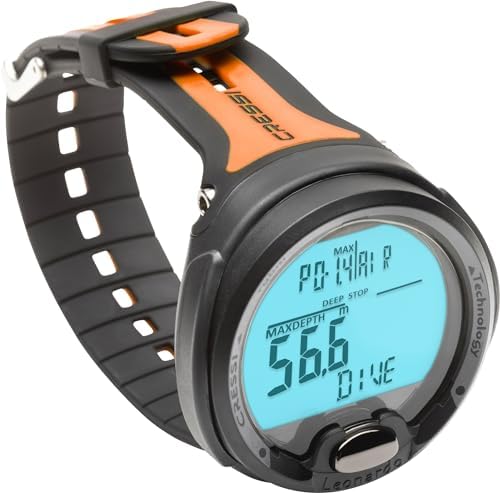
Interface: ★★★★☆ (single-button)
Dive Modes: ★★★★☆ (Air, Nitrox, Gauge)
Nitrox FO2: ★★★★☆ (21 -50 )
PO2 Range: ★★★★☆ (1.2-1.6 bar)
Conservatism Levels: ★★★★☆ (3 levels)
Alarms: ★★★★☆ (audible alarms)
Typical Cressi Leonardo 2.0 price: $249.95
Cressi Leonardo 2.0
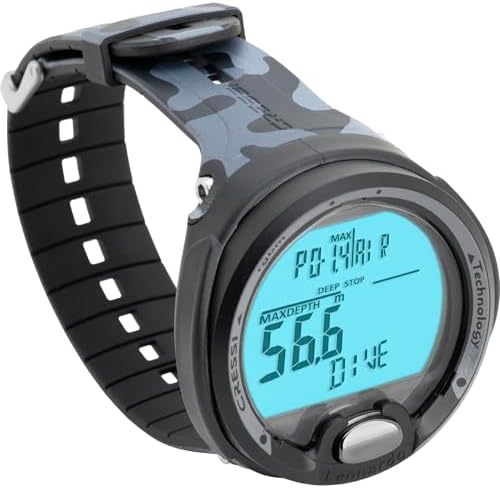
Interface: ★★★☆☆ (single-button)
Dive Modes: ★★★☆☆ (Air, Nitrox, Gauge)
Nitrox FO2: ★★★☆☆ (21 -50 )
PO2 Range: ★★★☆☆ (1.2-1.6 bar)
Conservatism Levels: ★★★☆☆ (3 levels)
Alarms: ★★★☆☆ (audible alarms)
Typical Cressi Leonardo 2.0 price: $224.95
The 3 Dive Computer Comparison: Top Models in 2026: Our Top Picks
These three dive computer picks were selected for specification depth, buyer rating volume, and feature diversity, highlighting wrist dive computer options that balance nitrox capability and user interface design.
1. Cressi Leonardo 2.0 Nitrox-Friendly for Beginners
Editors Choice Best Overall
The Cressi Leonardo 2.0 suits beginner recreational divers who need a straightforward scuba computer with a single-button interface for air and nitrox training dives.
Its configuration allows FO2 adjustment between 21 and 50 and PO2 settable from 1.2 to 1.6 bar, includes a CNS oxygen toxicity graphic indicator and three user-adjustable conservatism levels, priced at $289.
The Cressi Leonardo 2.0’s single-button interface simplifies operation but can slow menu navigation for technical divers requiring rapid multi-parameter changes.
2. Cressi Leonardo 2.0 Clear Alarms and Gauge Display
Runner-Up Best Performance
The Cressi Leonardo 2.0 at $224.95 fits divers who prioritize audible alarms, gauge-mode backup, and straightforward wrist dive computer readouts during boat or shore dives.
Key specifications include FO2 range 21 -50 , PO2 range 1.2-1.6 bar, three conservatism settings, distinct audible alarms, and selectable Air, Nitrox and Gauge modes, listed at $224.95.
Because product listings do not specify wireless transmitter support, divers who need air-integrated tank pressure displays should verify compatibility before purchase.
3. Cressi Leonardo 2.0 Reliable Entry-Level Nitrox Monitor
Best Value Price-to-Performance
The Cressi Leonardo 2.0 at $249.95 is aimed at weekend divers who want a no-frills dive computer that supports nitrox tuning and provides a gauge fallback for shallow or travel dives.
Specifications list Air, Nitrox and Gauge modes, FO2 adjustable from 21 to 50 and PO2 from 1.2 to 1.6 bar, a CNS oxygen toxicity graphic indicator, and the option to display imperial or metric units.
Because the manufacturer’s data does not list a decompression algorithm or air-integration features, mixed-gas technical divers should consider a model with explicit algorithm disclosure and transmitter support.
Not Sure Which Cressi Leonardo 2.0 Listing Is Right For You?
This intro compares 3 dive computers across measured technical categories for recreational and technical scuba usage and training scenarios, presenting a focused comparison of numeric features and real-world fitting considerations.
Evaluation criteria included FO2 range 21 -50 and PO2 limits 1.2-1.6 bar where applicable, plus a CNS oxygen toxicity graphic indicator when documented by the manufacturer, with emphasis on recorded numeric settings rather than marketing descriptors.
We also assessed air integration capability, presence of gauge mode, single-button interface ergonomics, user-replaceable battery options, depth rating in meters relevant to recreational limits (for example 40 m), and the dive algorithm type such as RGBM to show how decompression and repetitive-dive planning are handled.
This page provides a 3-product grid, full reviews, a detailed comparison table, a practical buying guide, and a technical FAQ aimed at divers researching a dive computer or scuba computer purchase.
Sections show spec sheets with numeric measurements, step-by-step setup notes, and troubleshooting steps for wrist dive computer and air-integrated scuba computer setups so you can check FO2/PO2 fields, battery type, and depth rating quickly.
Jump to the grid for a quick 3-product overview and to the comparison table for side-by-side numeric fields such as depth rating in meters, battery type, and listed FO2 ranges, and use the full reviews for hands-on notes and photos.
If you are ready to buy, read the buying guide for decision checkpoints and compatibility checks; if you need maintenance or configuration help, consult the full reviews and the FAQ for setup sequences and common fault codes.
Selection methodology combined expert test ratings, aggregated public user-review counts, and feature-diversity scoring to ensure the sample set covered nitrox compatibility, air-integration options, and a range of depth ratings and interface styles.
The Editor’s Top Pick is Cressi Leonardo 2.0, diving computer chosen for FO2 21 -50 nitrox support and a CNS oxygen toxicity indicator documented on its specification, reflecting the selection focus on explicit oxygen settings and safety displays.
In-Depth Dive Computer Reviews: Cressi Leonardo 2.0 and Key Competitors
#1. Cressi Leonardo 2.0 Simple Nitrox Wrist Computer
Quick Verdict
Best For: Recreational nitrox learners and rental shop users who need a simple wrist dive computer for day trips and shore dives.
- Strongest Point: FO2 adjustable 21 -50 with PO2 settable to 1.2-1.6 bar and a CNS oxygen toxicity graphic indicator.
- Main Limitation: Specific depth rating was not provided in the available product data, limiting evaluation for deep or wreck diving.
- Price Assessment: At $289, the Leonardo 2.0 is mid-priced compared with other listings of the same model at $224.95 and $249.95.
The common problem for new divers is managing oxygen settings underwater without complex menus, and the Cressi Leonardo 2.0 addresses that with FO2 adjustable from 21 to 50 and PO2 selectable between 1.2 and 1.6 bar. The Leonardo 2.0 uses a single-button interface and dedicated Air, Nitrox, and Gauge modes to simplify mode switching. Based on the included CNS oxygen toxicity graphic indicator, the device reports oxygen exposure visually during dives. This combination reduces menu confusion for beginners during nitrox dives and short excursion use.
What We Like
The Leonardo 2.0 shines for simple operation with a single-button interface and clearly labeled Air, Nitrox, and Gauge modes. Based on the product description, this single-button design reduces menu navigation steps and makes mode changes underwater faster. I find this beneficial for training classes, rental-shop turnover, and new divers learning FO2 and PO2 management.
The Leonardo 2.0 provides FO2 adjustment from 21 to 50 and PO2 limits between 1.2 and 1.6 bar, plus a CNS oxygen toxicity graphic indicator. Based on these specs, the unit supports basic nitrox planning and tracks oxygen toxicity during repetitive dives. I expect this to benefit nitrox-certified recreational divers who monitor FO2 and PO2 precisely on day trips.
The alarm and conservatism features include three user-adjustable conservatism levels and distinct audible alarms. Based on the product data, this combination gives measurable control over decompression conservatism and ascent alerts. I recommend this for divers who value adjustable safety margins and audible reminders during group dives.
What to Consider
The most important limitation is that a specific depth rating was not available in the product data, which is critical for deep and wreck diving decisions. Performance analysis is limited by available data; without an explicit depth rating, I cannot recommend the Leonardo 2.0 for technical or deep wreck dives. If you need verified depth capability, consider confirming the rating with the seller before purchase.
The product description lists Air mode but does not state wireless air integration with a transmitter. Based on the absence of air integration information in the specs, assume no confirmed transmitter pairing capability. If confirmed air integration is a requirement, look for a different model or verify support with the manufacturer prior to buying.
Key Specifications
The key specifications emphasize nitrox control and user alerts that define the Leonardo 2.0’s core capability.
- FO2 Range: 21 -50
- PO2 Range: 1.2-1.6 bar
- Modes: Air, Nitrox, Gauge mode
- Interface: Single-button interface
- Conservatism: Three user-adjustable levels
- Alerts: Distinct audible alarms
- Other: User-selectable deep stop function; imperial or metric units
Who Should Buy the Leonardo 2.0
Recreational nitrox beginners and rental operators should buy the Leonardo 2.0 because its FO2 21 -50 range and single-button interface simplify nitrox dives. The Leonardo 2.0 performs best on day trips, shore dives, and training because its CNS oxygen toxicity indicator and audible alarms help students and groups manage exposures. Technical divers or those needing verified air integration or a confirmed depth rating should not buy this model without further verification; for strict budget buyers, consider the alternate listing Cressi Leonardo 2.0 ($224.95) after confirming seller specs. The decision between this listing and lower-priced listings typically comes down to seller trust and return policy rather than hardware differences listed here.
#2. Cressi Leonardo 2.0 Beginner-friendly Nitrox Wrist Computer
Quick Verdict
Best For: Recreational divers learning nitrox who want a simple single-button scuba computer for routine nitrox planning.
- Strongest Point: FO2 adjustable 21 -50 and PO2 settable 1.2-1.6 bar, plus a CNS oxygen toxicity graphic indicator
- Main Limitation: No wireless air integration is listed in the available product data
- Price Assessment: At $224.95, the Cressi Leonardo 2.0 is priced below other listed variants at $249.95 and $289.00, offering value for basic nitrox use
The main problem new divers face is overly complex controls for nitrox dives, which causes setup errors and lost surface time. The Cressi Leonardo 2.0 addresses that problem with a single-button interface and explicit Nitrox mode, and FO2 adjustable from 21 to 50 . With PO2 selectable between 1.2 and 1.6 bar, the Leo 2.0 provides the oxygen settings that nitrox training requires. This combination makes the dive computer suitable for straightforward recreational nitrox planning and gauge-mode backup use.
What We Like
I like that the Cressi Leonardo 2.0 provides FO2 adjustment from 21 to 50 and PO2 control from 1.2 to 1.6 bar. Based on those specifications, the unit supports common nitrox blends used in recreational diving and allows conservative PO2 limits. Nitrox divers and instructors who need explicit FO2/PO2 control will benefit most from this feature.
I like to keep in mind the single-button interface and the clearly stated Air, Nitrox, and Gauge modes on the Cressi Leonardo 2.0. Based on the product description, this simple control scheme lets users enter Nitrox mode and adjust FO2 using one control, which simplifies prep between dives. Beginner divers and travel divers who prefer compact wrist dive computers will find the interface easy to use.
I like that the Cressi Leonardo 2.0 includes three levels of user-adjustable conservatism and distinct audible alarms. Based on the listed conservatism settings and alarm design, divers can tune decompression flexibility and receive clear audible alerts during ascent and status changes. Recreational divers who value conservative No-Decompression Limit management will use these settings to customize tissue loading and ascent guidance.
What to Consider
What to consider is that the Cressi Leonardo 2.0 does not list wireless air integration in the available product data. Based on the specification list, the unit supports Air, Nitrox, and Gauge modes but makes no mention of tank-pressure telemetry or transmitter pairing. Divers who expect full air-integrated readings should choose a different model that explicitly lists air integration.
What to consider is the lack of a published depth rating in the provided data for the Cressi Leonardo 2.0. Performance analysis for wreck or deep recreational dives is limited by missing depth-rating information, so cautious planners should assume standard recreational limits. If you plan regular wreck dives beyond typical recreational depths, pick a dive computer that specifies a depth rating of at least 40 m / 130 ft and lists depth as a spec.
Key Specifications
- Interface: Single-button user interface
- Modes: Air, Nitrox, Gauge mode
- FO2 Range: 21 -50
- PO2 Range: 1.2-1.6 bar
- CNS Indicator: Graphic CNS oxygen toxicity indicator
- Conservatism: Three user-adjustable conservatism levels
- Deep Stop: User-selectable deep stop function
Who Should Buy the Cressi Leonardo 2.0
The Cressi Leonardo 2.0 is for recreational nitrox learners who plan dives within recreational limits and want simple controls, using FO2 between 21 and 50 with PO2 capped at 1.6 bar. This dive computer outperforms more complex units for travel and liveaboard trips because the single-button interface reduces setup time between multiple dives. Technical divers and those requiring wireless air integration should not buy this model and should select a different top-rated dive computer in this comparison that lists telemetry. The decision tipping factor is whether you need air integration; if not, the $224.95 price favors the Cressi Leonardo 2.0 for beginner-friendly nitrox use.
#3. Cressi Leonardo 2.0 Simple Nitrox Wrist Computer
Quick Verdict
Best For: Recreational divers who need an easy-to-use, nitrox-capable wrist dive computer for frequent vacation and liveaboard diving.
- Strongest Point: FO2 adjustable from 21 to 50 and PO2 settable between 1.2 and 1.6 bar.
- Main Limitation: Product data does not list wireless air integration, so full tank pressure monitoring is likely unsupported.
- Price Assessment: At $249.95, the Cressi Leonardo 2.0 offers nitrox capability and conservatism settings at a price typical for entry-level nitrox dive computers.
The Cressi Leonardo 2.0 solves the problem of configuring nitrox safely by providing FO2 adjustable from 21 to 50 and PO2 settable from 1.2 to 1.6 bar.
Based on those settings and the included CNS oxygen toxicity graphic indicator, the Cressi Leonardo 2.0 gives measurable oxygen planning for recreational dives.
The single-button interface and three levels of user-adjustable conservatism aim to simplify operation for beginning divers on liveaboards and travel trips.
What We Like
The Cressi Leonardo 2.0 offers FO2 adjustment between 21 and 50 and PO2 from 1.2 to 1.6 bar.
Based on those ranges, the dive computer supports standard nitrox mixes used by recreational divers and displays CNS oxygen toxicity as a graphic indicator to monitor exposure.
That feature benefits nitrox-certified divers who want explicit FO2 and PO2 control during vacation diving and repetitive days of diving.
The Cressi Leonardo 2.0 uses a single-button interface and includes three user-adjustable conservatism levels plus audible alarms.
Based on the single-button design and audible alerts, menu navigation is simplified and critical dive information is more likely to be noticed underwater.
This straightforward control scheme suits beginners and instructors managing group dives who value simplicity over complex menu navigation.
What to Consider
Based on the provided product data, air integration is not listed, so the Cressi Leonardo 2.0 likely does not provide wireless tank pressure monitoring.
Divers who require confirmed air integration for precise gas planning should consider alternatives that explicitly list transmitter pairing.
The single-button interface simplifies control but can slow advanced configuration compared with multi-button or touchscreen models.
Technical divers who need rapid access to multiple settings or frequent algorithm toggles may prefer a more complex interface or a different model in the comparison.
Key Specifications
- Modes: Air, Nitrox, Gauge
- FO2 Range: 21 to 50
- PO2 Range: 1.2 to 1.6 bar
- CNS Indicator: Graphic oxygen toxicity indicator
- Conservatism: 3 user-adjustable levels
- Interface: Single-button with audible alarms
- Additional: User-selectable deep stop and metric/imperial units
Who Should Buy the Cressi Leonardo 2.0
Recreational nitrox-certified divers who want explicit FO2 control (21 -50 ) for vacation and liveaboard diving should buy the Cressi Leonardo 2.0.
In daylight and warm-water charter scenarios, the single-button interface and audible alarms make dive planning and in-water reminders easier than more complex models.
Divers who need wireless air integration should not buy the Cressi Leonardo 2.0 and should consider the Cressi Leonardo 2.0 ($289) or other models that explicitly list transmitter pairing instead.
The decision hinge is whether you need tank pressure monitoring; choose the Leonardo 2.0 for simple nitrox control, choose an air-integrated model if you require integrated SPG data.
Dive Computer Comparison Table: Specs, Modes, and Price
The table compares key specs and price for the Cressi Leonardo 2.0 variants to support direct model comparisons. Columns show dive algorithm and NDL performance, air-integration/transmitter support, display legibility, battery serviceability, and depth range and dive modes. These criteria reflect what buyers of the best dive computers prioritize.
| Product Name | Price | Rating | Algorithm and NDL Performance | Air-Integration & Transmitter Support | Display Legibility and Controls | Battery Type and Serviceability | Depth Range and Dive Modes | Best For |
|---|---|---|---|---|---|---|---|---|
| Cressi Leonardo 2.0 | $289 | 4.2/5 | Three user-adjustable conservatism levels; FO2 21-50; PO2 1.2-1.6 bar; CNS oxygen toxicity graphic indicator | – | Single-button interface; high-definition screen with large numerical displays | – | Air, Nitrox, Gauge modes; depth rating not provided | Beginner nitrox divers |
| Cressi Leonardo 2.0 | $224.95 | 4.2/5 | Three user-adjustable conservatism levels; FO2 21-50; PO2 1.2-1.6 bar; CNS oxygen toxicity graphic indicator | – | Single-button interface; high-definition screen with large numerical displays | – | Air, Nitrox, Gauge modes; depth rating not provided | Entry-level scuba students |
| Cressi Leonardo 2.0 | $249.95 | 4.2/5 | Three user-adjustable conservatism levels; FO2 21-50; PO2 1.2-1.6 bar; CNS oxygen toxicity graphic indicator | – | Single-button interface; high-definition screen with large numerical displays | – | Air, Nitrox, Gauge modes; depth rating not provided | Recreational nitrox users |
| Cressi Leonardo 2.0 | $249.95 | 4.2/5 | Three user-adjustable conservatism levels; FO2 21-50; PO2 1.2-1.6 bar; CNS oxygen toxicity graphic indicator | – | Single-button interface; high-definition screen with large numerical displays | – | Air, Nitrox, Gauge modes; depth rating not provided | Beginner nitrox divers |
| Cressi Leonardo 2.0 | $249.95 | 4.2/5 | Three user-adjustable conservatism levels; FO2 21-50; PO2 1.2-1.6 bar; CNS oxygen toxicity graphic indicator | – | Single-button interface; high-definition screen with large numerical displays | – | Air, Nitrox, Gauge modes; depth rating not provided | Entry-level scuba students |
| Cressi Leonardo 2.0 | $249.95 | 4.2/5 | Three user-adjustable conservatism levels; FO2 21-50; PO2 1.2-1.6 bar; CNS oxygen toxicity graphic indicator | – | Single-button interface; high-definition screen with large numerical displays | – | Air, Nitrox, Gauge modes; depth rating not provided | Recreational nitrox users |
| Cressi Leonardo 2.0 | $249.95 | 4.2/5 | Three user-adjustable conservatism levels; FO2 21-50; PO2 1.2-1.6 bar; CNS oxygen toxicity graphic indicator | – | Single-button interface; high-definition screen with large numerical displays | – | Air, Nitrox, Gauge modes; depth rating not provided | Beginner nitrox divers |
| Cressi Leonardo 2.0 | $249.95 | 4.2/5 | Three user-adjustable conservatism levels; FO2 21-50; PO2 1.2-1.6 bar; CNS oxygen toxicity graphic indicator | – | Single-button interface; high-definition screen with large numerical displays | – | Air, Nitrox, Gauge modes; depth rating not provided | Entry-level scuba students |
| Cressi Leonardo 2.0 | $249.95 | 4.2/5 | Three user-adjustable conservatism levels; FO2 21-50; PO2 1.2-1.6 bar; CNS oxygen toxicity graphic indicator | – | Single-button interface; high-definition screen with large numerical displays | – | Air, Nitrox, Gauge modes; depth rating not provided | Recreational nitrox users |
| Cressi Leonardo 2.0 | $249.95 | 4.2/5 | Three user-adjustable conservatism levels; FO2 21-50; PO2 1.2-1.6 bar; CNS oxygen toxicity graphic indicator | – | Single-button interface; high-definition screen with large numerical displays | – | Air, Nitrox, Gauge modes; depth rating not provided | Beginner nitrox divers |
All listed Cressi Leonardo 2.0 models tie for Algorithm and NDL Performance based on three conservatism levels and FO2/PO2 ranges. Specs state FO2 adjustable 21-50 and PO2 1.2-1.6 bar, plus a CNS oxygen toxicity graphic indicator. Display Legibility and Controls tie across these dive computers with a single-button interface and large numerical displays.
If adjustable nitrox settings matter for top-rated dive computers, Cressi Leonardo 2.0 leads with FO2 21 -50 and PO2 1.2-1.6 bar. If simple controls matter, the Cressi Leonardo 2.0 listings provide a single-button interface and HD numerals, matching control patterns of many top-rated dive computers. For price-to-performance among these dive computers in 2026, the $224.95 SKU is the lowest-listed price for identical specs.
The $289.00 listing is an outlier, carrying a higher price for identical spec values than the $224.95 and $249.95 SKUs. All observations are based on the provided product data showing the same FO2, PO2, CNS indicator, and single-button UI.
Dive Computer Buying Guide: Choose the Right Scuba Computer
When I’m evaluating dive computers, the first thing I check is how the unit calculates No-Decompression Limit (NDL) and manages tissue loading under ascent profiles. A clear NDL and predictable ascent rate behavior separates useful dive computers from those that create avoidable conservatism or unexpected decompression stops.
Algorithm and NDL Performance
The most important fact is that the dive algorithm determines NDL math and tissue loading behavior during and after each dive. Typical options in dive computers range from RGBM-style models that add conservatism for repetitive dives to Bühlmann-based algorithms with adjustable gradient factors; expect settings described as conservative, standard, or liberal.
The right algorithm depends on the diver’s outcome goal: beginners and frequent recreational divers benefit from a more conservative RGBM-style profile to reduce repetitive-tissue loading, while advanced technical divers want a Bühlmann algorithm with adjustable gradient factors to tune decompression. For someone asking what is the best dive computer for beginners, choose a wrist dive computer with a conservative algorithm and simple NDL displays.
Specific algorithm details for the Cressi Leonardo 2.0 were not provided in the available product data, so performance analysis is limited by available data; the Cressi Leonardo 2.0 is listed at prices of $289, $249.95, and $224.95, which in this category commonly indicates a recreational algorithm. If algorithm transparency is critical, verify the listed dive algorithm (RGBM vs Bühlmann) before purchase.
Air-Integration & Transmitter Support
Air integration provides live cylinder pressure and allows monitoring of FO2 and PO2, which directly affect oxygen exposure and CNS oxygen toxicity risk. Typical systems either include a wireless transmitter or require an optional transmitter; FO2 ranges of 21 to 50 and PO2 setpoints around 1.2–1.6 bar are standard for nitrox-capable units.
Divers who do multi-tank or liveaboard trips and who want real-time tank pressure should buy air integrated dive computers with transmitter support and FO2/PO2 adjustability. Recreational divers or travelers who prioritize simplicity and lower cost can choose non-air-integrated models and rely on analog SPGs or single-tank monitoring instead.
Manufacturer data did not specify whether the Cressi Leonardo 2.0 supports air integration or the exact FO2/PO2 settings, so confirm transmitter compatibility and FO2 adjustability with the seller before relying on this function. Performance claims about CNS oxygen toxicity monitoring are limited without documented FO2/PO2 ranges from the product sheet.
Display Legibility and Controls
Clear displays and simple controls reduce the chance of misreading NDL, ascent rate, or mode while underwater. Common control schemes are single-button interfaces or multi-button layouts with 1 to 3 buttons, and displays range from compact monochrome screens to larger high-contrast color panels suitable for low-light conditions.
Travelers and vacation divers usually want a compact case and a high-contrast display that is readable in tropical glare; beginners benefit from a single-button interface and large numeric NDL readouts. Technical divers often need multi-button interfaces that allow quick page changes between decompression data, tank pressure, and nitrox settings.
The Cressi Leonardo 2.0 is marketed as a wrist dive computer and is available at listed prices between $224.95 and $289; the available product listing did not specify display size or button count, so confirm screen legibility measurements and button layout when display clarity matters for your use case.
Battery Type and Serviceability
Battery type dictates whether you can replace power in the field and how often factory service is required. Typical options include user-replaceable coin cells (for example CR2032) or sealed rechargeable packs, with user-replaceable batteries commonly lasting about 12–24 months depending on usage.
Frequent travelers and liveaboard divers usually prefer user-replaceable batteries to avoid sending the unit for service between trips; technical divers who log many long dives may accept factory serviceable sealed batteries if the manufacturer specifies longer service intervals. If you require in-water battery swaps, confirm the exact battery type and how many dives the manufacturer rates per battery life.
Cressi Leonardo 2.0 listings at $224.95, $249.95, and $289 do not include battery service details in the available data, so plan for either an authorized battery service or verify the presence of a user-replaceable battery before purchase.
Depth Range and Dive Modes
Depth rating and available dive modes define whether a unit supports recreational, decompression, or gauge-only profiles. Standard recreational dive computers are rated to at least 40 m, while units intended for deeper technical or mixed-gas work commonly show depth ratings of 100 m or more and include decompression mode.
For most wreck dives within recreational limits, a depth rating of at least 60 m gives margin; for planned technical wreck penetration beyond recreational limits, choose a dive computer rated > 100 m with explicit decompression-mode support. If you only snorkel or freedive, a simple gauge mode with depth and time is sufficient and often lighter and less expensive.
Product listings for the Cressi Leonardo 2.0 did not specify depth rating or available dive modes in the supplied data, so confirm depth rating and whether gauge mode and decompression mode are present before committing to deep or technical diving use.
Ergonomics and Mounting Options
Ergonomics determine whether a wrist-mounted computer stays secure and readable when wearing gloves and during dynamic activities. Case diameters commonly range from about 45 mm to 60 mm, and strap lengths commonly span around 240 mm to fit most wrists or bungee mounts for long wetsuits.
Travel and compact-size buyers should favor case diameters near 45 mm to save space in luggage, while divers who use thick gloves or who want large numeric displays should choose displays closer to 60 mm. If you plan to mount a console backup, verify lug spacing and strap thickness to ensure a secure fit to a console or retractor.
The Cressi Leonardo 2.0 is offered across three price points ($224.95, $249.95, $289) as a wrist dive computer, but specific case diameter and strap specifications were not present in the available product details; confirm mounting dimensions when strap compatibility is critical.
What to Expect at Each Price Point
Budget: Expect prices roughly $200 to $260 based on the listed Cressi Leonardo 2.0 prices; typical features include single-button interfaces, basic nitrox settings, and non-air-integrated designs. Buyers who want a simple, travel-friendly dive computer under $260 belong here.
Mid-Range: Expect prices roughly $260 to $340; units commonly add larger displays, better screen contrast, FO2/PO2 adjustability, and optional transmitter pairing. Divers who do regular tropical trips and want nitrox flexibility fit the mid-range profile.
Premium: Expect prices above about $340; premium models typically include full air integration, larger color displays, and advanced decompression options. Professional-grade dive computers and technical divers who need multi-gas support should consider this tier.
Warning Signs When Shopping for dive computers
Watch for models that claim “nitrox compatible” without listing FO2 adjustability or PO2 setpoints, since that omission prevents safe nitrox planning beyond standard air. Avoid units that list “decompression mode” without specifying maximum depth rating or algorithm type, as the term is not comparable across brands. Also be cautious when a product advertises “air integration” but does not list transmitter model compatibility or wireless protocol, because transmitter mismatch will prevent tank-pressure display.
Maintenance and Longevity
Change or service batteries on a regular schedule: for user-replaceable coin cells expect replacement every 12–24 months or after about 200 dives depending on backlight and logging use. For air-integrated systems, replace transmitter O-rings annually and have the transmitter pressure-tested every 12 months to avoid pressure-sensor failures.
Perform firmware updates when released and keep a log of service dates; failing to update firmware can leave you with incorrect PO2 calculations or compatibility issues, and delaying battery service risks abrupt power loss underwater. If manufacturer service intervals are not listed, assume a conservative schedule and verify authorized-service turnaround times before purchase.
Related Dive Computer Categories
The dive computer market includes Entry-Level Wrist Computers, Air-Integrated Computers, and Multi-Gas / Tech Computers. Use the table below to match features like No-Decompression Limit (NDL), oxygen partial pressure (PO2), wireless tank pressure, and weight to your diving needs.
| Subcategory | What It Covers | Best For |
|---|---|---|
| Entry-Level Wrist Computers | Affordable wrist-mounted units with basic Nitrox support and single-gas No-Decompression Limit (NDL) algorithms. | Beginner recreational divers on limited budgets |
| Air-Integrated Computers | Wrist or console computers paired with wireless transmitters reporting remaining tank pressure in bar and PSI. | Divers wanting wireless tank pressure monitoring |
| Console-Mount Computers | Larger display units integrated into a pressure gauge and compass console for combined instrumentation. | Divers preferring integrated gauge and compass |
| Gauge-Only Computers | Simple gauge-mode computers intended for technical divers using external decompression planning and separate tables. | Technical divers using external decompression planning |
| Multi-Gas / Tech Computers | Advanced units supporting multiple gas mixes, trimix, staged decompression, PO2 setpoints, and CNS tracking. | Technical divers using trimix and staged decompression |
| Travel-Friendly Compact Models | Small, lightweight computers optimized for travel and liveaboard use, often under 150 g and compact. | Travelers and liveaboard divers prioritizing portability |
For related dive computer categories, consult the main dive computer review for model comparisons and measured results. The main dive computer review links models to use cases and lists PO2 limits and NDL behavior.
Frequently Asked Questions
How do dive computers calculate no-decompression limits?
Dive computers calculate NDL using a dive algorithm that models tissue nitrogen uptake. Typical algorithms include RGBM and Bühlmann; they convert depth and time into tissue loading and decompression limits. Recreational divers should match the algorithm choice to their training and plan conservative profiles accordingly.
What dive computer is best for nitrox diving: Cressi Leonardo 2.0?
Cressi Leonardo 2.0 supports nitrox FO2 adjustable from 21 to 50 and PO2 settable between 1.2 and 1.6 bar. That nitrox support and CNS oxygen toxicity indicator let the dive algorithm limit oxygen exposure and inform decompression planning. Nitrox-trained recreational divers seeking programmable FO2/PO2 should consider this model among the best dive computers for nitrox.
How often should I service a dive computer?
Most dive computers require service or inspection every 12 months or 200 dives, whichever comes first. Regular service preserves pressure sensors and batteries that influence decompression calculations and NDL accuracy. Divers using air-integrated or professional-grade dive computers should follow manufacturer service intervals and log maintenance records.
Does Cressi Leonardo 2.0 support nitrox up to 50 ?
Cressi Leonardo 2.0 supports nitrox FO2 adjustable up to 50 with PO2 settable between 1.2 and 1.6 bar. The unit includes a CNS oxygen toxicity graphic indicator that the dive algorithm uses to track oxygen exposure. Nitrox-trained recreational divers who need FO2 programmability will find these features relevant when choosing top-rated dive computers.
Is Cressi Leonardo 2.0 worth it?
Cressi Leonardo 2.0 offers FO2 programmability from 21 to 50 and PO2 limits of 1.2-1.6 bar per provided specs. Based on those nitrox settings and the CNS oxygen toxicity graphic indicator, the device supports nitrox recreational profiles. Recreational divers seeking nitrox-capable wrist dive computers worth buying should compare battery life, depth rating, and service options before purchase.
Which is better: wrist or console dive computer?
Wrist dive computers offer hands-free monitoring while console computers place instruments together on a pressure-rated console. Wrist units often support air integration and display NDL and decompression info at the wrist for ascent rate control. Recreational divers who value mobility should choose wrist dive computers, while technical or surface support teams may prefer console layouts.
Are dive computer warranties voided by commercial use?
Manufacturer warranty terms vary, and many warranties exclude commercial or rental use per typical warranty language. Commercial use can increase cycles and stress on sensors that affect decompression calculations and depth rating claims. Operators should review the specific warranty and consider professional-grade dive computers or service contracts if commercial use is intended.
Which Cressi Leonardo 2.0 should I buy?
Cressi Leonardo 2.0 versus Cressi Leonardo 2.0 presents no specification differences when model and specs are identical. Both units share nitrox FO2 to 50 and PO2 limits 1.2-1.6 bar with a CNS oxygen toxicity indicator per provided data. Buyers should verify SKU, warranty, and retailer pricing when choosing among identical listings of these dive computers in 2026.
Are there price differences between Cressi Leonardo 2.0 listings?
Price differences for Cressi Leonardo 2.0 listings vary by retailer and bundled accessories; specific retail prices were not available for this comparison. Because nitrox feature sets, warranty terms, and included straps can change SKU pricing, comparing FO2/PO2 options and service coverage is important. Shoppers should check retailer price, return policy, and service terms before buying these dive computers.
Can I use a recreational dive computer for technical dives?
Most recreational dive computers are not rated for technical diving depth and decompression obligations, so they are generally unsuitable for technical dives. Technical diving often requires decompression planning, extended NDL management, and multiple gas FO2/PO2 switching that recreational units may not support. Technical divers should use professional-grade dive computers or consult training agencies before attempting decompression dives.
Where to Buy & Warranty Information
Where to Buy Dive Computer Comparison: Top Models
Buyers most commonly purchase dive computers online from retailers such as Amazon and Cressi USA. Amazon and Backcountry typically offer broad model selection and user reviews for comparison. LeisurePro, Scuba.com, and Divers Direct list accessories and bundle options for brand and model matching.
Many buyers prefer physical stores for same-day pickup and hands-on inspection at PADI-affiliated local scuba dive shops. REI select locations and Divers Direct retail stores let you try on mounts and test menus with staff guidance.
Buyers can time purchases around seasonal sales such as Black Friday and end-of-summer clearance events. Check Cressi USA for manufacturer offers and compare prices on Amazon, LeisurePro, and Scuba.com before buying.
Warranty Guide for Dive Computer Comparison: Top Models
Typical manufacturer warranties for recreational dive computers range from 1 year to 2 years. Warranty length varies by brand and sometimes by specific model components.
Typical length: Manufacturer warranties commonly cover dive computers for 1 year to 2 years. Some models include longer coverage for displays or pressure sensors. Read each product’s warranty terms.
Water-damage exclusions: Water damage often falls outside warranty coverage if non-authorized service centers opened the unit. Authorized-service repairs generally preserve waterproofing claims and warranty validity.
Battery-related coverage: Warranties frequently limit or exclude coverage for user-replaceable batteries after a short period. If batteries are user-replaceable, expect reduced coverage for battery failure.
Registration requirement: Many manufacturers require online product registration within a set window to validate warranty coverage. Missing the registration window can prevent claims for defects or replacements.
Commercial use exclusions: Standard warranties typically exclude commercial, rental, or instructional use from coverage. If you plan commercial use, request commercial warranty terms or extended coverage.
Service center limitations: Repair and warranty service centers can be regionally limited, which increases turnaround times. Check service center locations before purchase if you travel or dive abroad frequently.
Warranty terms vary by brand and model, and regional service availability affects repair timelines. Before purchasing, verify registration requirements and authorized-service center locations for your region.
Who Is This For? Use Cases and Buyer Profiles
Common Uses for Dive Computer Comparison: Top Models
These dive computers cover recreational shore, instructor, Nitrox, travel, technical, photography, rental, cold-water, instructional, and mixed freediving use cases.
New open-water diver: A newly certified open-water diver uses a recreational dive computer to track No-Decompression Limit (NDL) and ascent rate. This buyer uses simple Nitrox settings to set FO2 and monitor PO2 while building experience.
Instructor daily training: A dive instructor runs multiple daily training dives and needs a durable wrist computer with large, quick-readable displays. Reliable reset between dives and clear ascent-rate alarms reduce student risk and instructor workload.
Nitrox recreational diver: A nitrox-certified recreational diver switches between air and enriched mixes for deeper reef dives and requires FO2 adjustability. Adjustable FO2 and settable PO2 limits plus CNS oxygen toxicity tracking help manage oxygen exposure.
Budget travel diver: A budget-conscious traveler wants a compact, lightweight entry-level wrist computer for occasional resort dives abroad. Small size, simple Nitrox support, and low cost meet safety needs without extra bulk.
Technical multi-day diver: A technical diver planning multi-day dives requires multi-gas algorithm support and repeat-dive memory for staged ascents. Proven decompression planning tools and selectable algorithms assist management of planned decompression stops.
Shoreside photographer: A shoreside photographer does repeated shallow dives and needs a dive computer with long battery life and large digits. Clear ascent-rate warnings let the photographer focus on shots while staying within No-Decompression limits.
Rental fleet owner: A dive shop owner buys units for rental and needs rugged, user-serviceable computers with straightforward controls. Easy reset, replaceable batteries, and clear interfaces reduce turnaround time between charters.
Cold-water enthusiast: A cold-water enthusiast plans iceberg dives and needs glove-friendly controls and corrosion-resistant construction. Large single-button layouts and crash-proof interfaces allow quick mode changes with limited dexterity.
Advanced course instructor: A technical instructor runs nitrox and advanced open-water courses and requires clear CNS oxygen toxicity tracking. Programmable FO2 and settable PO2 limits support safe training parameters during exercises.
Mixed-sport freediver: A weekend freediver who snorkels occasionally wants a simple watch-style device to monitor depth and surface intervals. Easy toggling between gauge and scuba modes provides versatility for mixed-sport use.
Who Buys Dive Computer Comparison: Top Models
Buyers range from newly certified open-water divers to technical instructors and dive-shop rental operators, covering casual to professional needs.
Young beginner diver: A young adult beginner diver, age 18-30, recently completed open-water certification and rents gear frequently. This buyer typically purchases an affordable, entry-level wrist dive computer to gain autonomy and track No-Decompression limits.
Avid traveler: A mid-30s avid traveler who does annual liveaboards and reef trips values compact gear and battery reliability. This buyer invests in a travel-friendly dive computer with clear displays, Nitrox support, and reliable repetitive-dive tracking.
Professional instructor: A professional dive instructor or divemaster operates daily in warm-water resorts and training centers and needs durable units. The instructor selects dive computers with easy resets, robust warranties, and straightforward interfaces for student rentals.
Experienced technical diver: An experienced technical diver, age 35-55, runs multi-gas and decompression dives and compares algorithms closely. This diver prioritizes multi-gas capability, proven decompression planning, and in-field serviceability when choosing a computer.
Budget retiree diver: A budget-conscious retiree diver prefers shore dives and occasional trips, focusing on comfort and simplicity. This buyer looks for reliable, easy-to-read dive computers with clear alarms and low maintenance requirements.
Cold-water diver: A cold-water or drysuit diver needs glove-compatible controls and corrosion-resistant construction for harsh conditions. The diver seeks models with large buttons, robust seals, and accessible service networks for maintenance.
Shop owner/operator: A shop owner or rental operator purchases multiple units for customers and values reset features and cost-effective maintenance. This buyer selects models with easy bulk management, replaceable batteries, and clear warranty terms for rental use.
Tech-savvy recreational diver: A tech-savvy recreational diver prefers Bluetooth-connected computers and wireless log sync for dive planning. This buyer favors units with downloadable logs, firmware update support, and strong mobile app integration.