
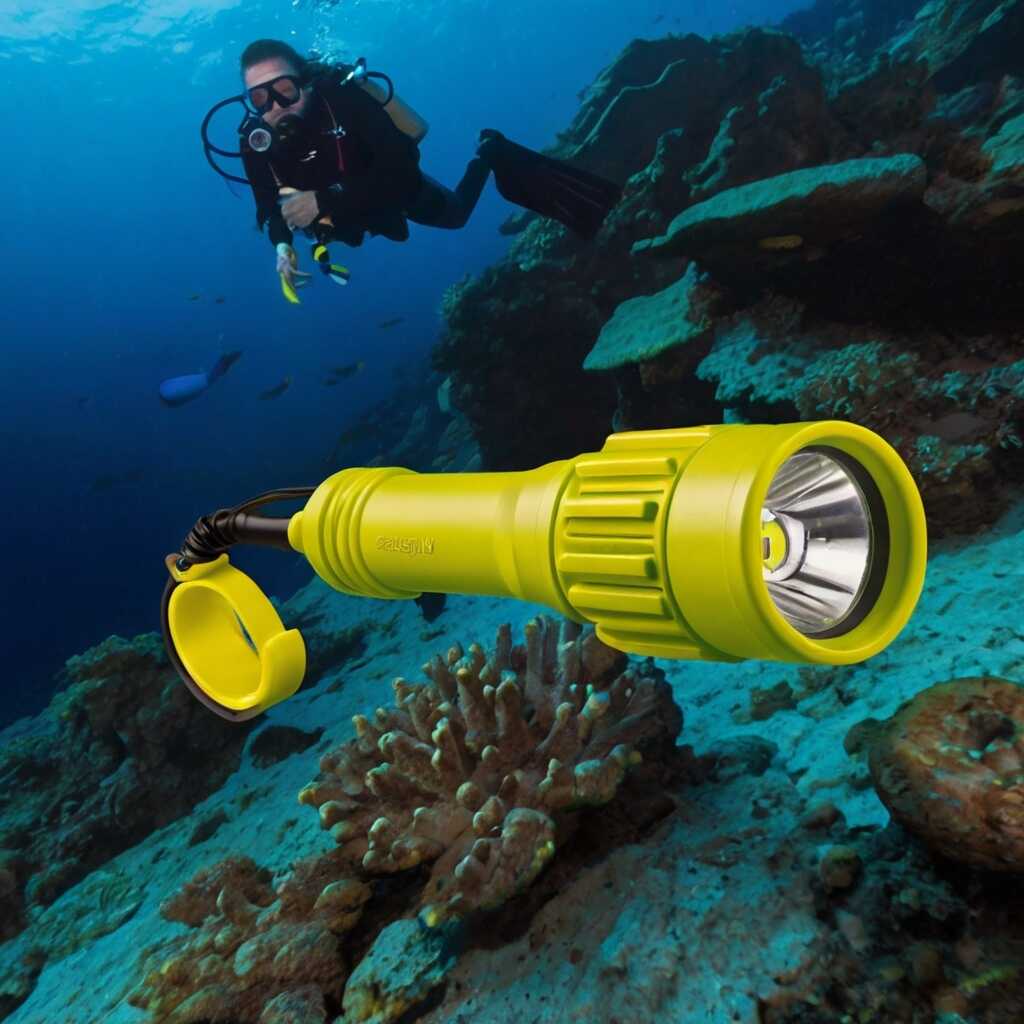
The Submariner-26S submarine ensures the safety and efficacy of night dives through powerful high-brightness lighting. The significance of high-brightness lights on the Submariner-26S lies in the ability to enhance underwater visibility, ensure diver safety, and provide better imaging for research. High-brightness lights improve the operational effectiveness of extended underwater missions, vital for both recreational diving and marine research. This article will discuss the crucial role and benefits of high-brightness lighting on the Submariner-26S during night missions, its importance in marine research, and its impact on extended diving operations. Diving Flashlight Submariner-26S SM-26S was subjected to meticulous checks by Scuba Forge.

Crucial Role of High-Brightness on Submariner-26S Night Missions
High-brightness on the Submariner-26S improves underwater visibility by illuminating dark and murky waters effectively. This enhanced visibility helps divers navigate underwater optimally and identify potential hazards. Key advantages of using high-brightness lights include better visual accuracy and faster target recognition during night-time missions. High-brightness lighting on the Submariner-26S enhances safety protocols by providing clear visibility, thus averting underwater accidents. Although high-brightness lights consume more power, the Submariner-26S is equipped with energy-efficient technology to mitigate battery life impact. The Submariner-26S features specific high-brightness lighting beneficial for researchers, such as adjustable brightness settings and directional LED beams.
Why is high-brightness provided by Submariner-26S essential for marine research at night?
High-brightness on the Submariner-26S assists researchers in identifying marine species by clearly illuminating underwater subjects. Unique light configurations, such as variable wavelength settings, aid in accurate marine data collection. High-brightness improves imaging quality for underwater research by offering clear, detailed captures of marine life. The Submariner-26S’s light settings impact nocturnal marine life behavior minimally, allowing more natural observation. The high-brightness light of the Submariner-26S emits up to 5000 lumens, providing ample illumination for research activities. Diving Flashlight Submariner-26S SM-26S has a comfortable feel, reflecting its quality materials.
Impact of High-Intensity Lighting on Extended Night Diving Operations with Submariner-26S
There is a strong correlation between high-intensity lighting and longer diving durations on the Submariner-26S as brighter lights extend operational visibility. High-intensity lighting increases energy consumption, but advanced battery management systems in the Submariner-26S optimize power usage. High-intensity lighting does not impact the structural integrity of the Submariner-26S due to robust engineering and material selection. Operational benefits of enhanced lighting include better navigation, more effective task execution, and prolonged dive times. High-intensity lights on the Submariner-26S necessitate regular maintenance checks to ensure consistent performance and extend light lifespan.
How does the high-intensity lighting on Submariner-26S contribute to extended mission durations underwater?
High-intensity lighting assists in navigation and obstacle avoidance for longer dives by providing clear, far-reaching underwater illumination. Quality high-intensity lighting enhances underwater communication systems on the Submariner-26S through better visibility of signals. Measures such as waterproofing and heat dissipation technology ensure the optimum performance of high-intensity lights over extended missions. Lighting intensity affects mission planning and execution timelines by enabling extended operational periods and reducing the frequency of surface returns. The high-intensity lighting on the Submariner-26S enables maximum night dive durations of up to 10 hours, greatly enhancing exploration capabilities.